Thinking Process
PHASE 1: VISUAL DECONSTRUCTION
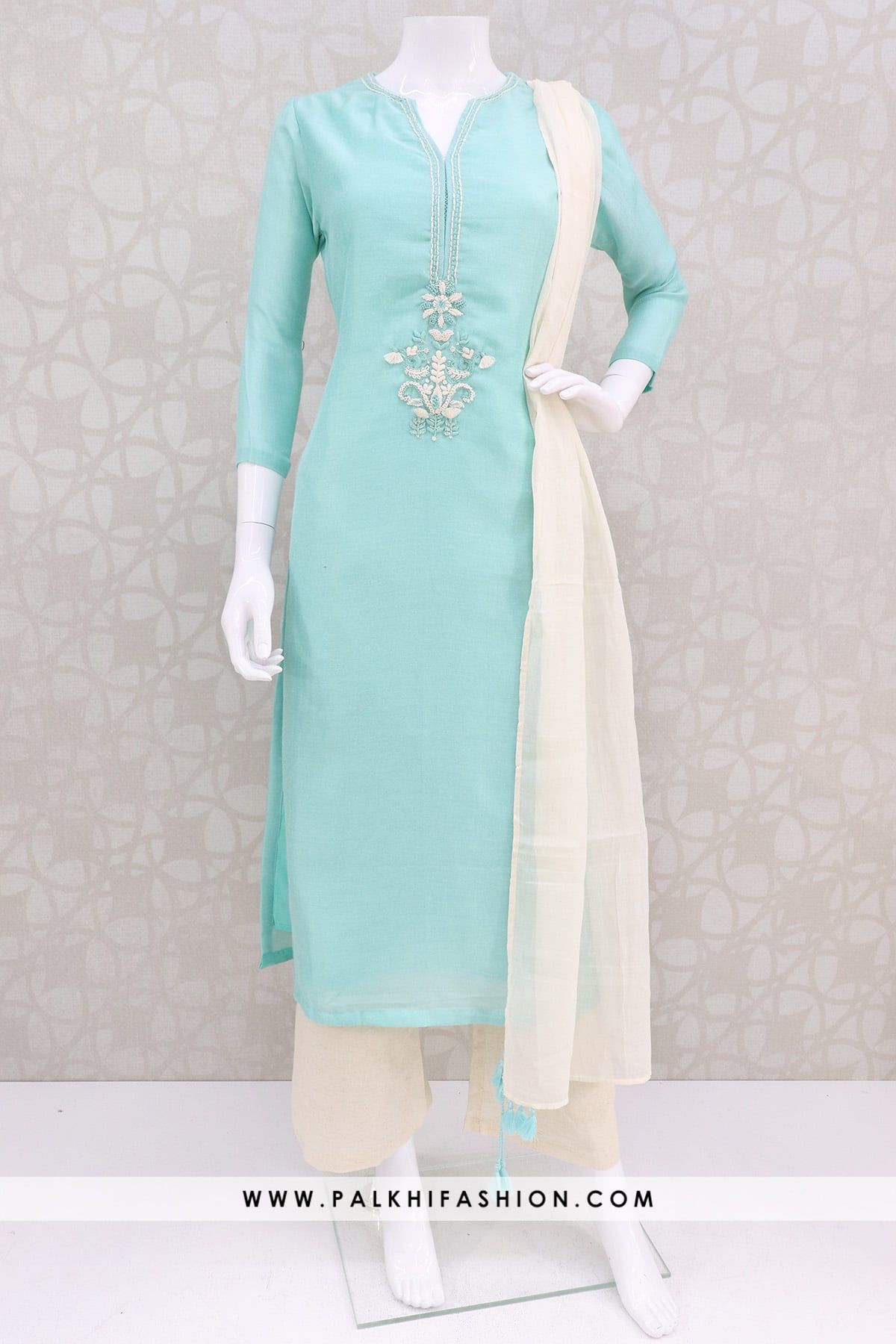
- **Fabric Physics:** The source garment is a woven fabric (likely cotton, linen, or silk blend) which possesses structural stiffness unlike the target's current stretch-knit ribbed top. It has a matte finish with a subtle sheen. The simulation must treat this as non-elastic; it should drape vertically with crisp fold lines rather than clinging to body contours.
- **Key Features:** The intricate white embroidery (chikankari style) on the central placket and neckline is the focal point and must be preserved with high fidelity. The V-neckline with the standing collar structure must replace the halter neck. The 3/4 length sleeves are structural and must replace the bare arms of the target.
PHASE 2: FIT & DRAPE SIMULATION
- **Body Mapping:**
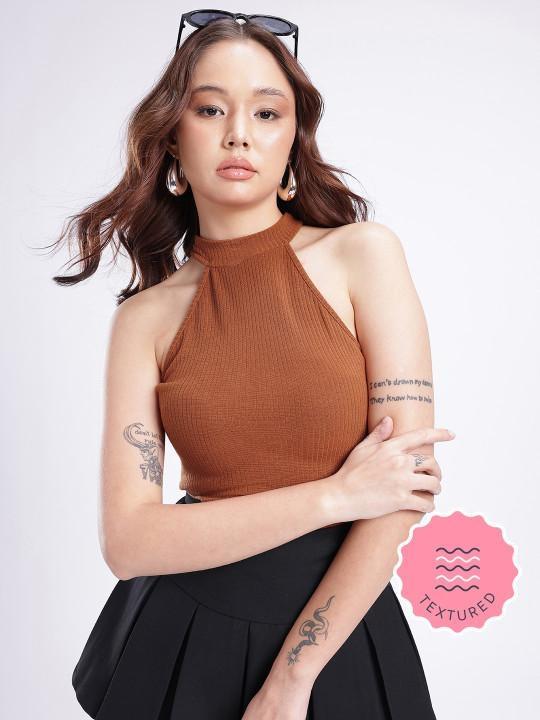
- **Torso:** The Kurta is a long tunic. Unlike the current crop top, the new garment must flow downwards past the waist, effectively covering the waistband of the target's skirt. It should hang somewhat straight from the bust down, honoring the gravity of a woven tunic, rather than tapering tightly at the waist.
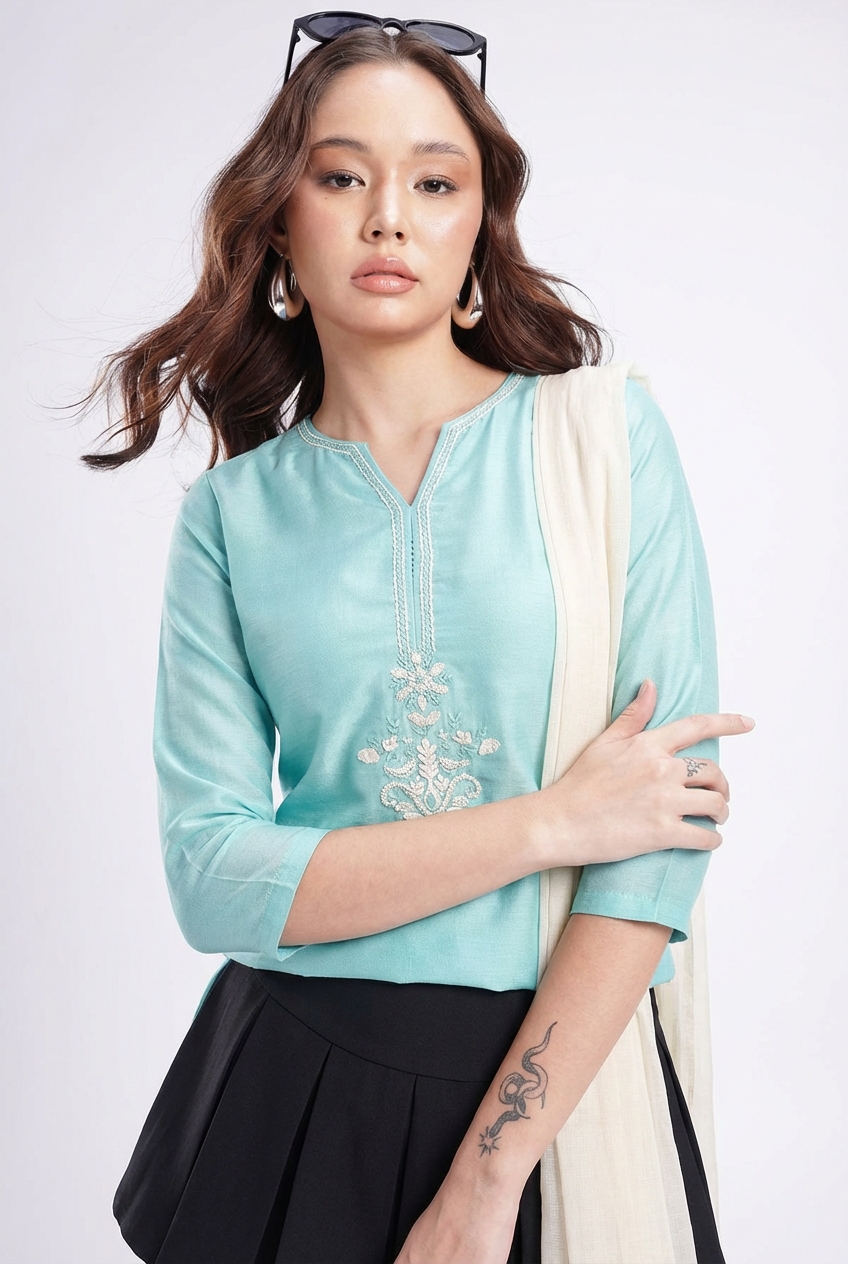
- **Sleeves:** The target's left arm is crossed over the body. The Kurta sleeve must simulate a sharp bend at the elbow (compression folds on the inner elbow, tension on the outer). The right sleeve will hang relatively straight with minor bunching at the shoulder.
- **Occlusion Handling:**
- **Hair:** The target has significant hair volume falling over both shoulders. The Kurta collar and shoulders must be rendered *underneath* these hair layers.
- **Arms/Hands:** The target's left forearm and hand completely obscure the mid-torso. The Kurta fabric must be generated *behind* this crossed arm. The left hand fingers and the tattoo on the left forearm must layer *over* the new fabric.
PHASE 3: ENVIRONMENT & LIGHTING
- **Light Match:** The target image uses soft, frontal studio lighting with a slight bias from the upper left (indicated by forehead highlights). The flat lighting of the mannequin image must be updated to generate a drop shadow from the target's crossed left arm onto the chest of the Kurta.
- **Color Calibration:** The source is a cool mint/turquoise. Ensure the white balance matches the warm skin tones of the user so the mint does not fluoresce unnaturally. The cream/white embroidery must maintain contrast against the mint fabric under the studio lights.
PHASE 4: IDENTITY PROTECTION
- **Facial Lock:** Absolute freeze on the facial region (eyes, nose, lips), the sunglasses on the head, and the specific earring loops. The hairline and the specific volume of the hair waves must remain pixel-perfect.
- **Body Integrity:** The target's arm thickness and shoulder width must not be altered. The tattoos on the left forearm and right bicep (snake design) must be preserved and not covered by the sleeve generation where the skin is intended to be visible (though the 3/4 sleeve will likely cover the bicep tattoo, the forearm tattoo must remain distinct if the sleeve ends before it). DO NOT slim the waist; allow the tunic to drape naturally over the existing body shape.