Thinking Process
PHASE 1: VISUAL DECONSTRUCTION
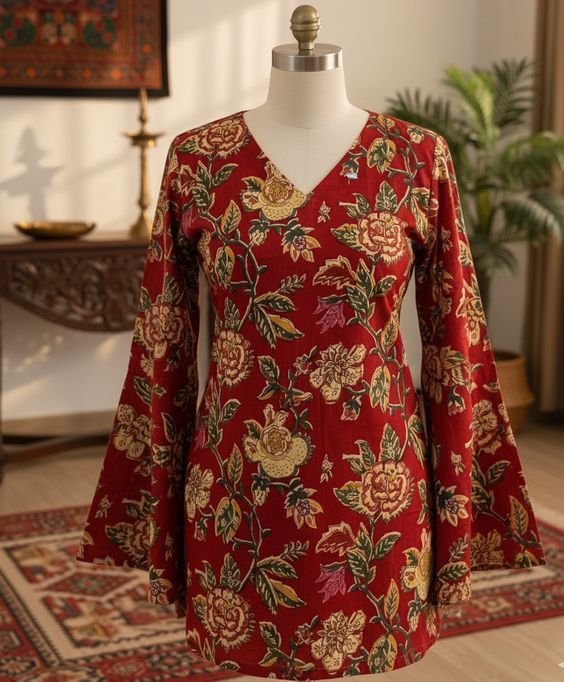
- **Fabric Physics:** The source garment appears to be a medium-weight woven cotton or linen blend. It has a matte finish with low specularity (no shine). The physics simulation must render it as semi-structured fabric that holds the bell-shape of the sleeves but is susceptible to soft folding at compression points; it is not elastic/stretchy.
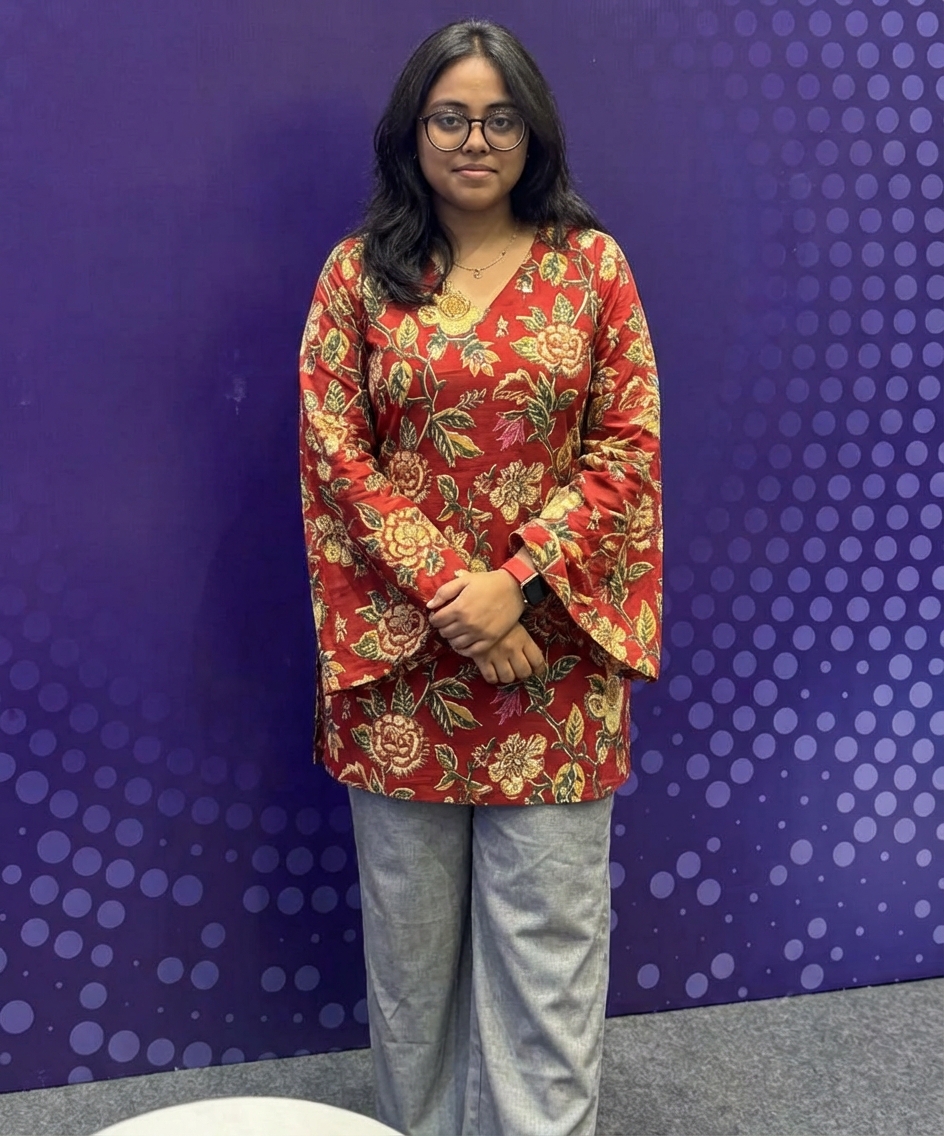
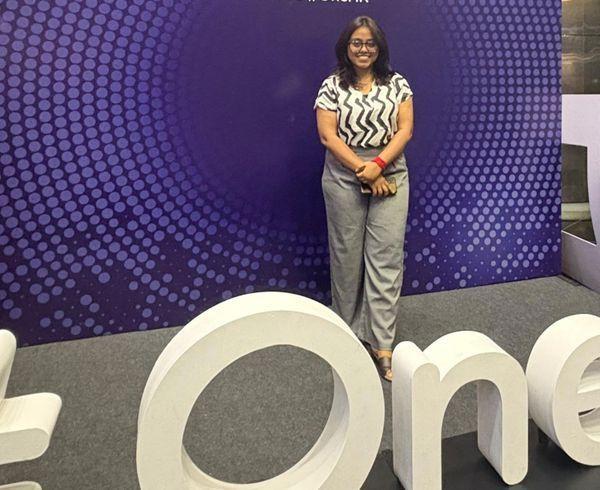
- **Key Features:** The distinct V-neckline must be preserved. The flared "bell" sleeves are a critical design element that must be generated (extending past the user's current short sleeves). The dense floral pattern (yellow/green on red) requires texture mapping that follows the warp and weft of the fabric without distorting the flower shapes. The longer hemline (tunic style) must replace the current cropped silhouette.
PHASE 2: FIT & DRAPE SIMULATION
- **Body Mapping:** The garment is a Kurta/Tunic, meaning it is designed to be worn untucked. The simulation must extend the hemline down over the user's hips and upper thighs, covering the waistband of the grey trousers. Due to the user's clasped hands, the long bell sleeves will encounter collision at the wrists/forearms; the fabric should drape naturally over the forearms and potentially bunch slightly where the hands meet the fabric.
- **Occlusion Handling:**
1. **Hands & Wrists:** The user's clasped hands, the red wristband (right), and the watch/bracelet (left) must be segmented and layered *over* the new garment.
2. **Hair:** The loose dark hair resting on the shoulders and upper chest must be masked and composited *on top* of the red fabric.
3. **Trousers:** The top portion of the grey trousers currently visible will be occluded by the new longer hemline.
PHASE 3: ENVIRONMENT & LIGHTING
- **Light Match:** The user environment features diffuse, cool-toned event lighting (likely fluorescent or LED) with a purple cast from the backdrop. Shadows are soft and fall directly downward. The source garment's warm, directional studio lighting (golden hour style) must be neutralized. The red fabric must be color-graded to accept the cool ambient light of the event space to avoid looking like a "sticker."
- **Color Calibration:** The red saturation needs to be slightly desaturated to match the slightly grainy, lower-contrast quality of the target photo. A subtle purple/blue tint should be applied to the shadows of the garment to integrate with the backdrop reflection.
PHASE 4: IDENTITY PROTECTION
- **Facial Lock:** The user's entire head, including glasses, facial expression, neck, and the necklace resting on the skin, must remain frozen and unaltered.
- **Body Integrity:** Strictly prohibit any warping or slimming of the user's torso, waist, or arm width. The generated garment must expand to fit the user's actual volumetric dimensions (shoulders, bust, and waist) rather than warping the user to fit the mannequin's size. The skin tone on the small exposed V-neck area must match the user's facial complexion.