Thinking Process
PHASE 1: VISUAL DECONSTRUCTION
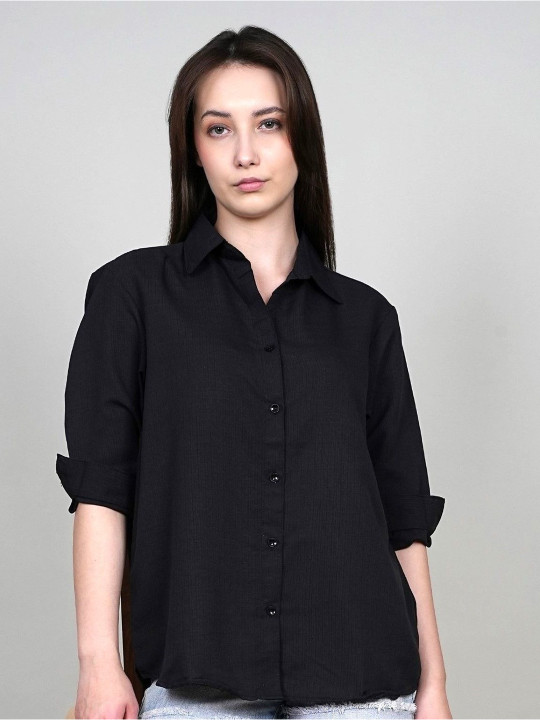
- **Fabric Physics:** The source garment is a black, woven fabric, likely a cotton or linen blend. It possesses a matte finish with low specularity (little to no shine). The physics simulation must treat this as a semi-structured material—stiffer at the collar and placket, but prone to sharp, angular creasing rather than fluid, silk-like draping.
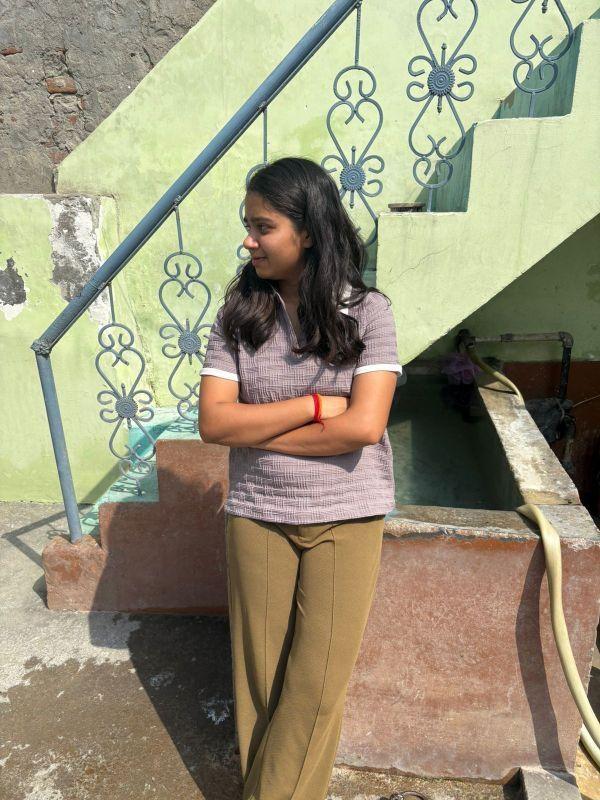
- **Key Features:** The structured point collar must be preserved and correctly positioned around the neck. The central button placket needs to maintain vertical alignment relative to the torso's twist. The rolled-up cuffs on the long sleeves are a critical geometric detail that must be retained, replacing the user's current short hem.
PHASE 2: FIT & DRAPE SIMULATION
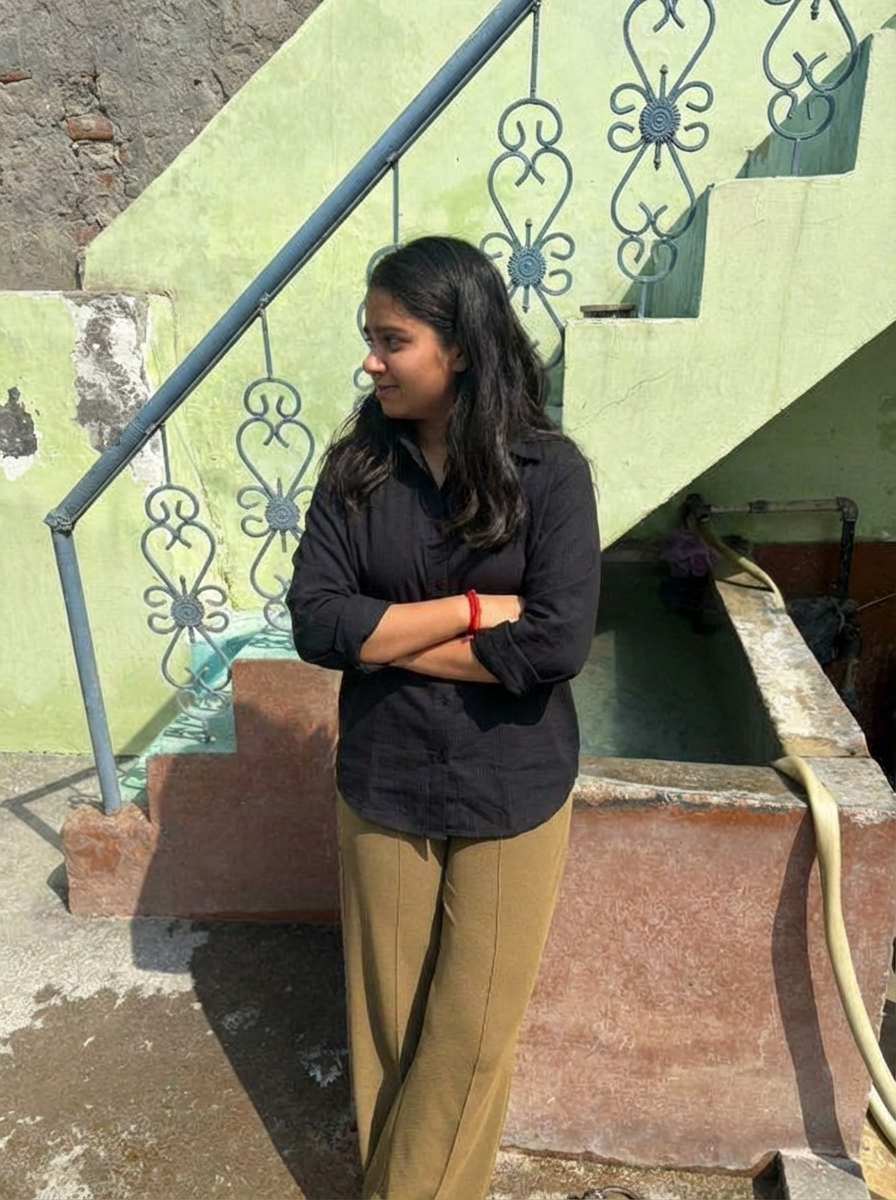
- **Body Mapping:** Due to the user's crossed-arm pose, standard gravity draping does not apply. The shirt fabric must be simulated with high compression forces across the chest and midriff where the arms press against the torso. Expect significant transverse folds (bunching) above and below the forearm intersection. The sleeves must conform to the flexion of the elbows, creating tension creases at the outer elbow and bunching at the inner elbow.
- **Occlusion Handling:** This is a high-complexity occlusion scenario. The user's long dark hair falls over both shoulders and must be segmented and layered *over* the new shirt collar. The user's hands and forearms are crossed; the shirt's torso section must render *behind* the arms, while the shirt's sleeves must map *onto* the arms. The red wrist thread on the right arm must be preserved and layered on top of the new black sleeve/cuff.
PHASE 3: ENVIRONMENT & LIGHTING
- **Light Match:** The target environment features harsh, directional outdoor sunlight coming from the upper right, creating hard shadows. The flat studio lighting of the source garment must be relit. We must generate a strong shadow cast by the user's crossed arms onto the stomach area of the black shirt. The left side of the user's torso (viewer's left) should fall into deep shadow to match the trousers' lighting.
- **Color Calibration:** The absolute black of the source garment needs to be lifted slightly to account for atmospheric scattering in the outdoor setting. The black fabric should not look like a "void"; it requires applying a noise texture or enhancing the normal map to ensure the texture interacts with the sunlight, preventing the shirt from looking like a flat black cutout.
PHASE 4: IDENTITY PROTECTION
- **Facial Lock:** The user's profile view, specifically the jawline, nose, cheek, and ear, must be strictly frozen using a hard mask. The hairline boundary is critical; no pixel bleeding from the black shirt should enter the face region.
- **Body Integrity:** The volumetric shape of the user's arms and shoulders must not be slimmed or altered. The simulation must respect the user's current shoulder width and arm thickness, simply wrapping the new texture around the existing voxel data of the body.