Thinking Process
PHASE 1: VISUAL DECONSTRUCTION
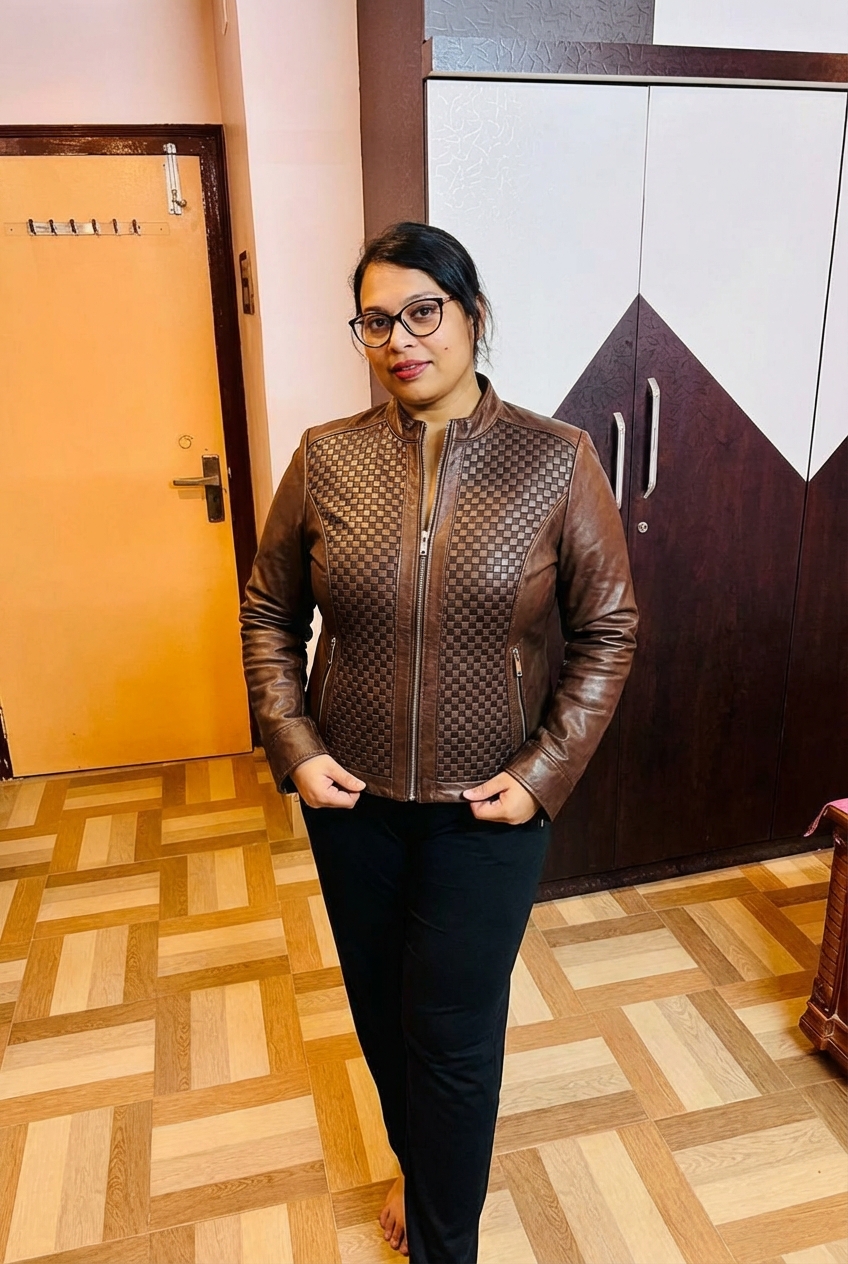
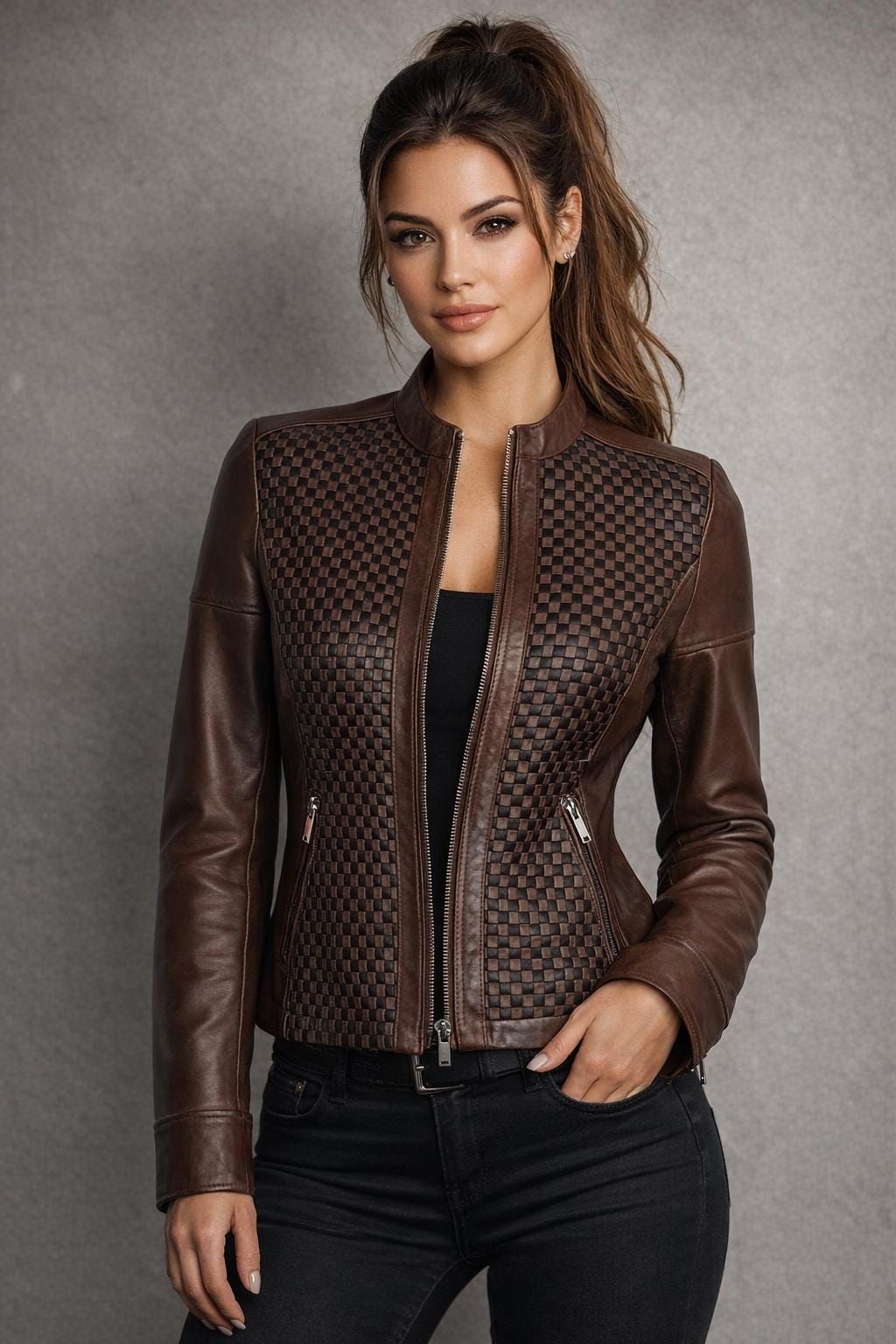
- **Fabric Physics:** The source garment is structured leather. It requires high specular roughness to simulate a semi-matte sheen, distinct from the matte finish of the user’s current cotton/lace top. The physics engine must treat this as a high-weight, high-stiffness material that resists gravity rather than flowing freely.
- **Key Features:** The woven/checkered leather texture on the front panels is critical and needs normal mapping to show depth. The standing mandarin collar, silver vertical zippers (central and pockets), and the smooth leather transition on the sleeves and side panels must be preserved with sharp texture fidelity.
PHASE 2: FIT & DRAPE SIMULATION
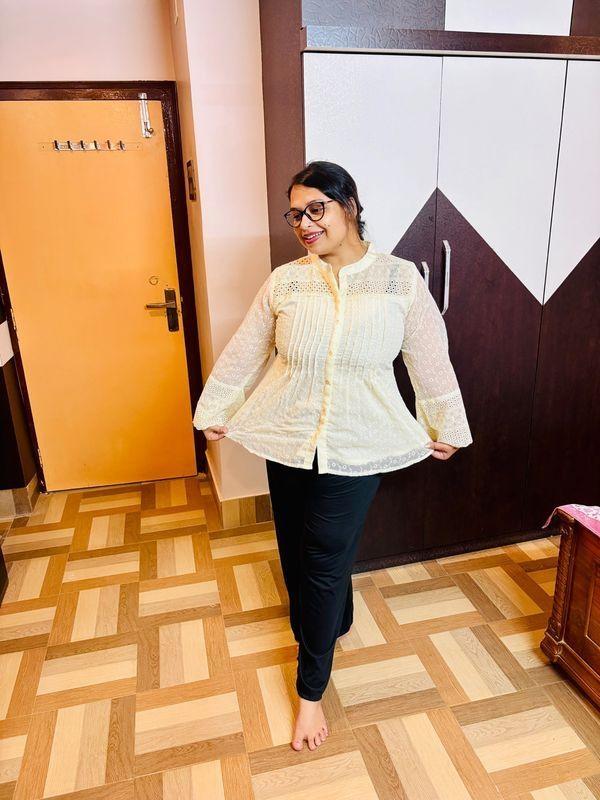
- **Body Mapping:** The user is wearing a loose, peplum-style top which flairs at the hips. The target jacket is fitted and hip-length. The simulation must "tighten" the silhouette, adhering closer to the torso and waist. Where the user's right arm is slightly bent, the leather should form sharp, horizontal compression creases (accordion folds) at the inner elbow, rather than soft fabric bunching.
- **Occlusion Handling:** The user's hair is tied back, minimizing shoulder occlusion. However, the high collar of the jacket may interact with the user's jawline/chin; the collar must sit *behind* the chin. The user's hands (fingertips visible on the left, full hand on the right) must act as a hard mask—the jacket sleeves must terminate at the wrists and not overlap the hands.
PHASE 3: ENVIRONMENT & LIGHTING
- **Light Match:** The target environment has strong, warm (yellow-cast) artificial lighting coming from the upper-left, casting shadows onto the wardrobe behind the user. The neutral, cool-lit studio leather must be re-lighted with a warm amber tint. Specular highlights on the leather shoulders and chest must reflect this warm light source.
- **Color Calibration:** The chocolate brown of the jacket needs to undergo color grading to absorb the room's yellow ambient light, likely shifting slightly towards a warmer mocha tone to avoid looking like a "pasted" asset. The contrast needs to be lowered slightly to match the dynamic range of the user photo.
PHASE 4: IDENTITY PROTECTION
- **Facial Lock:** The user's face, specifically the glasses, downward gaze, nose, and mouth, receives a strict freeze mask. The neck area needs careful blending where the new collar sits.
- **Body Integrity:** STRICT PROHIBITION on warping the user's underlying torso volume to match the source model's slim physique. The jacket must be expanded to fit the user's natural measurements. Since the new jacket is shorter than the old tunic, the generation model must "inpaint" the upper thighs/hips area of the pants that was previously covered by the tunic.