Thinking Process
PHASE 1: VISUAL DECONSTRUCTION
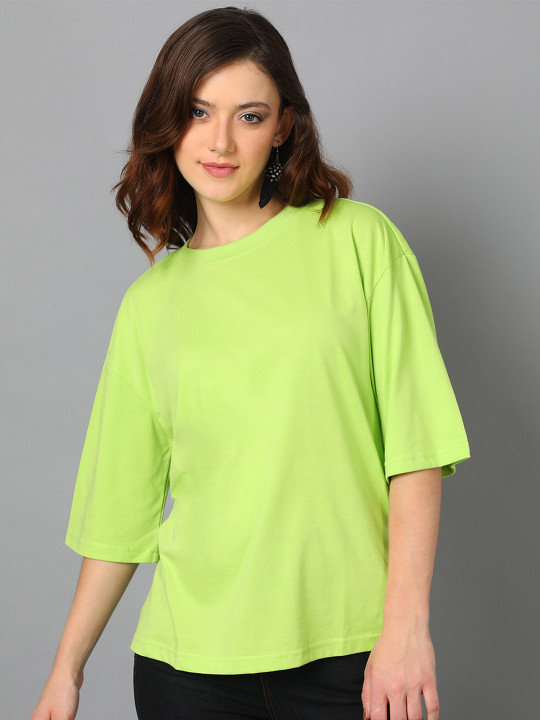
- **Fabric Physics:** The source garment is a medium-weight cotton jersey knits. It possesses a matte finish with high light absorption (low specularity). The simulation must exhibit "soft body" dynamics; it should hold a structured boxy shape at the shoulders but drape heavily with gravity, creating soft, rolling folds rather than sharp, angular creases.
- **Key Features:**
- **Drop Shoulders:** The seam where the sleeve attaches lies significantly below the anatomical shoulder point; this silhouette is crucial to the oversized aesthetic.
- **Ribbed Crew Neck:** The neck band is thicker and ribbed, distinct from the main body fabric.
- **Hemline:** A standard double-stitched straight hem that hits below the hip.
- **Sleeve Length:** Half-sleeves that should extend to or just past the elbow, wider than a standard fitted sleeve.
PHASE 2: FIT & DRAPE SIMULATION
- **Body Mapping:**
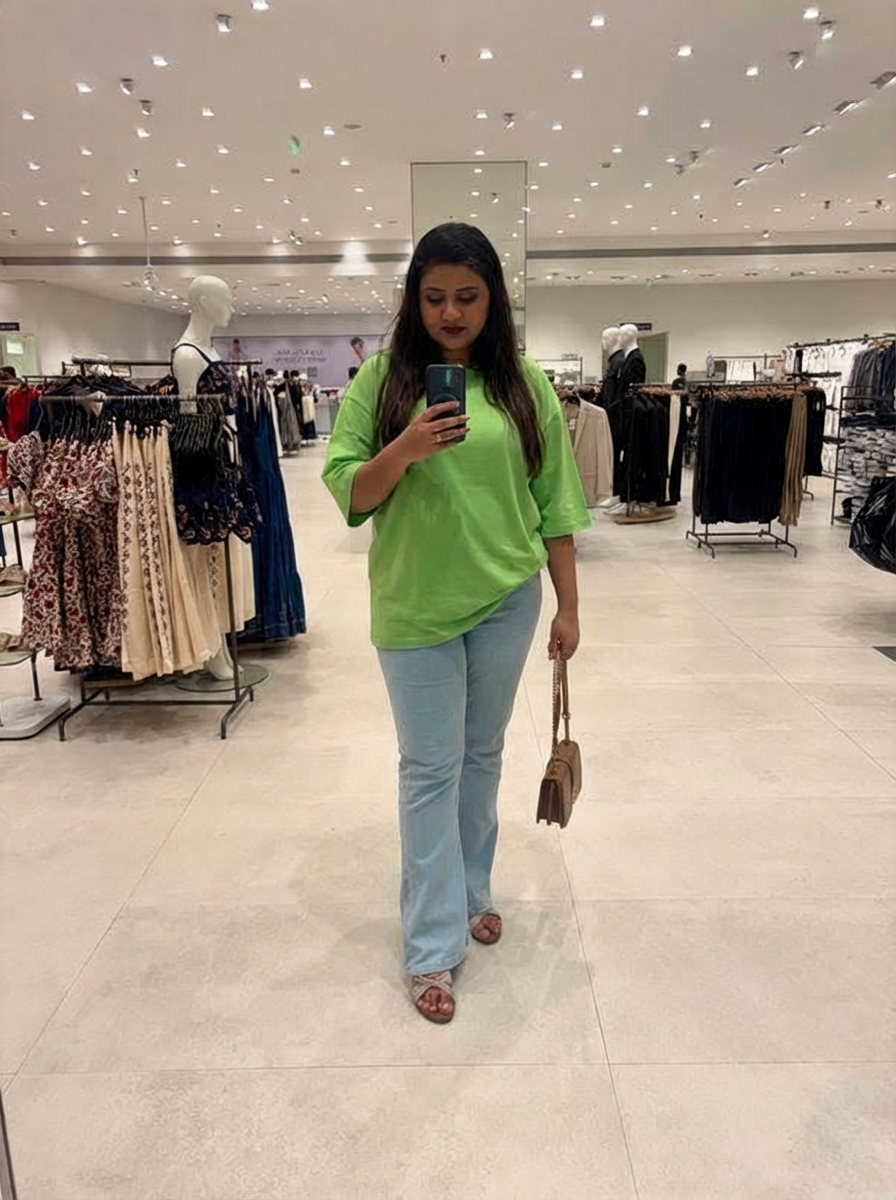
- **Torso:** The garment must not cling to the user's waist. It requires a relaxed, boxy volume that hangs vertically from the chest/shoulder apex, obscuring the user's torso curve.
- **Right Arm (Phone Arm):** Due to the bent elbow holding the phone, the fabric must compress and bunch at the inner elbow (antecubital fossa). The sleeve tension should pull slightly upward across the right deltoid.
- **Left Arm (Relaxed):** The sleeve needs to hang straight down with full gravity influence, exhibiting a circular opening at the bottom rather than flattening against the arm.
- **Occlusion Handling:**
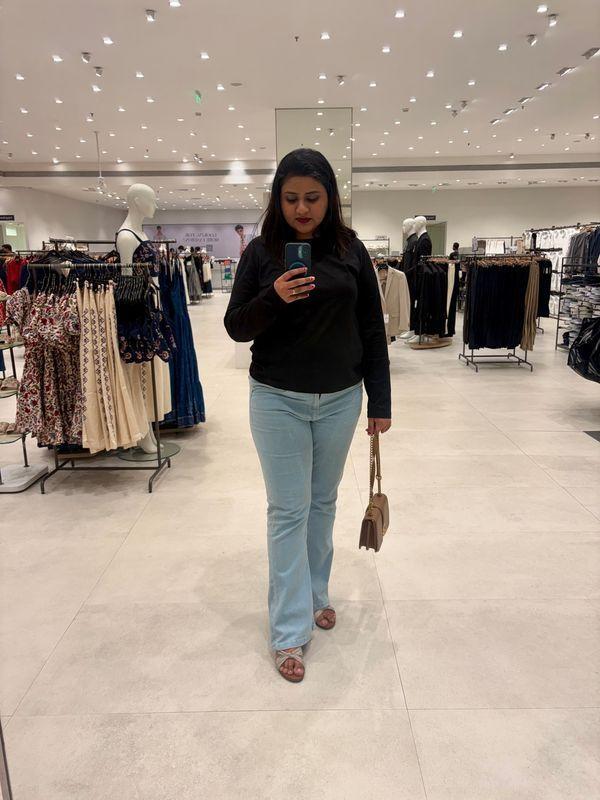
- **Primary Occlusion (Phone & Hands):** The smartphone and the user's hands holding it are positioned directly over the sternum/chest. The green t-shirt must be rendered *behind* the phone and hands. This is a hard-mask requirement.
- **Hair:** The user's long dark hair falls over both shoulders. The garment collar and shoulder panels must be generated on a layer *beneath* the hair tips.
- **Purse Strap:** The gold chain bag strap held in the left hand hangs low; if the shirt hem is long enough to touch it, the fabric must collide with and drape slightly over or behind the strap, not clip through it.
PHASE 3: ENVIRONMENT & LIGHTING
- **Light Match:** The target environment utilizes overhead retail grid lighting (multiple recessed downlights).
- **Shadows:** The shirt needs to cast a soft drop shadow onto the light blue denim jeans. Self-shadowing within the shirt folds must be consistent with top-down illumination (darker under the sleeves and bust).
- **Reflections:** No specular highlights should be applied to the cotton, but the fabric should show diffuse brightening on the upper shoulder planes.
- **Color Calibration:** The source green is highly saturated (studio light). In the retail environment, the green must be slightly desaturated and warmed to match the ambient room tone. The black level of the shadows on the green shirt must match the black level of the background clothing racks to ensure integration.
PHASE 4: IDENTITY PROTECTION
- **Facial Lock:** The user's face, including the jawline, chin, and neck skin exposed above the crew neck, must be strictly preserved using a frozen mask.
- **Body Integrity:** The simulation is prohibited from warping or slimming the user's underlying skeletal structure. While the shirt is oversized and will naturally hide the waist, the width of the hips and the volume of the arms must remain anatomically consistent with the original image. The user's legs and jeans must remain untouched.