Thinking Process
PHASE 1: VISUAL DECONSTRUCTION
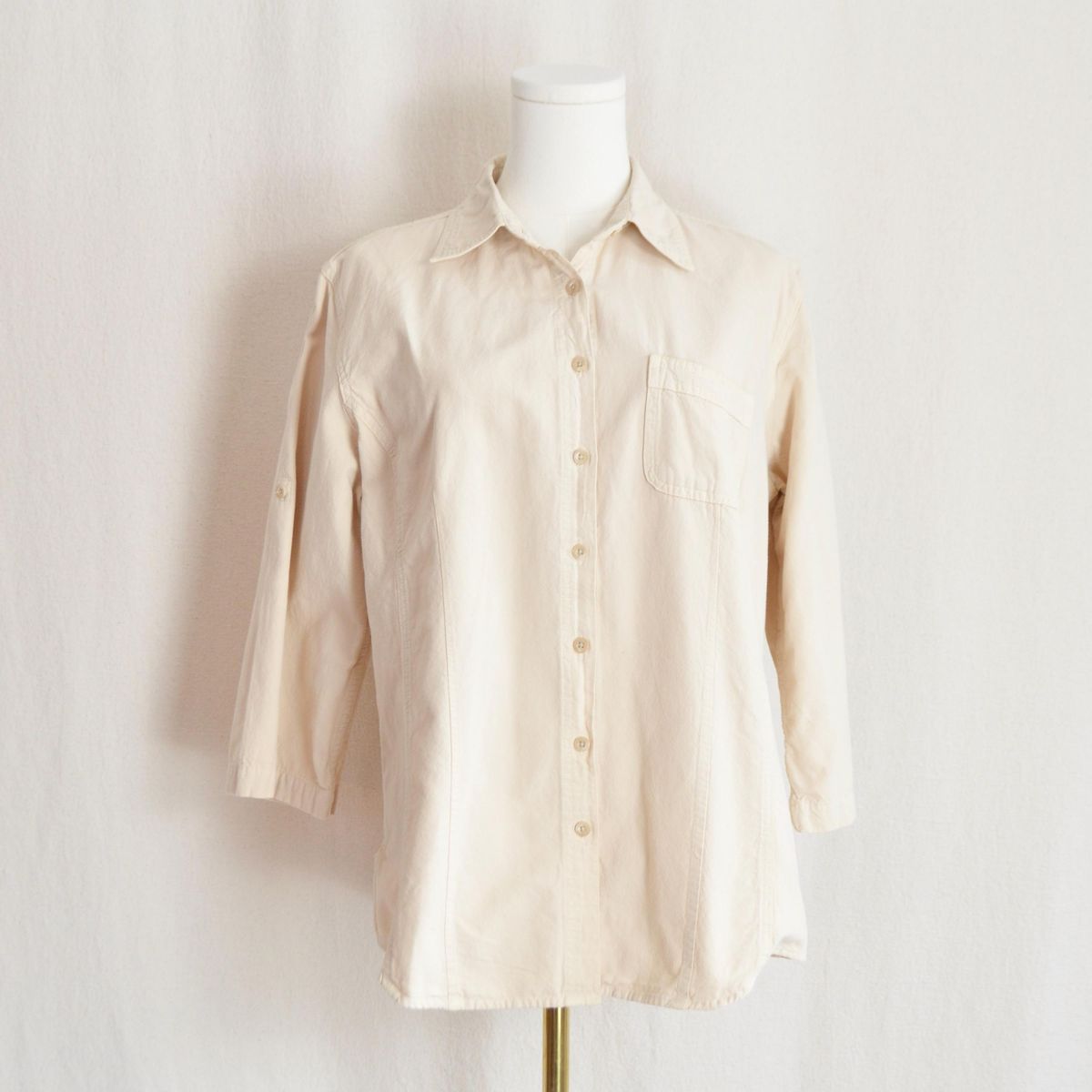
- **Fabric Physics:** The source garment appears to be a medium-weight woven cotton or linen blend. It has a matte finish with low specular reflection. It possesses structural stiffness around the placket and collar but is prone to soft, angular creasing rather than fluid, liquid-like draping. The simulation must treat the material as non-elastic.
- **Key Features:**
- **Collar:** Standard point collar structure that must stand slightly away from the neck.
- **Seams:** Distinct vertical princess seams running down the front panels; these provide shape and must be visible.
- **Closure:** Visible button placket with contrasting neutral buttons.
- **Pocket:** Single patch pocket on the wearer's left chest.
- **Sleeves:** Appears to be 3/4 length or roll-tab sleeves; the cuff detail is essential.
PHASE 2: FIT & DRAPE SIMULATION
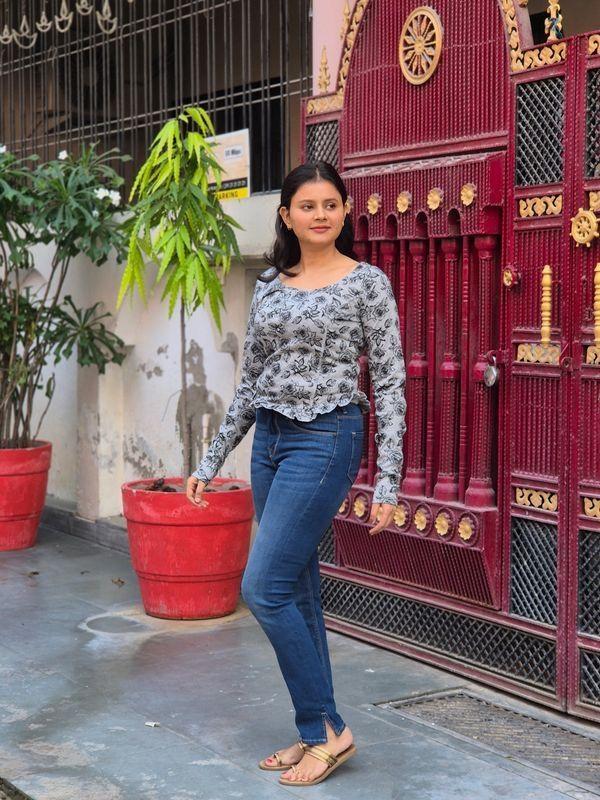
- **Body Mapping:** The source garment is a "Regular/Relaxed Fit" shirt, whereas the user is currently wearing a form-fitting top. The generated image must show the shirt hanging somewhat loosely over the waist and hips, creating negative space between the fabric and the user's torso, specifically avoiding the "vacuum-sealed" look. The curved hemline should fall over the waistband of the jeans.
- **Occlusion Handling:**
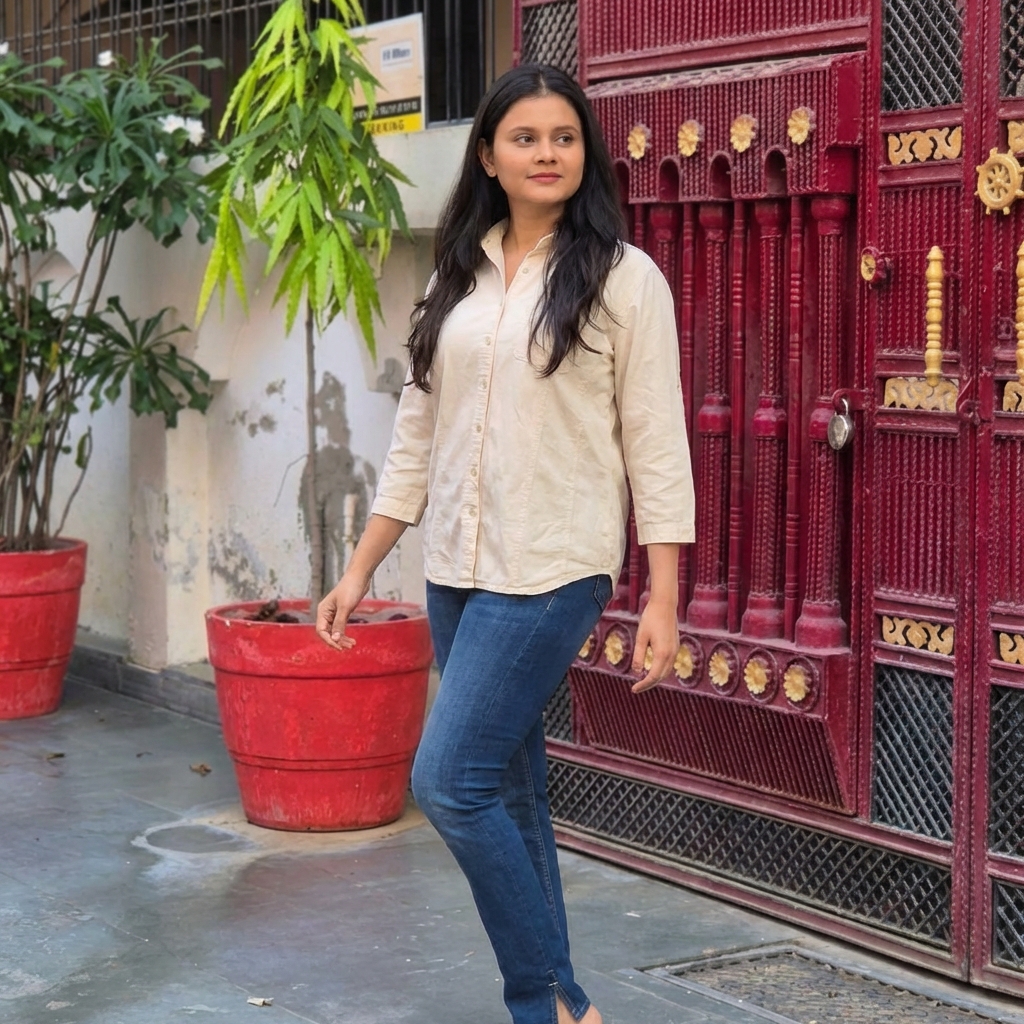
- **Hair:** The user has long, dark hair falling over both shoulders. This is the primary occlusion layer. The new shirt collar and shoulder yoke must be generated *underneath* the hair composite layer.
- **Arms:** The user's arms are close to the torso. The simulation must calculate ambient occlusion (shadowing) where the inner sleeves rub against the side of the shirt body.
PHASE 3: ENVIRONMENT & LIGHTING
- **Light Match:** The user is in an outdoor environment with soft, diffuse daylight coming primarily from the viewer's left (hitting the user's right side). The new garment must render with brighter highlights on the left chest/shoulder and soft, cast shadows graduating toward the right side and under the bust.
- **Color Calibration:** The source cloth is warm cream/beige. The target environment has cool ambient skylight and reflected red tones from the gate. The beige must be color-graded to accept a slight cool tint in the shadows to match the pavement and avoid looking like a pasted studio cutout.
PHASE 4: IDENTITY PROTECTION
- **Facial Lock:** The user's entire head, including the chin, jawline, and neck structure above the clavicle, must remain pixel-perfectly frozen.
- **Body Integrity:** Do not slim the user's arms or hips. The silhouette of the torso will naturally expand slightly due to the change from a fitted knit top to a woven button-down; this volume increase is accurate and must be maintained. Do not alter the waist size of the jeans.