Thinking Process
PHASE 1: VISUAL DECONSTRUCTION
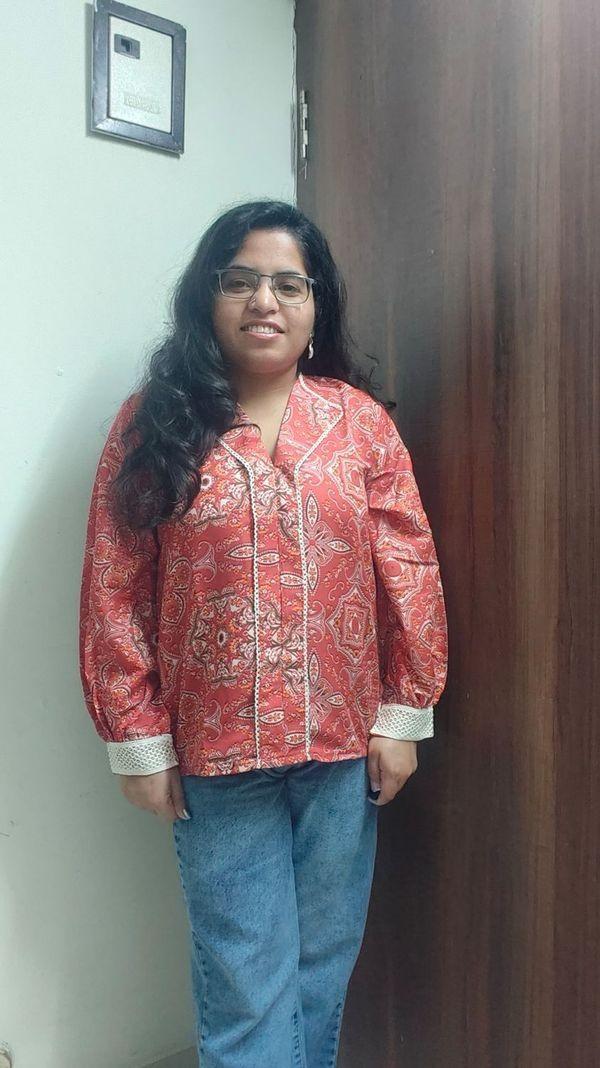
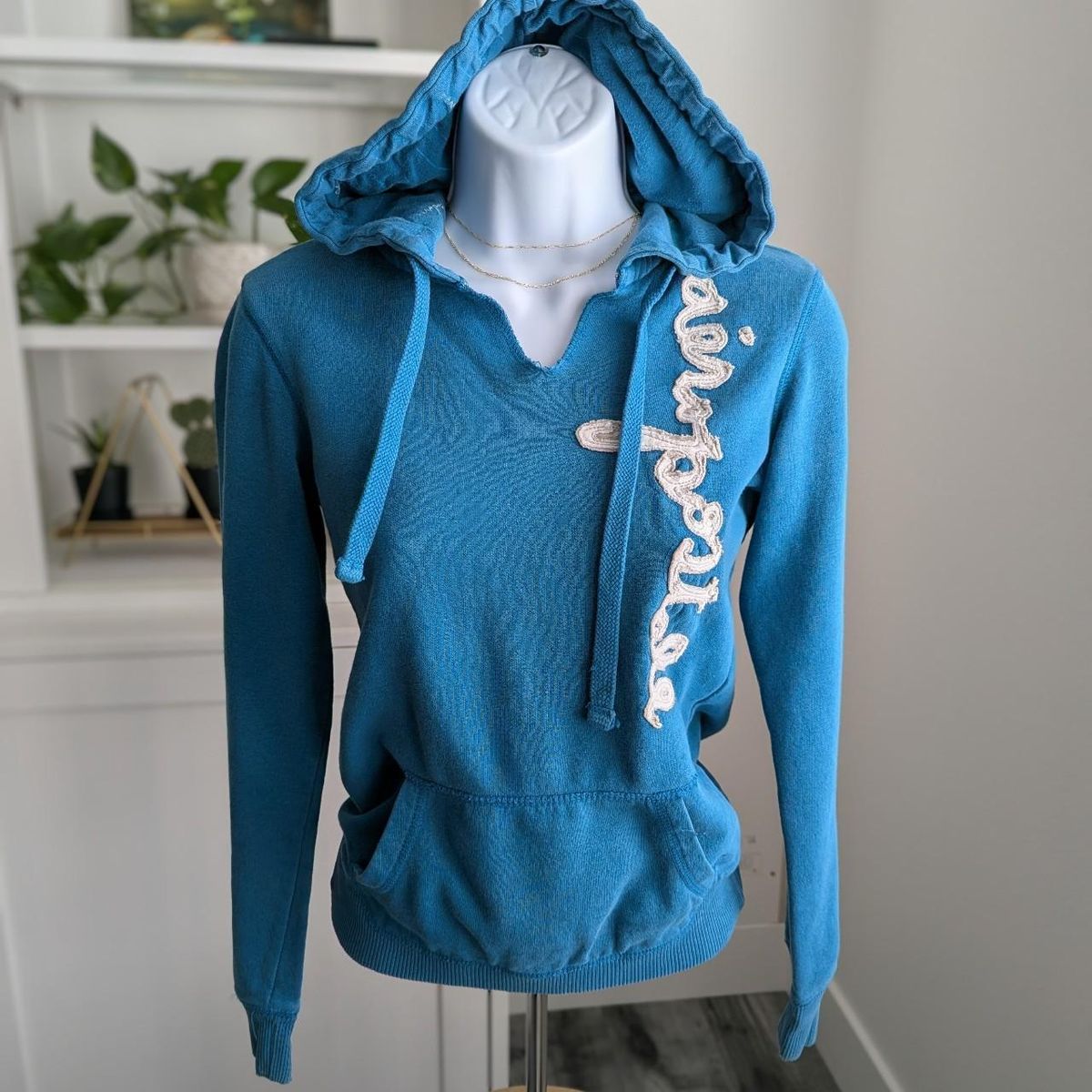
- **Fabric Physics:** The source garment is a cotton-blend jersey knit (sweatshirt material). Unlike the user's current flowy, lightweight blouse, this fabric has a heavier weight (approx. 280-300 GSM) and high drag. It has a matte finish that absorbs light rather than reflecting it. The simulation must account for the stiffness of the ribbed cuffs and hem, creating a structural "break" rather than a fluid drape.
- **Key Features:**
1. **Embroidery:** The vertical "Aeropostale" script applique on the left side is textured and raised; it must not appear flattened or distorted.
2. **Hardware:** Two thick drawstrings hanging from the neckline.
3. **Structure:** The Kangaroo pocket (pouch) adds thickness to the lower abdominal area.
4. **Hood:** The hood bulk around the neck needs to be managed (simulated in a "down" position behind the neck, or draped naturally if kept up, though "down" is standard for try-on).
PHASE 2: FIT & DRAPE SIMULATION
- **Body Mapping:**
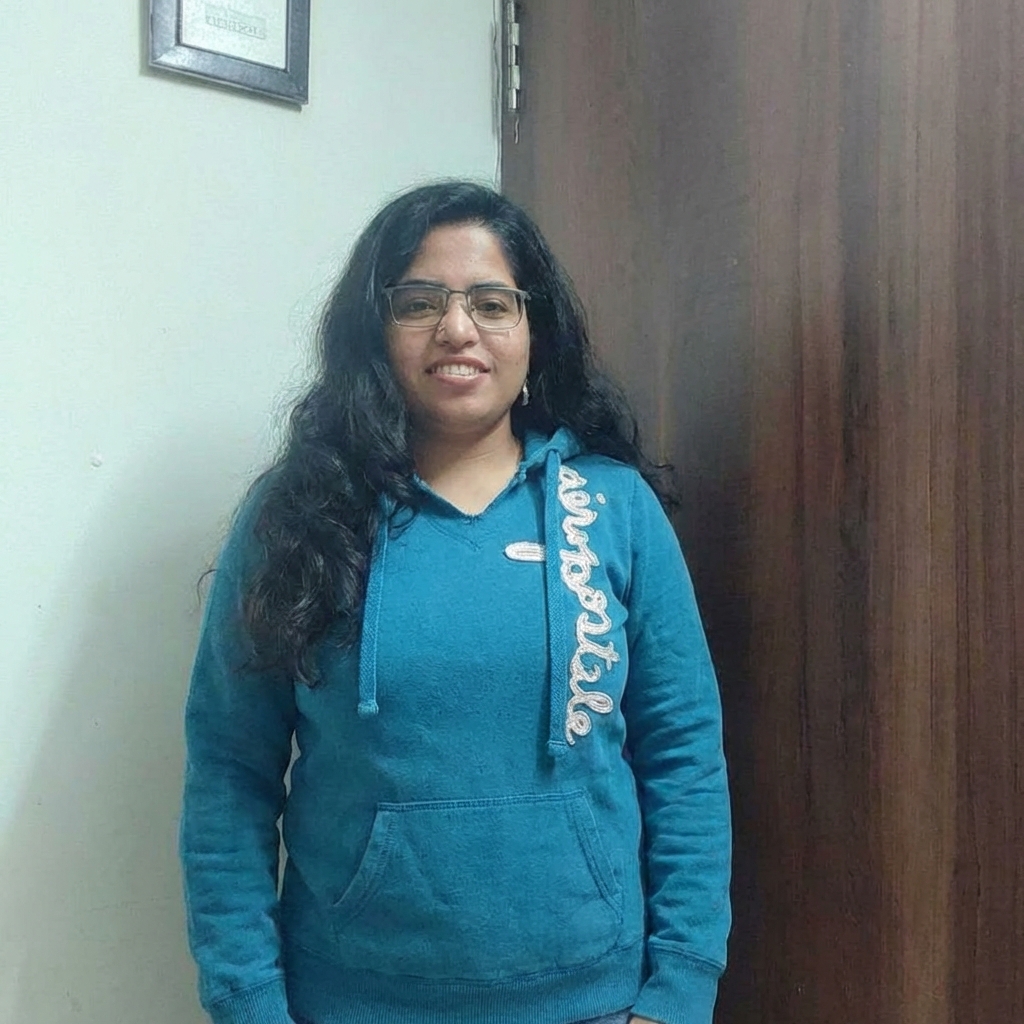
- **Torso:** The ribbed hem at the waist creates a natural cinch. The fabric should balloon slightly above the waist hem (the "mushroom" effect of sweatshirts) rather than hanging completely straight like the current tunic.
- **Chest:** The fabric must tension across the bust, potentially causing the vertical logo to curve slightly outward, preserving 3D volume.
- **Arms:** The sleeves are cuffed. The fabric should stack/bunch slightly above the wrists where the user's arms are straight, creating horizontal fold lines typical of fleece material.
- **Occlusion Handling:**
- **Hair (CRITICAL):** The user has voluminous dark hair cascading over both shoulders and the chest. A high-precision segmentation mask is required to separate the hair strands. The hoodie must be rendered *behind* the hair layers.
- **Hands:** The user's hands are visible at the bottom of the sleeves. The ribbed cuffs of the hoodie must stop at the wrist bone, ensuring the hands are not covered.
PHASE 3: ENVIRONMENT & LIGHTING
- **Light Match:** The user's environment has soft, diffuse indoor lighting (cool white/fluorescent tone) coming from overhead/front-left. The source garment is currently lit by bright studio lights. The hoodie's brightness must be lowered to match the ambient occlusion of the room. Shadows must be generated under the bust, inside the kangaroo pocket opening, and under the hood area.
- **Color Calibration:** The source teal/blue is highly saturated. To look realistic in the target room, the saturation must be slightly reduced, and the color temperature cooled to match the wall paint and lighting conditions of the User Image.
PHASE 4: IDENTITY PROTECTION
- **Facial Lock:** The user's face, including the specific reflection on her glasses, smile lines, and jawline, must be masked and frozen.
- **Body Integrity:** The simulation is strictly forbidden from warping the user's waist or arm thickness to fit the garment. The hoodie adds bulk; therefore, the final silhouette should naturally appear slightly wider than the current image (due to fabric thickness), but the underlying body mesh must remain true to the user's original measurements. The legs/jeans must remain untouched.