Thinking Process
PHASE 1: VISUAL DECONSTRUCTION
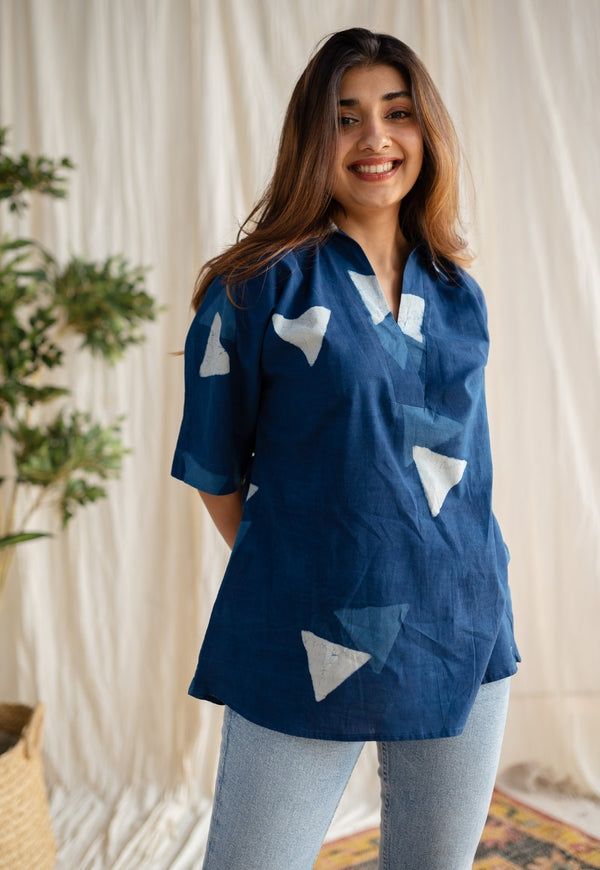
- **Fabric Physics:** The source garment appears to be a natural fiber blend, likely cotton or linen with an Indigo-style dye. It possesses a matte finish with zero specularity (no shine). The simulation must treat this as a medium-weight fabric that holds creases slightly (semi-structured) rather than draping like liquid or clinging like spandex.
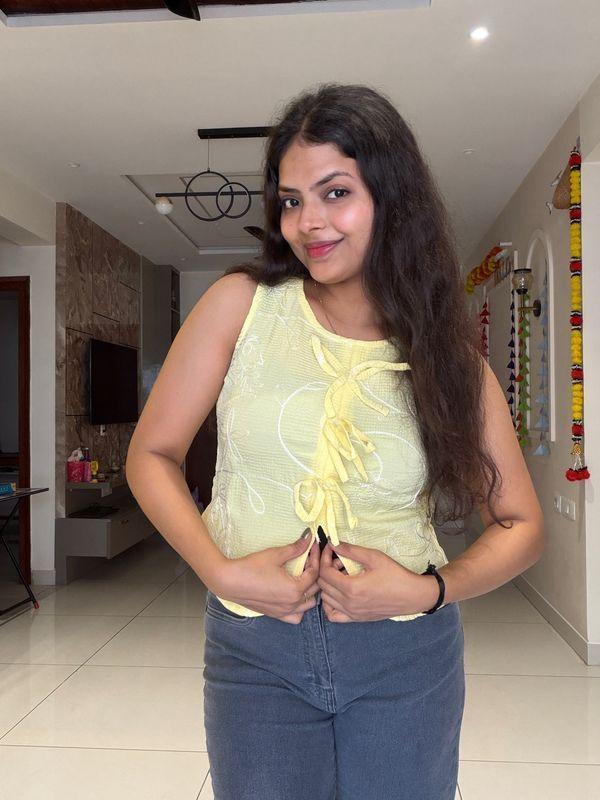
- **Key Features:** The specific geometric white/light-blue triangular block prints must be preserved without distortion. The "V" neckline with the small collar stand is a critical structural element. The 3/4 length sleeves must be generated (extrapolated) onto the user's bare arms. The garment length is a tunic/kurta style, extending below the hips, significantly longer than the user's current crop top.
PHASE 2: FIT & DRAPE SIMULATION
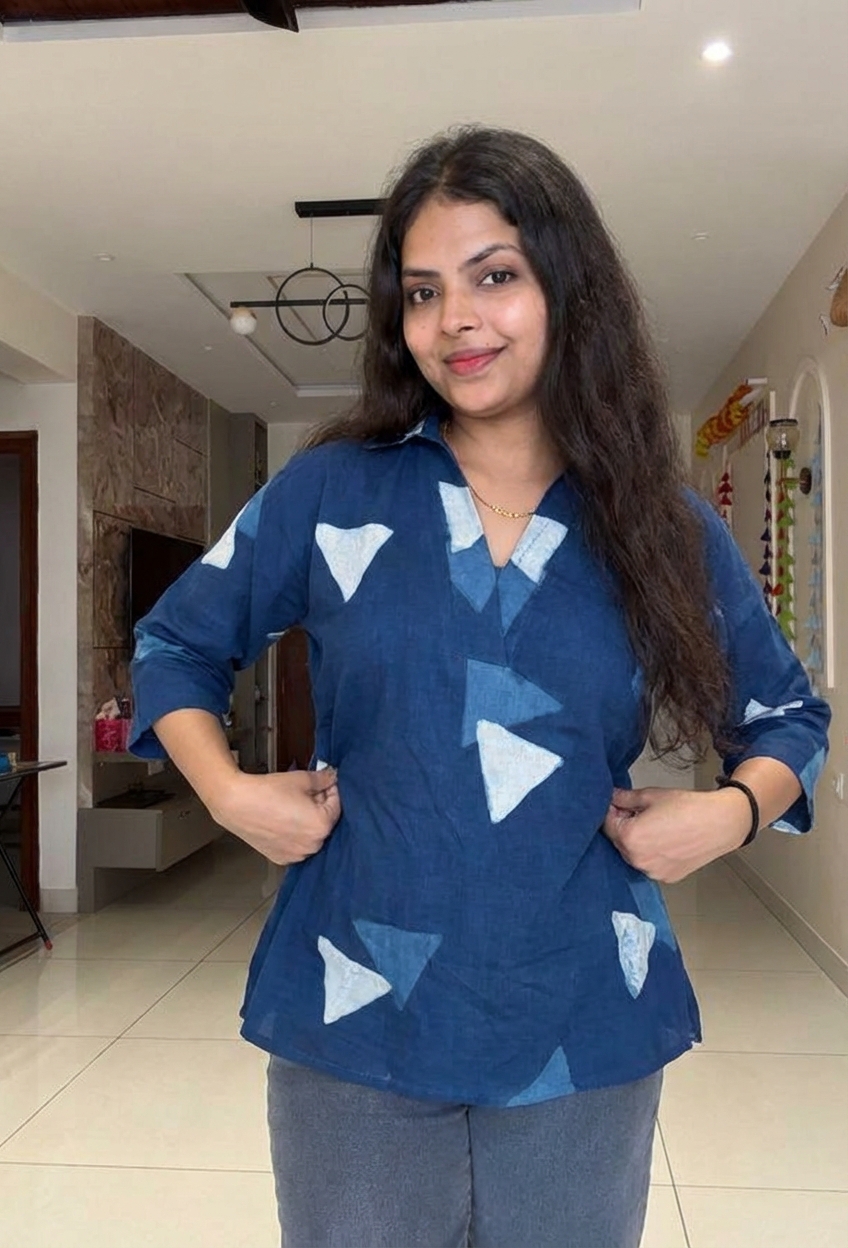
- **Body Mapping:** The target garment is a relaxed fit. It should settle on the user's shoulders and drape vertically, avoiding the tight contouring of the current yellow top. Since the user's hands are positioned at waist level pulling her current top, the new simulation is complex: the new tunic is longer and should technically hang *behind* the hands or bunch slightly where the wrists contact the hip area. The sleeves should end roughly at the mid-forearm.
- **Occlusion Handling:**
1. **Hair:** The user's long dark hair flows over both shoulders and heavily occludes the left side of the chest (viewer's right). This hair mask must be layered **strictly over** the new blue tunic.
2. **Hands/Arms:** The user's hands are clasping near the navel/waist. The new garment texture must be masked out where the hands and forearms overlap the torso region. The fabric should appear to flow behind the hands.
3. **Necklace:** The delicate gold chain on the neck must be segmented and re-applied over the new V-neck area.
PHASE 3: ENVIRONMENT & LIGHTING
- **Light Match:** The user is under overhead artificial recessed lighting (downward direction). Shadows on the new garment must cast downward (e.g., under the bust and collar). The lighting is flatter and cooler than the warm, soft studio light of the source image.
- **Color Calibration:** The deep indigo blue of the source garment must be slightly cooled and desaturated to match the indoor white balance of the user's room. Avoid high-contrast black shadows; keep shadow falloff soft to match the ambient room occlusion.
PHASE 4: IDENTITY PROTECTION
- **Facial Lock:** Absolute pixel preservation required for the face, jawline, and neck area above the collarbone. The user's skin tone on the arms and face must remain untouched.
- **Body Integrity:** Strict prohibition on warping the user's waist or arm width. The garment is loose, but the underlying skeletal structure (shoulder width, hip width) must match the user's original proportions, not the model's.