Thinking Process
PHASE 1: VISUAL DECONSTRUCTION
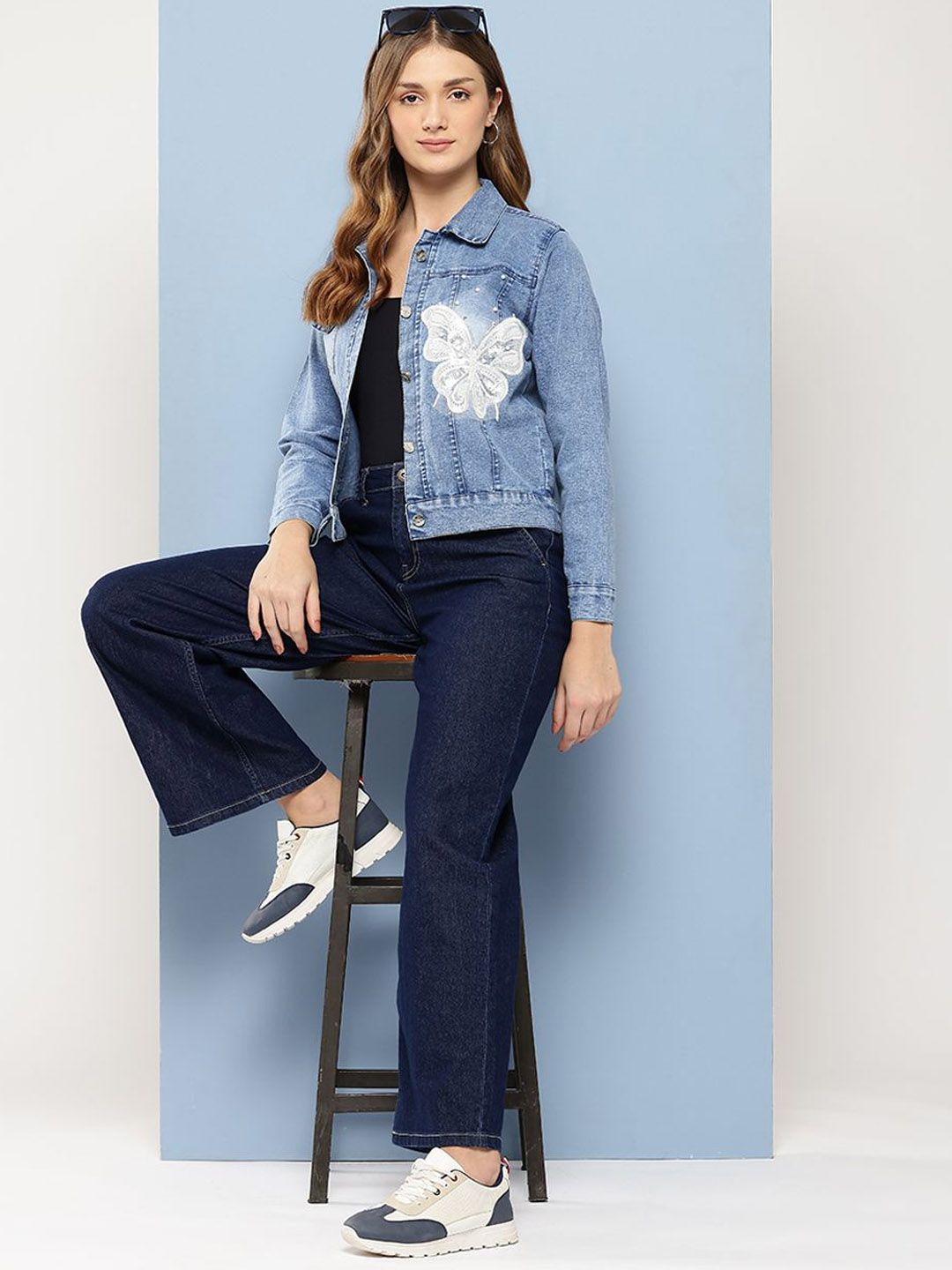
- **Fabric Physics:** The source material is a light-wash denim. This requires rigid body dynamics simulation; the fabric possesses high structural integrity and low drape compared to the user's current ribbed knit. It does not cling to the skin. Specularity maps must show a matte finish on the cotton weave, with sharp, high-contrast reflections only on the silver buttons. The texture must convey the roughness of the twill weave.
- **Key Features:**
- **Butterfly Appliqué:** The white lace/embroidered butterfly on the left chest is the critical focal point and must maintain its 3D texture without warping into the armpit area.
- **Hardware:** Silver shank buttons on the central placket and pockets must be preserved.
- **Construction:** Visible orange/gold topstitching, the shirt-style collar, and the structured shoulder seams.
- **Wash/Fade:** The lighter fading pattern on the center chest and arms must align with the user's volumetric lighting.
PHASE 2: FIT & DRAPE SIMULATION
- **Body Mapping:**
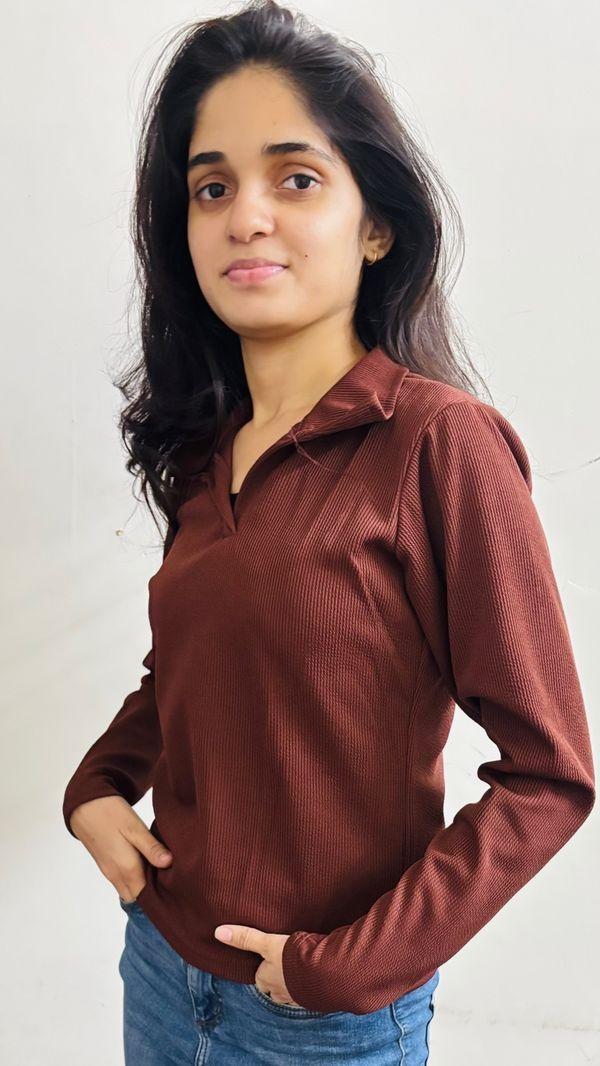
- **Shoulder Structure:** Unlike the current sloping ribbed top, the denim jacket creates a squared-off shoulder silhouette. Padding/structure must be simulated here.
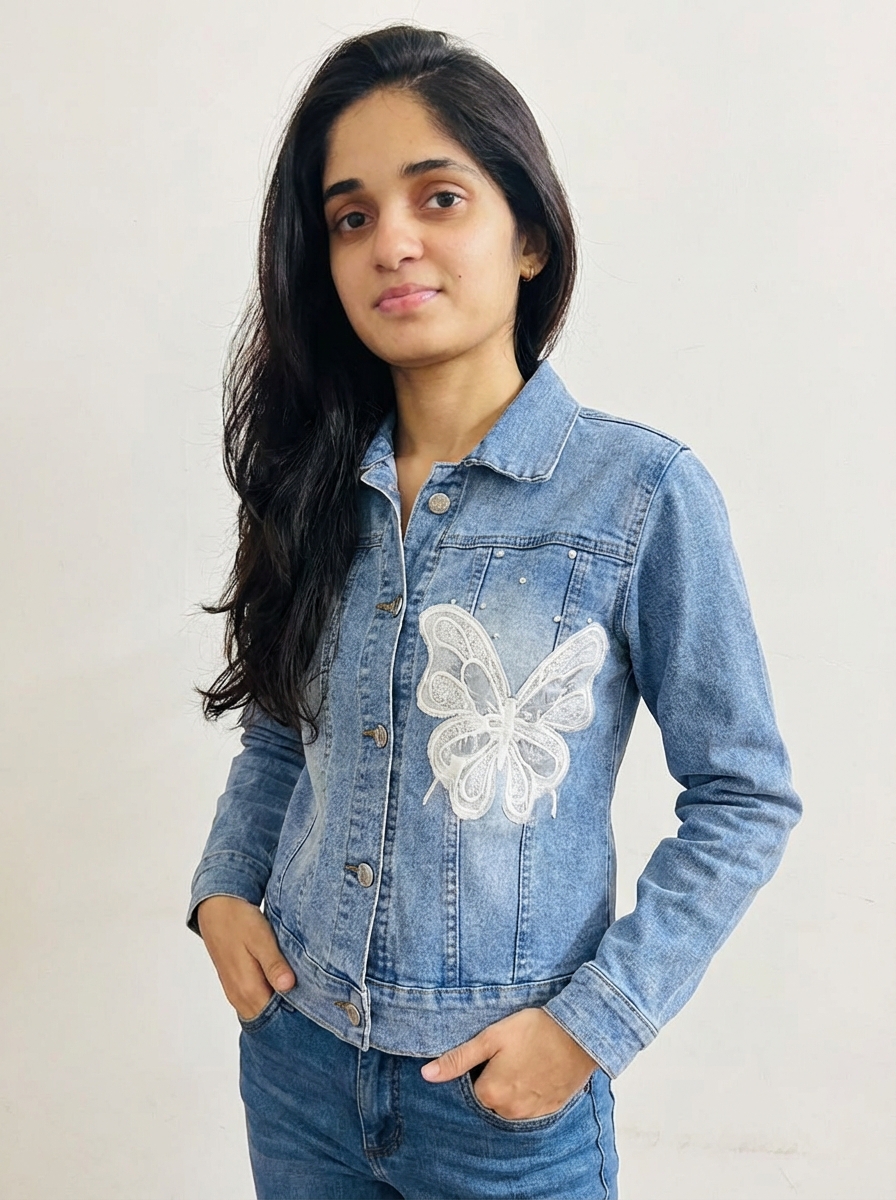
- **Arm Interaction:** The user's elbows are bent at an obtuse angle to place hands in pockets. The denim, being stiff, must show distinct "accordion" folding or creasing at the inner elbow (antecubital fossa) rather than soft bunching.
- **Hemline Interaction:** Since the user's hands are tucked into the jeans, the jacket's hem will likely interact with the wrists. The jacket should drape *over* the back of the hands or bunch slightly above the wrist, depending on the jacket's intended length (likely high-hip).
- **Occlusion Handling:**
- **Hair Masking:** The user has voluminous dark hair draping over the left shoulder and chest. A high-fidelity hair segmentation mask is required to layer the hair *over* the new denim jacket. The butterfly logo must be partially occluded by the hair strands naturally.
- **Hand/Pocket Interface:** The user's fingers are inside the pant pockets. The jacket hem must not clip through the hands; it should settle naturally around the wrist area.
PHASE 3: ENVIRONMENT & LIGHTING
- **Light Match:** The user image features soft, diffused ambient lighting, seemingly coming from the front-left. The source image has high-key studio lighting. The denim's brightness must be reduced (exposure compensation) to match the room's ambient occlusion. Shadows cast by the collar and buttons should fall softly to the viewer's right.
- **Color Calibration:** The source denim is a vibrant cool blue. The user's environment is warmer/neutral. A slight warm gradation overlay is needed on the jacket to blend it into the scene, preventing it from looking "superimposed" or too cool for the room temperature.
PHASE 4: IDENTITY PROTECTION
- **Facial Lock:** Absolute freeze on the facial region (eyes, nose, mouth, jawline) and the visible neck area above the collarbone. The specific volume and flow of the user's hair must remain pixel-perfect.
- **Body Integrity:** Strictly prohibit "slimming" or altering the user's waist width. The denim jacket adds bulk due to material thickness; the final render must show a slightly larger silhouette than the current tight ribbed top to reflect realistic layering. Do not warp the user's hips or jeans to fit the jacket.