Thinking Process
PHASE 1: VISUAL DECONSTRUCTION
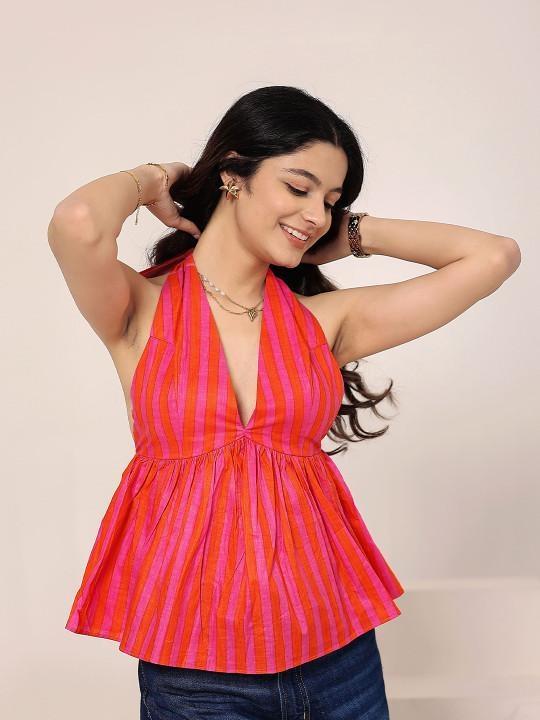
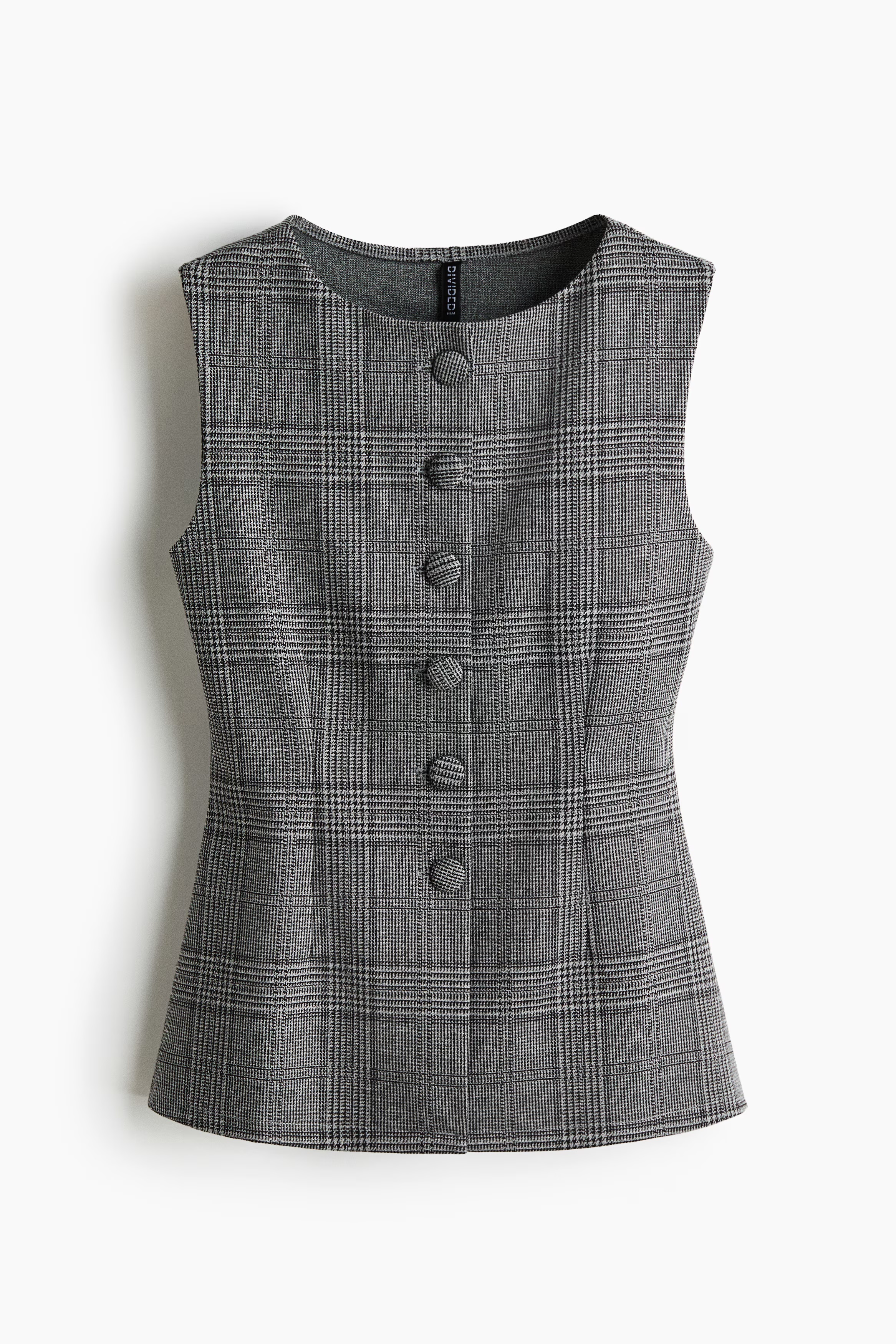
- **Fabric Physics:** The source garment is a structured, woven textile, likely a polyester-viscose or wool-blend suiting fabric. It possesses high structural integrity with minimal elasticity. Unlike the user's current flowy cotton/linen halter, this vest will not drape softly; it will hold its tailored shape. Light reflection should be matte with subtle specular highlights on the thread weave, avoiding any wet or satin-like sheen.
- **Key Features:** The Glen plaid (Prince of Wales check) pattern must maintain alignment across the central button placket. The six large, textured buttons are critical rigid bodies that must not distort. The vertical princess seams (darts) providing the waist shape and the high, round crew neckline must be preserved exactly as seen.
PHASE 2: FIT & DRAPE SIMULATION
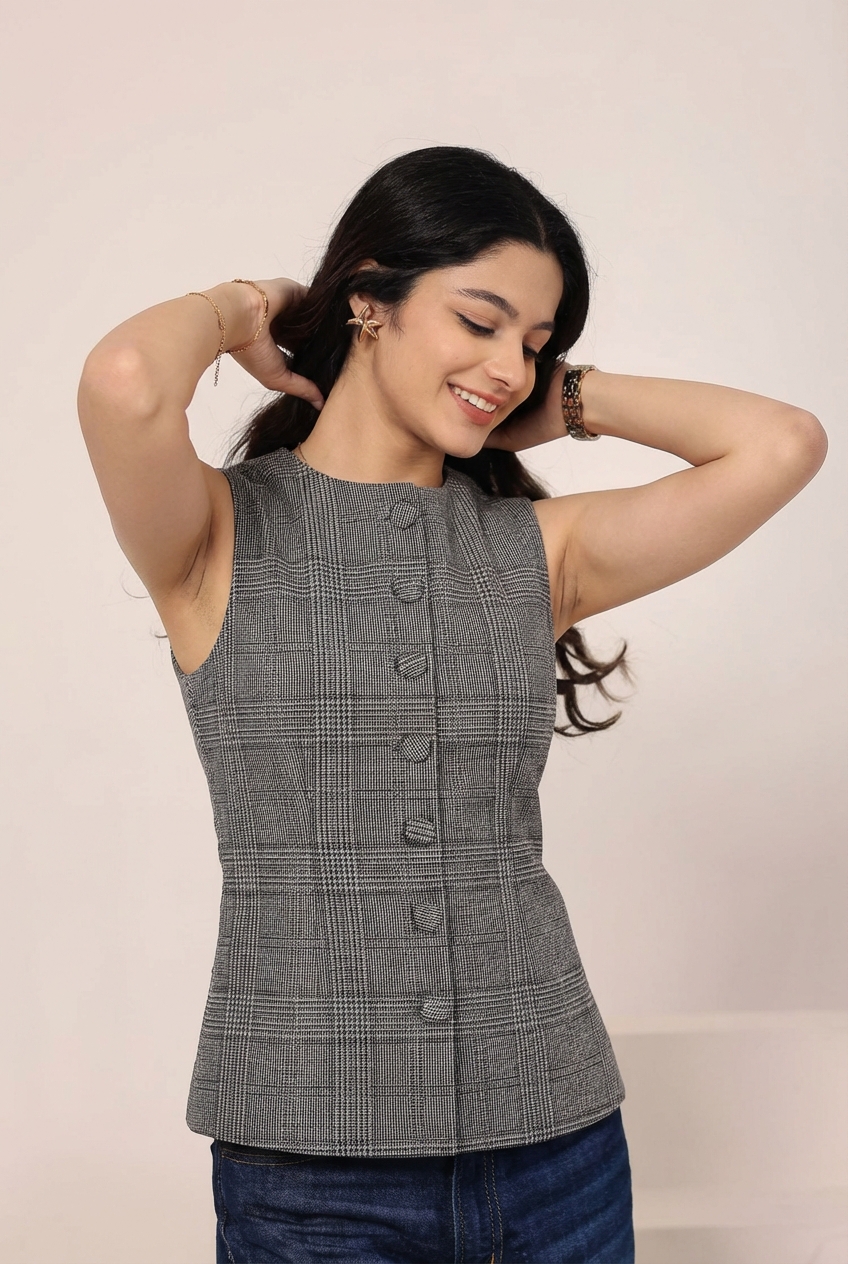
- **Body Mapping:** Due to the user's "arms raised" pose, the ribcage is expanded and lifted. This structured vest should sit higher on the torso than it would in a relaxed pose. Expect minor tension ripples radiating from the armholes toward the bust, but the center front placket must remain relatively straight. The garment shoulder width is wider than the current halter top; the simulation must extend the fabric over the currently bare collarbone area while maintaining the sleeveless cut.
- **Occlusion Handling:**
- **Hair:** The long dark hair flowing behind the neck and the loose strands near the left shoulder (viewer's right) must be segmented. The high collar of the new vest will likely interact with the hair at the nape; the hair must layer *over* the back of the collar.
- **Jewelry:** The user's necklace sits lower than the new garment's high neckline; the necklace should be occluded (covered) by the new fabric.
- **Anatomy:** The user's hands are behind the head and do not occlude the torso. However, the current halter neck straps must be digitally removed and replaced with generated skin texture where the new vest's armholes do not cover.
PHASE 3: ENVIRONMENT & LIGHTING
- **Light Match:** The user image features soft, diffuse studio lighting coming predominantly from the front-left, casting soft shadows on the right side of the torso. The new garment must render with a corresponding shadow gradient, darkening slightly towards the viewer's right side.
- **Color Calibration:** The source image is cool-toned/neutral grey. The user image has a warmer, skin-tone dominant cast. A slight warm filter (temperature shift +300K estimated) should be applied to the grey fabric to integrate it into the room's ambient light, preventing it from looking like a "blue-grey" cutout.
PHASE 4: IDENTITY PROTECTION
- **Facial Lock:** The user's entire head (from the chin up), including facial expression, makeup, and earrings, is a strict "no-modify" zone.
- **Body Integrity:** The user's waistline, arm thickness, and skin tone must remain unaltered. No digital slimming or warping of the ribcage is permitted. The generated skin required to replace the old halter straps must perfectly match the existing skin texture and lighting of the upper chest.