Thinking Process
PHASE 1: VISUAL DECONSTRUCTION
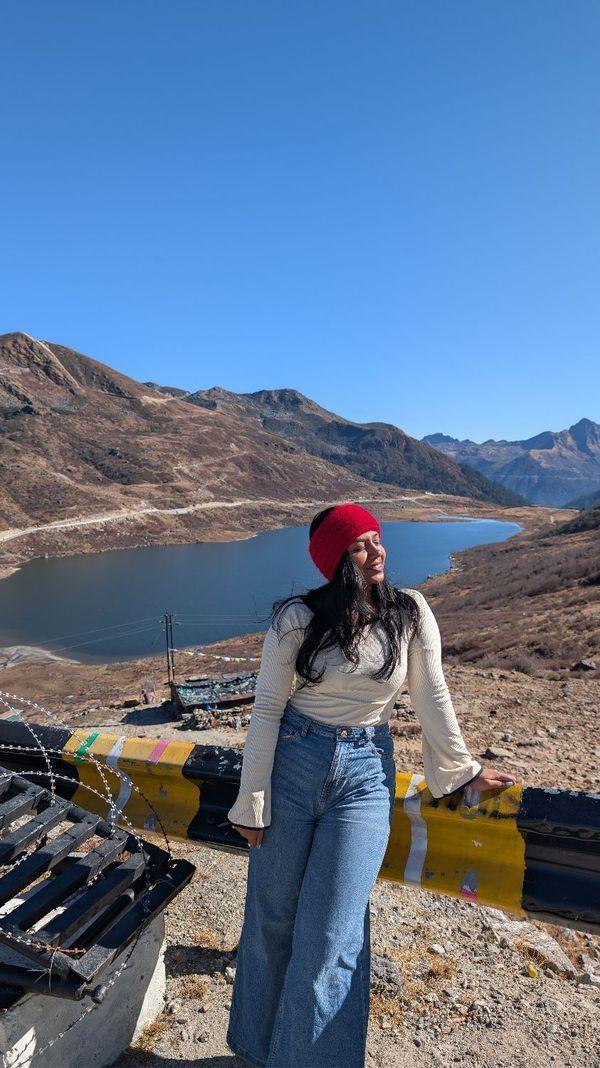
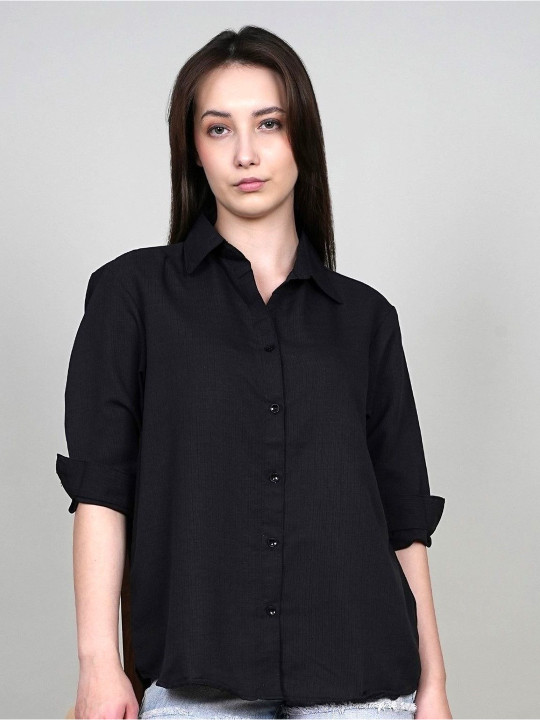
- **Fabric Physics:** The source garment is a matte black woven fabric, likely cotton poplin or a linen blend. It has a structural stiffness greater than the user's current ribbed knit top but maintains a relaxed drape. Light reflection should be diffuse with low specularity; it absorbs light rather than reflecting it, requiring careful texture mapping to prevent it from looking like a flat black silhouette.
- **Key Features:** The sharp collar structure, central button placket, and specifically the rolled-up sleeves (stopping just above the elbow) must be preserved. The loose, relaxed fit of the torso and the curved bottom hemline are essential design elements that differentiate it from the user's current tight-fitting top.
PHASE 2: FIT & DRAPE SIMULATION
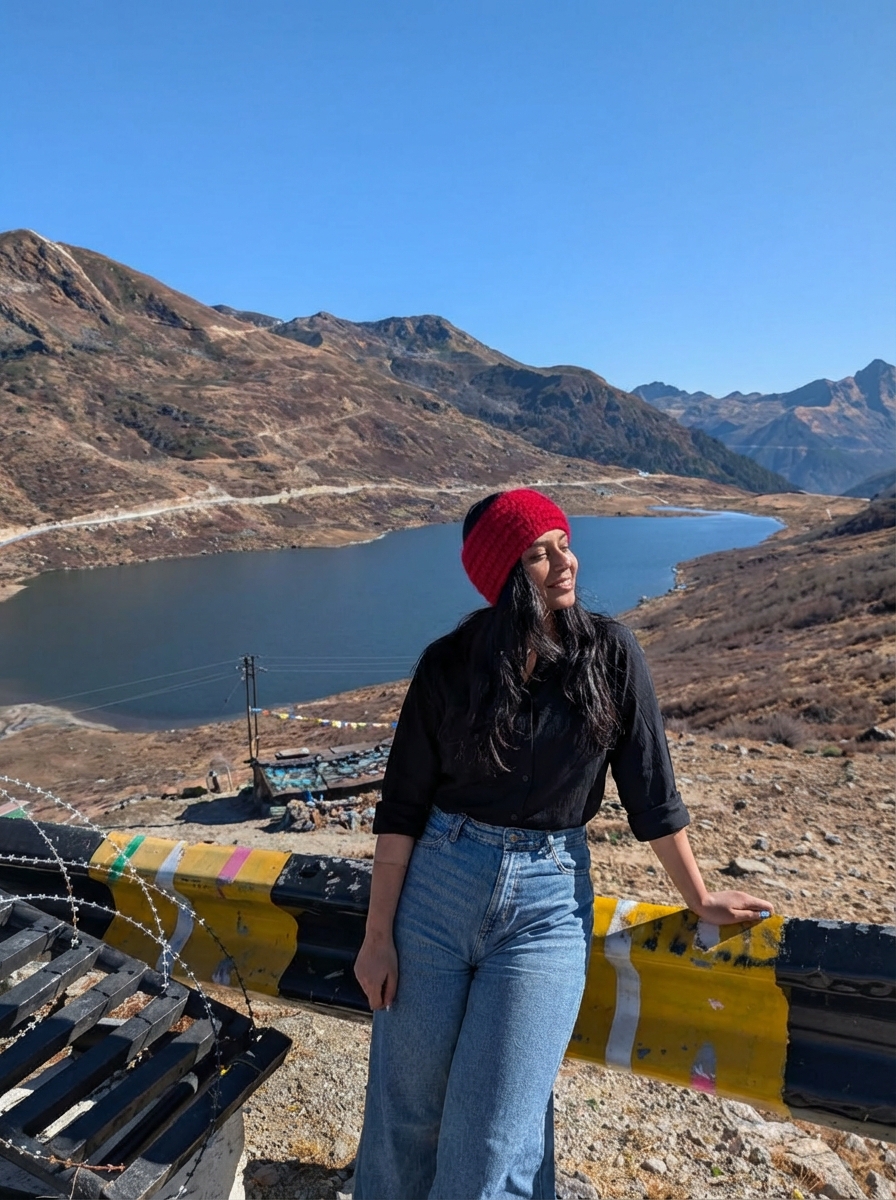
- **Body Mapping:** The target user is leaning slightly back against a guardrail. The new garment is looser than the current tight top; therefore, the simulation must expand the silhouette around the torso. The fabric should hang vertically from the chest due to gravity, creating a gap between the fabric and the user's waist (negating the current hourglass contour of the ribbed top). The collar must sit naturally around the neck base, interacting with the existing red headband without intersection.
- **Occlusion Handling:**
1. **Hair:** The user has long, dark hair flowing over her shoulders and chest. This hair must be segmented and composited *over* the new black shirt.
2. **Arms/Sleeves:** The source shirt has rolled sleeves, while the user wears long sleeves. The simulation must generate realistic skin texture for the user's forearms where the new shorter sleeves end, replacing the white fabric of the original top.
3. **Guardrail:** The user's lower back/hips press against the rail. The back hem of the shirt must deform slightly or drape over the rail if the length dictates.
PHASE 3: ENVIRONMENT & LIGHTING
- **Light Match:** The target environment features harsh, direct sunlight coming from the viewer's right (the user's left), creating high-contrast shadows. The source garment (studio lit) must be re-lit to match this. The right side of the shirt (viewer's perspective) requires strong illumination to reveal fabric texture, while the left side must fall into deep shadow to match the scene's dynamic range.
- **Color Calibration:** The black fabric must not appear grey. It requires deep black levels with a slight cool-blue cast in the shadows (reflecting the blue sky ambient light) and warm highlights (reflecting the direct sunlight) to integrate with the mountain environment.
PHASE 4: IDENTITY PROTECTION
- **Facial Lock:** The user's entire face, neck area above the collarbone, and the red knitted headband must remain completely frozen and pixel-unaltered.
- **Body Integrity:** While the garment silhouette will be wider due to the loose fit of the shirt, the underlying body mesh (shoulder width, arm thickness, and hip placement) must remain exact. Do not slimming or alter the user's anatomical proportions to fit the garment.