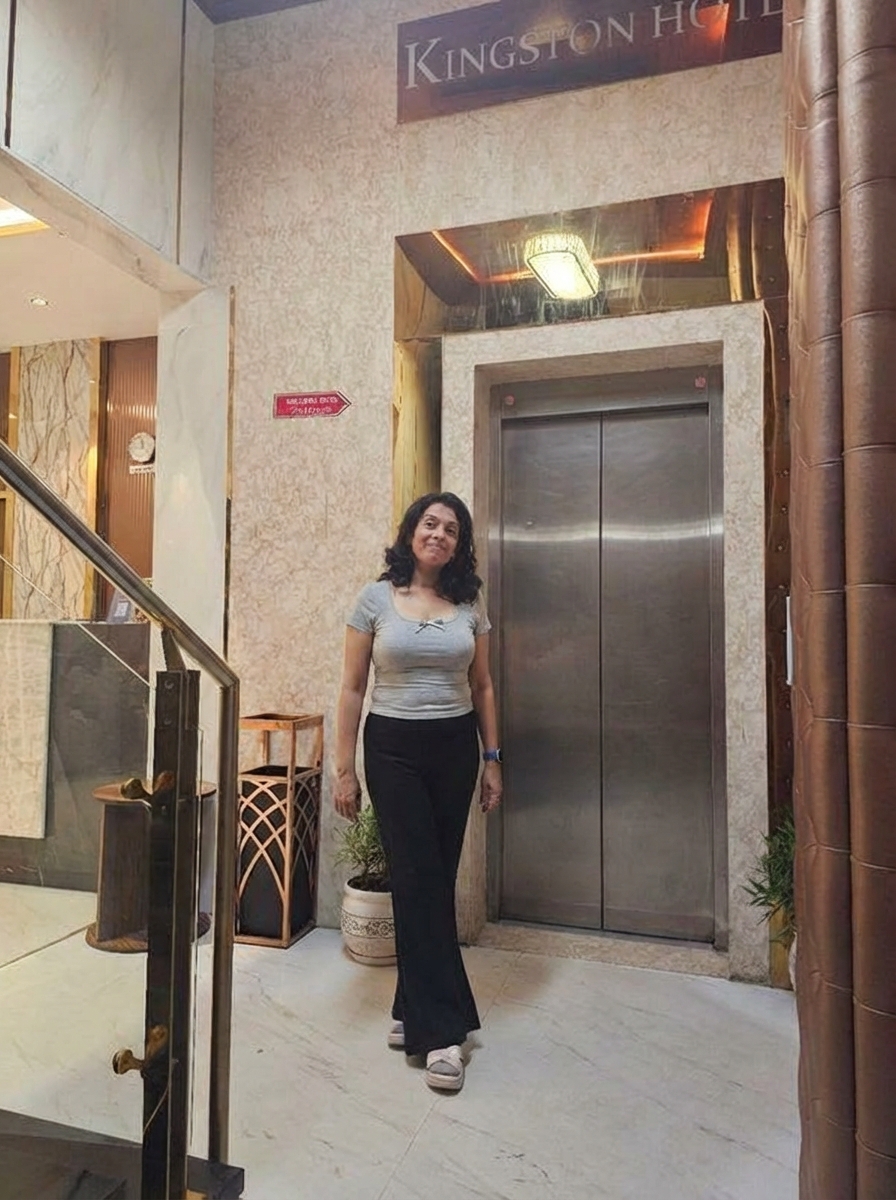
Thinking Process
PHASE 1: VISUAL DECONSTRUCTION
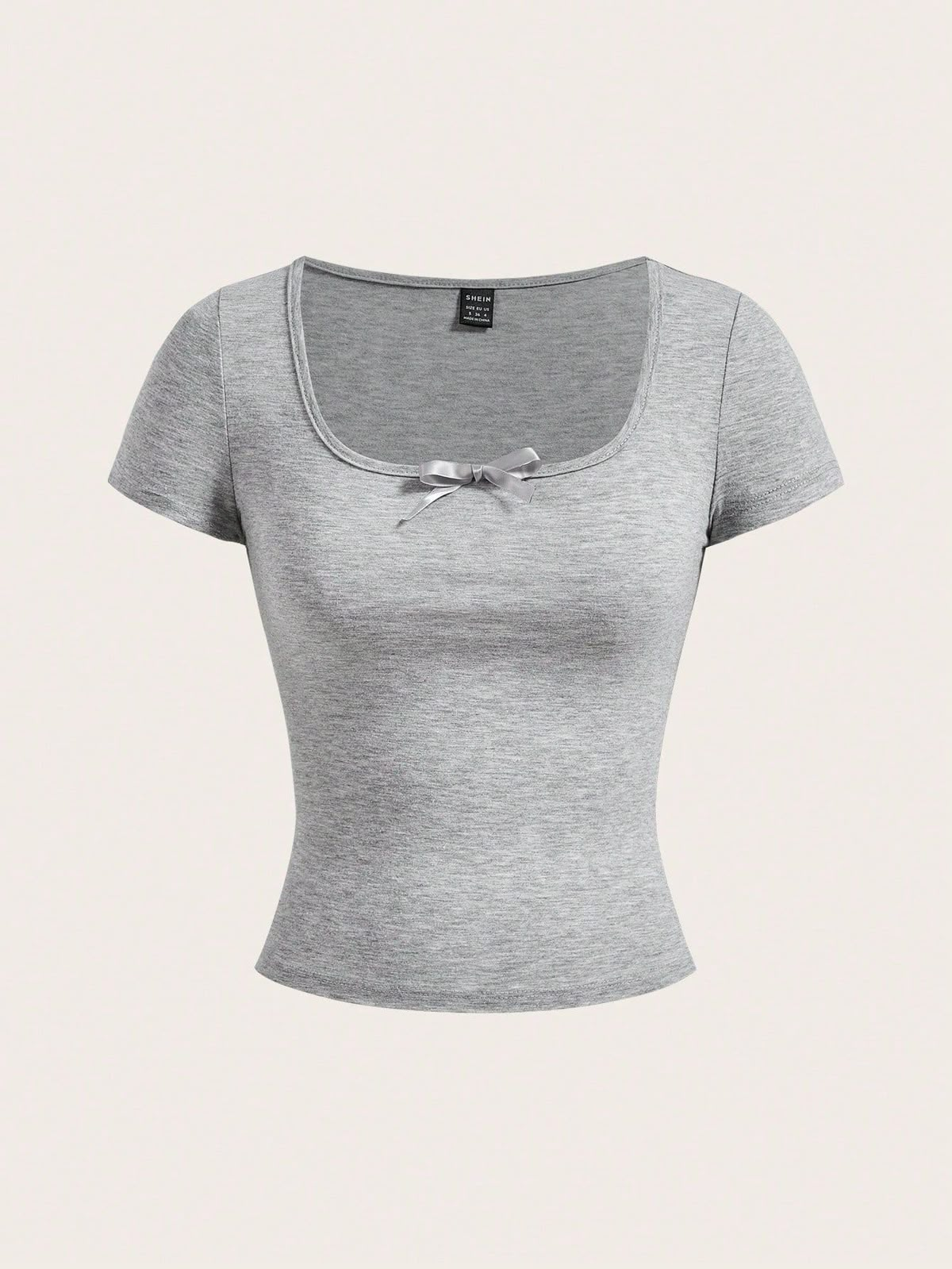
- **Fabric Physics:** The source garment is a heather grey jersey knit (likely cotton-spandex blend). It possesses high elasticity and a matte finish with low specular reflection. Unlike the user's current stiff embroidered cotton, this material behaves like a "second skin," requiring soft-body physics with stretch resistance rather than rigid folding. The satin bow at the neckline requires a distinct shader with higher glossiness (anisotropic reflection) compared to the matte torso.
- **Key Features:**
- The central satin ribbon bow must retain its 3D loop structure and metallic sheen.
- The "heathered" noise texture of the grey fabric must be preserved to avoid looking like a flat solid color.
- The wide scoop/square neckline structure must be maintained without warping.
- The cap sleeve hem stitching and the bottom hemline structure must remain visible.
PHASE 2: FIT & DRAPE SIMULATION
- **Body Mapping:**
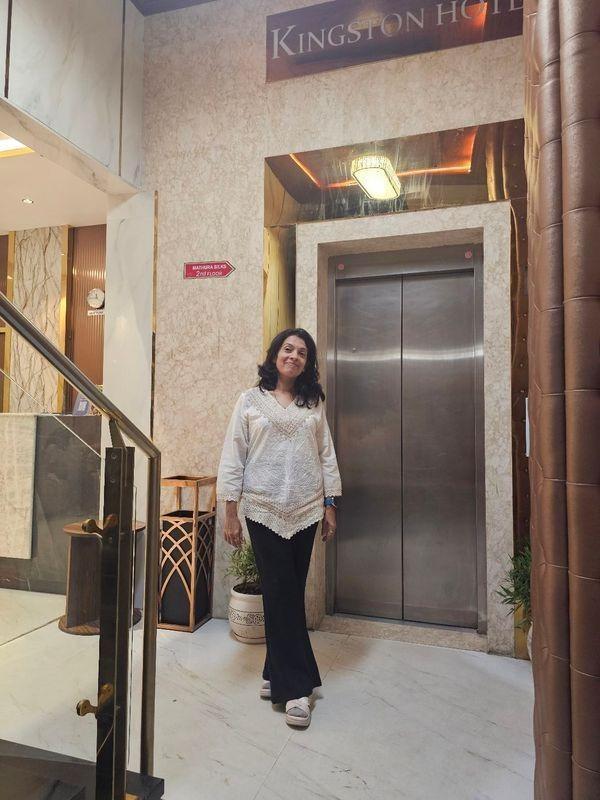
- **Significant Topology Change:** The user is currently wearing a loose, A-line tunic. The source garment is a fitted crop top. The simulation must infer the user's torso shape beneath the current loose clothing to apply a tight fit.
- **Skin Generation:** Since the source garment has short sleeves and the user is wearing long sleeves, the forearm and bicep skin texture must be generatively synthesized to replace the white sleeves of the current tunic.
- **Tension Points:** The fabric should exhibit slight lateral tension across the bust and waist, creating minor horizontal stretch lines rather than vertical gravity-based folds.
- **Occlusion Handling:**
- **Hair:** The user has dark, shoulder-length hair resting on both shoulders. A high-fidelity alpha mask must be created for the hair to ensure the grey tee is layered *underneath* the hair strands.
- **Accessories:** The watch on the left wrist must be segmented and layered over any generated skin/garment area.
PHASE 3: ENVIRONMENT & LIGHTING
- **Light Match:** The user is in a warm, indoor hotel lobby environment with overhead tungsten/yellow lighting. The source garment is currently lit by cool, flat studio light.
- The grey top must be color-graded with a warm yellow/orange tint to integrate with the environment.
- Shadows must be cast downward (from overhead ceiling lights), specifically creating a drop shadow from the chin/neck onto the chest area of the new garment.
- **Color Calibration:** The "heather grey" values must be shifted towards the warm spectrum (decreasing blue channel, increasing red/green gamma) to match the ambient temperature of the marble surroundings.
PHASE 4: IDENTITY PROTECTION
- **Facial Lock:** The region above the mid-neck (jawline, chin, mouth, nose, eyes, and forehead) must remain pixel-perfectly frozen. No lighting spill from the new garment should alter skin tone on the face.
- **Body Integrity:**
- **Strict Prohibition:** Do not slim the user's waist or modify the width of the hips visible in the black pants.
- The transition from the new crop top to the existing black pants must be handled carefully; if the crop top is shorter than the current tunic, the midriff area must be realistically generated or the shirt length adjusted to meet the pant line, maintaining the user's natural BMI and stance.