Thinking Process
PHASE 1: VISUAL DECONSTRUCTION
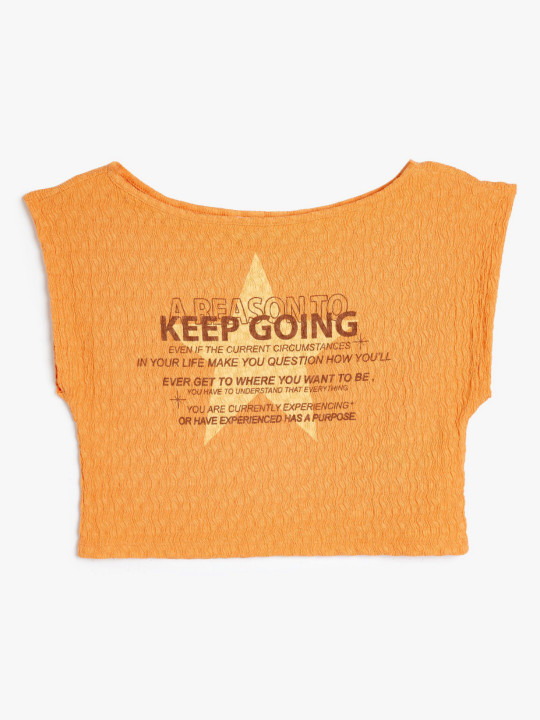
- **Fabric Physics:** The source garment exhibits a textured, crinkled surface (likely a seersucker or plissé knit blend). It possesses a matte finish with high surface friction, meaning it will not reflect light specularly but will show micro-shadows within the fabric ridges. It has a semi-rigid structure due to the texturing, suggesting a boxy drape rather than a fluid cling.
- **Key Features:** The central graphic ("A REASON TO KEEP GOING" text and star emblem) must be preserved without distortion. The garment features a wide boat-neck cut and cap sleeves. The hemline is straight and cropped. The distinct vertical/crinkled texture pattern must remain visible to maintain realism.
PHASE 2: FIT & DRAPE SIMULATION
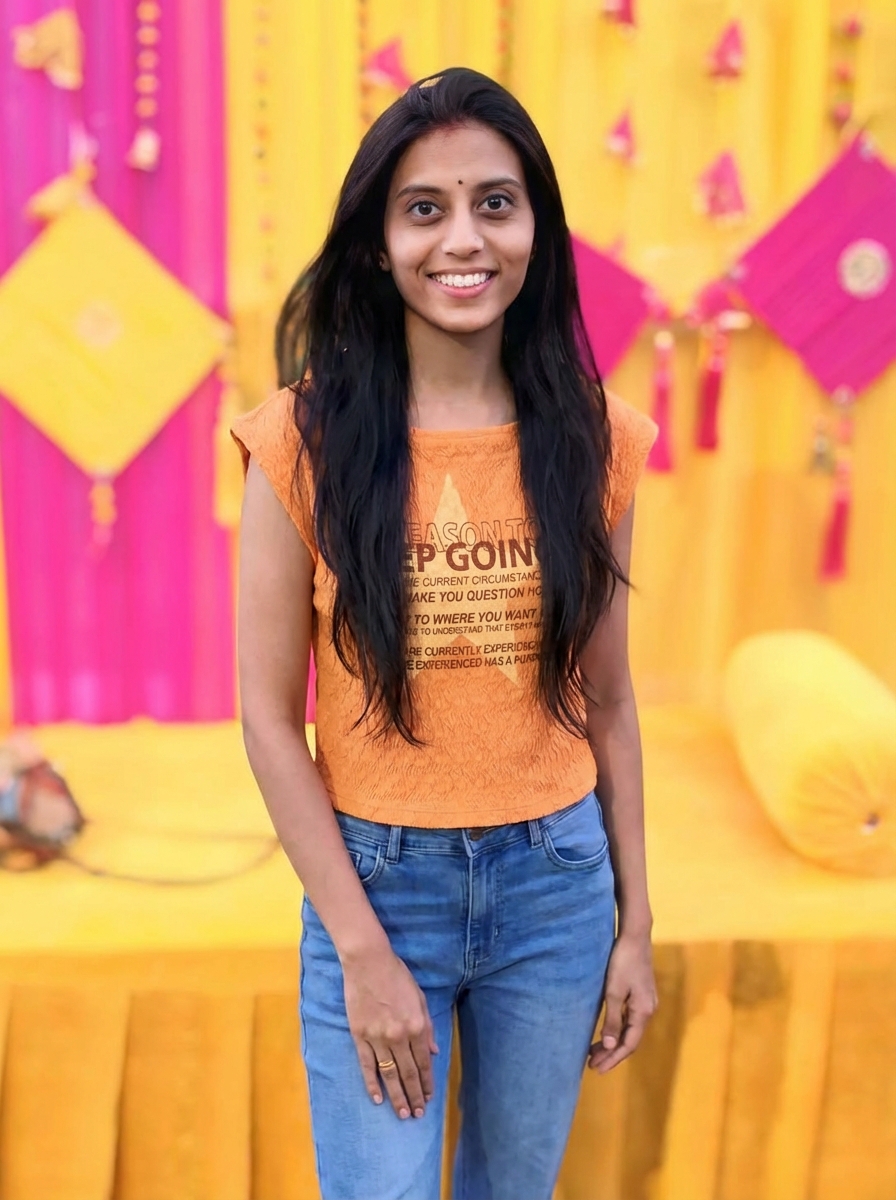
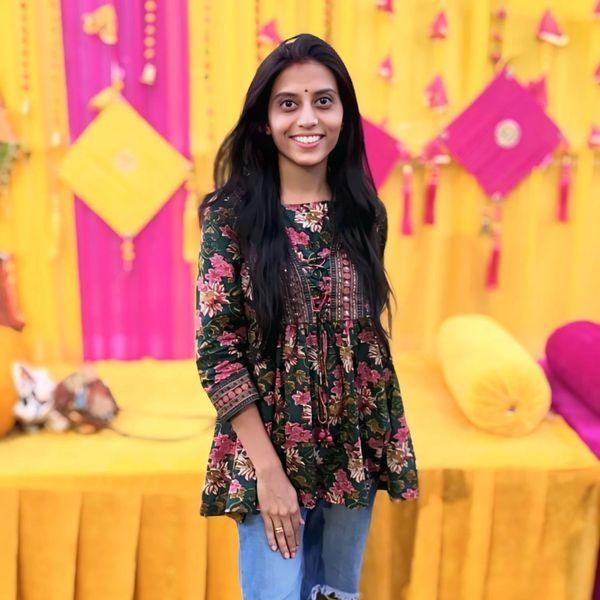
- **Body Mapping:** The source garment is significantly shorter (crop top) than the user's current tunic (long kurta). The simulation must drape the orange top loosely over the shoulders and chest, ending near the natural waistline. Unlike the current A-line tunic, the new garment will hang relatively straight from the bust down due to its boxy cut.
- **Occlusion Handling:** CRITICAL: The user has long, dark hair cascading over both shoulders and covering a significant portion of the upper chest. A precise segmentation mask must be generated for the hair to layer it *over* the new orange top. The user's right hand is positioned low; since the new garment is cropped, the hand will likely not interact with the hem, but the wrist area must remain distinct from the new garment's side seam.
PHASE 3: ENVIRONMENT & LIGHTING
- **Light Match:** The user is in a highly diffuse, warm-lighting environment (yellow and pink decor). The lighting is soft/ambient with no harsh directional shadows. The new garment must accept a warm color cast (yellow/gold ambient bounce) to integrate with the background. Shadows generated by the hair onto the new shirt must be soft and diffuse, not sharp.
- **Color Calibration:** The bright orange of the source cloth must be slightly desaturated or warmed to match the ambient temperature of the room. It should not appear "neon" or cool-toned against the warm yellow backdrop.
PHASE 4: IDENTITY PROTECTION
- **Facial Lock:** The user's entire head, facial expression (smile), neck, and the specific volume and flow of her hair must remain pixel-perfectly frozen.
- **Body Integrity:** Strictly prohibited to alter the user's shoulder width, arm thickness, or torso geometry. The simulation must fit the cloth to the body, not warp the body to the cloth. The visible portions of the jeans/legs below the new cropped hemline must remain untouched.