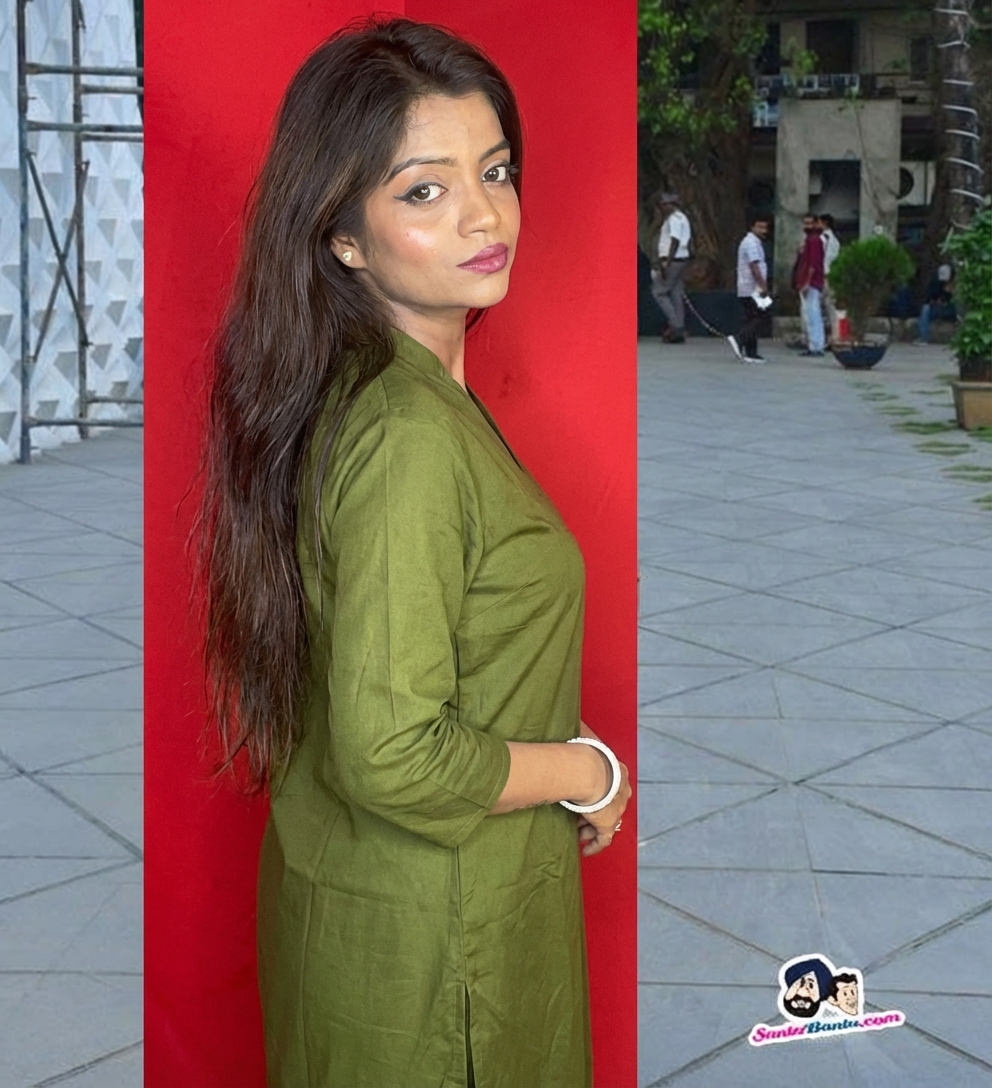
Thinking Process
PHASE 1: VISUAL DECONSTRUCTION
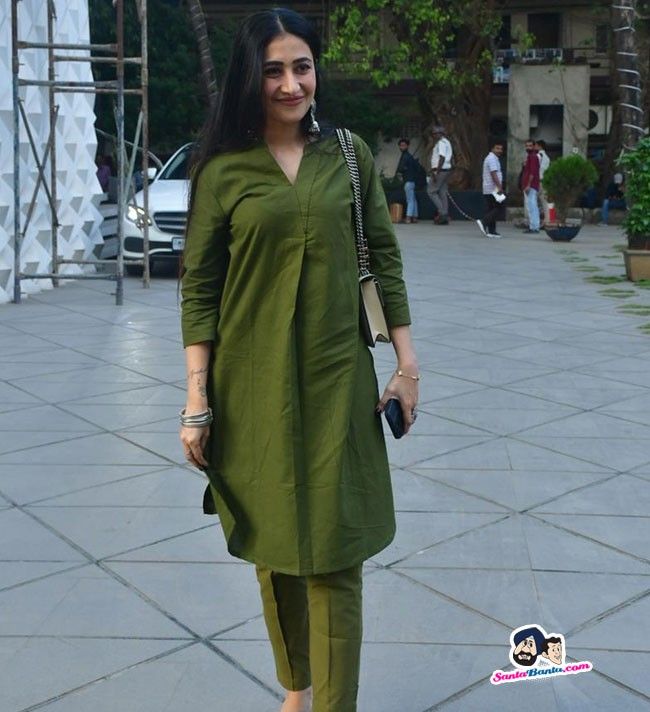
- **Fabric Physics:** The source garment is an olive green tunic (kurta), likely constructed from cotton or a cotton-linen blend. It exhibits a matte finish with low specular reflection. The physics model involves medium-weight structural rigidity—it holds creases and folds rather than draping like liquid silk (e.g., visible drag lines at the waist and armpit). It has high tensile strength but low elasticity.
- **Key Features:**
- The V-neckline with a structured placket and standing collar.
- The central vertical seam/pleat running down the front torso.
- Three-quarter length sleeves (or rolled-up long sleeves).
- **Critical Removal:** The source image contains a cross-body handbag strap overlaying the chest; this texture must be inpainted/removed to ensure a clean garment transfer.
PHASE 2: FIT & DRAPE SIMULATION
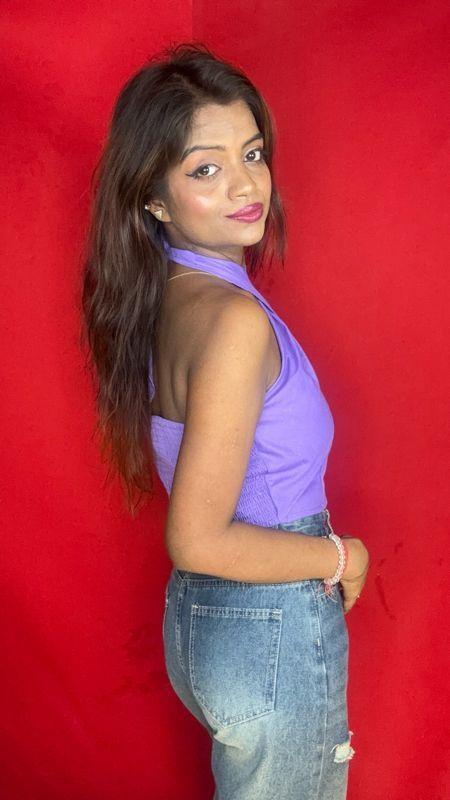
- **Body Mapping:** The target user is in a side-profile/twisted pose. Unlike the source (walking forward), the target garment must drape vertically relative to gravity, not the body's curve. The kurta is a loose/relaxed fit, meaning it should not cling to the user's waist like the current purple crop top. It must hang straight down from the bust point, creating negative space between the fabric and the user's lower back. The hemline will extend past the waist, covering the belt loops of the jeans.
- **Occlusion Handling:**
- **Hair:** The user's long hair falls over her left shoulder and down her back. The Green Kurta must be rendered on a layer *behind* the hair volume.
- **Arms/Hands:** The user's left forearm and wrist cross the torso/hip area. Since the kurta is long, the fabric must pass *behind* the left forearm/wrist but *over* the torso.
- **Shoulder:** The garment shoulder seam must align with the user’s shoulder rotation.
PHASE 3: ENVIRONMENT & LIGHTING
- **Light Match:** The target environment utilizes hard, artificial studio lighting (likely a flash or ring light) coming from the viewer's left, creating strong highlights on the face and deep shadows against the red background. The source garment is lit by diffuse outdoor daylight. The simulation must increase the contrast on the green fabric, adding hard cast shadows on the right side of the folds to match the scene's dynamic range.
- **Color Calibration:** The red background will likely cause "color spill" (diffuse reflection) onto the edges of the green fabric. The olive tone must be color-graded to remove the cool, bluish outdoor ambient light of the source and adopt the warmer, indoor tonality of the target scene.
PHASE 4: IDENTITY PROTECTION
- **Facial Lock:** The user's face, jawline, makeup, and ear (with earring) are strictly frozen. The neck area above the kurta's collar must remain the user's original skin.
- **Body Integrity:** Do not warp the user's arm thickness or shoulder width to fit the source garment's mannequin shape. The user's slim physique must be maintained; the loose kurta should appear oversized relative to her body, preserving her underlying skeletal structure without artificially widening her torso.