Thinking Process
PHASE 1: VISUAL DECONSTRUCTION
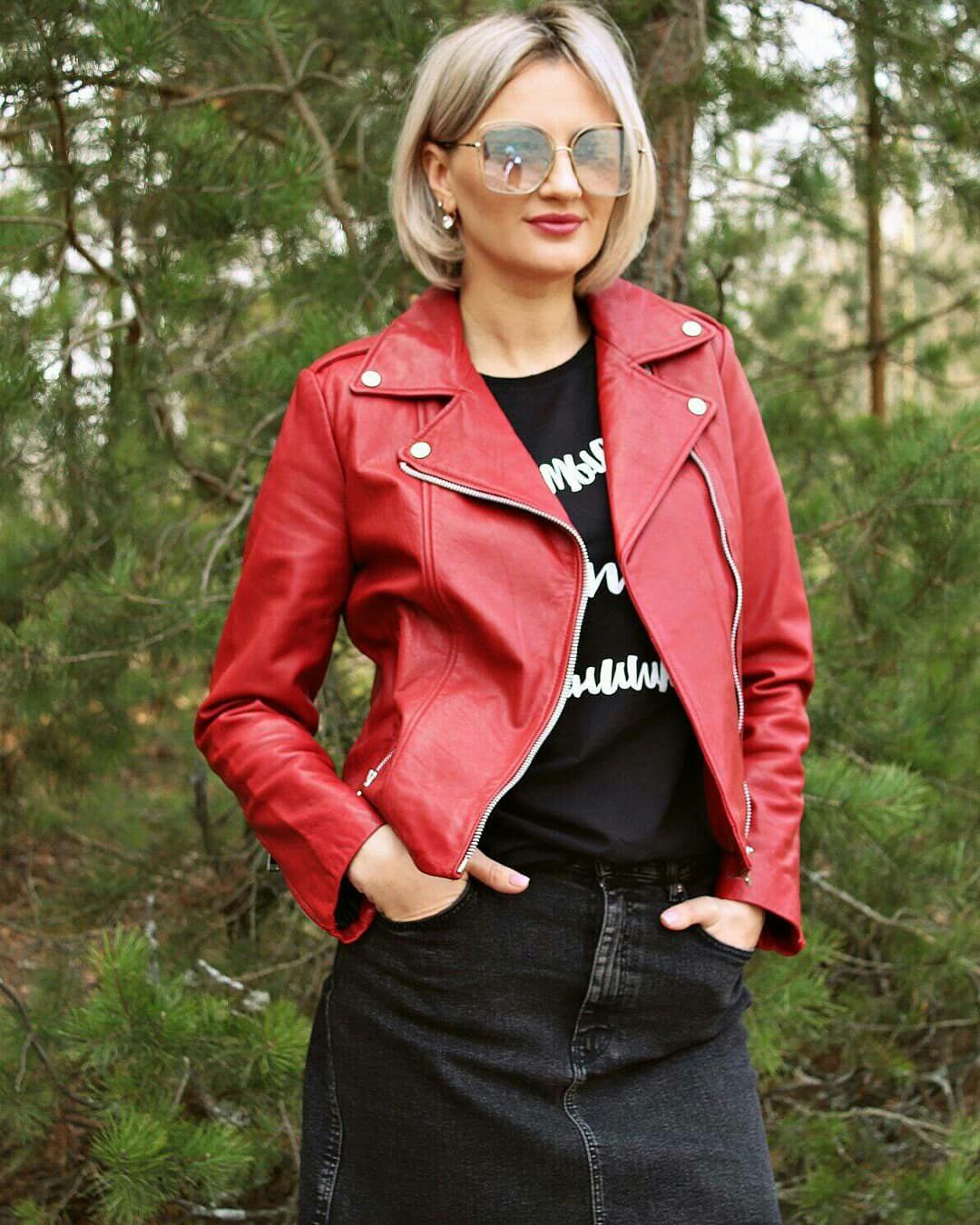
- **Fabric Physics:** The source garment is a structured leather jacket. The material simulation must exhibit high stiffness and weight, resisting small wrinkles. It requires a semi-gloss (specular) shader to replicate the leather grain's reflectivity. The black inner t-shirt requires a matte cotton physics profile with softer, gravity-driven drape.
- **Key Features:** The notched lapels with silver snap buttons, the asymmetrical metallic zipper, and the zippered cuffs are non-negotiable details. The volume of the collar and the distinct "biker" silhouette (slightly cropped length, structured shoulders) must be preserved.
PHASE 2: FIT & DRAPE SIMULATION
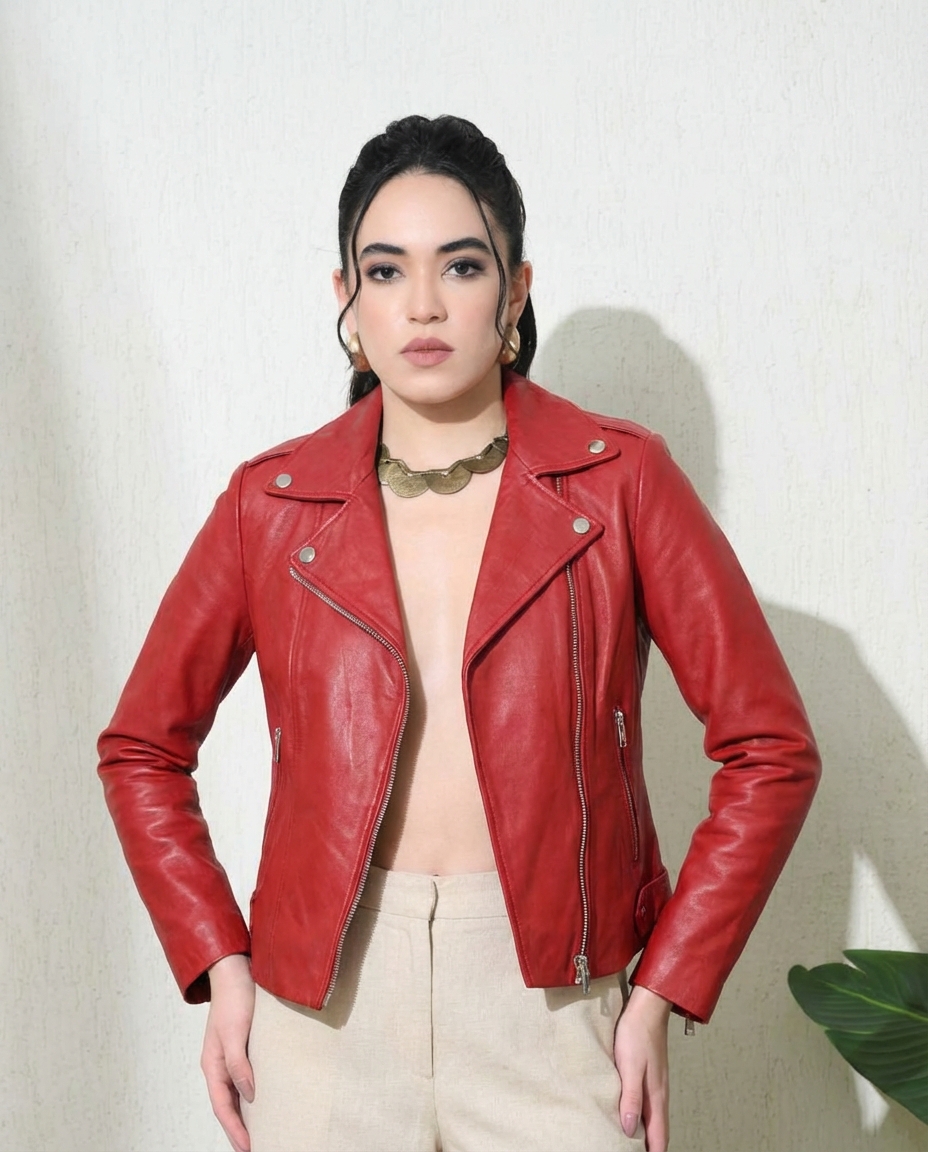
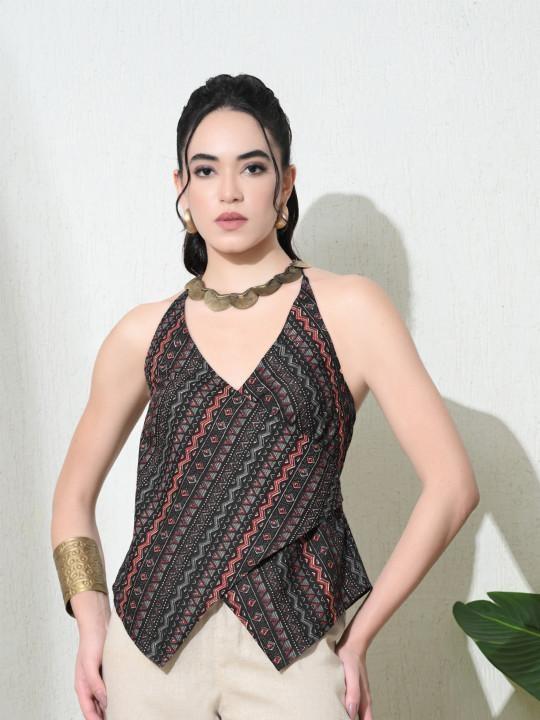
- **Body Mapping:** Unlike the current form-fitting halter top, the leather jacket adds bulk. The simulation must expand the silhouette at the shoulders and arms. The sleeves must extend fully to the wrist, covering the user's bare arms. Since the jacket is open, the center front will hang vertically due to gravity, exposing the black t-shirt (or the user's chest if only the jacket is transferred) along the midline. The hemline should hit slightly below the waist, resting near the top of the hip bone.
- **Occlusion Handling:**
- **Necklace:** The large disc necklace sits high on the clavicle. The jacket's lapels will likely overlap the outer edges of the necklace. The necklace must be layered *under* the jacket lapels but *over* the black under-shirt.
- **Arm Cuff:** The user has a large gold cuff on the right forearm. Since the leather jacket has long sleeves, this cuff will be **fully occluded** (hidden) by the new garment. The simulation must not attempt to render the cuff on top of the leather sleeve.
- **Hands:** The user's thumbs touch the upper thigh area. The jacket hemline may graze the thumbs; the hands must be segmented as the topmost layer to prevent the jacket from clipping through the fingers.
PHASE 3: ENVIRONMENT & LIGHTING
- **Light Match:** The target environment uses high-key, frontal studio lighting with a slight bias from the right, creating a distinct drop shadow on the wall to the user's left. The source image (forest) has diffuse, cool outdoor lighting. The leather texture must be re-lit to reflect the studio's "white" light source, creating sharp specular highlights on the shoulder and lapel ridges, while casting a consistent shadow onto the wall behind the user.
- **Color Calibration:** Remove the cool/green ambient color cast from the forest reflection on the leather. Shift the red leather tone slightly warmer to harmonize with the warm beige tones of the user's trousers and skin.
PHASE 4: IDENTITY PROTECTION
- **Facial Lock:** The user's entire head (hairline to chin), including the dangling hoop earrings, must remain frozen pixel-perfect.
- **Body Integrity:** The user's hip width and leg position (beige trousers) must not be warped. Do not apply "slimming" effects to the waist; allow the leather jacket to add its natural structural width to the upper body without altering the underlying biological mesh.