Thinking Process
PHASE 1: VISUAL DECONSTRUCTION
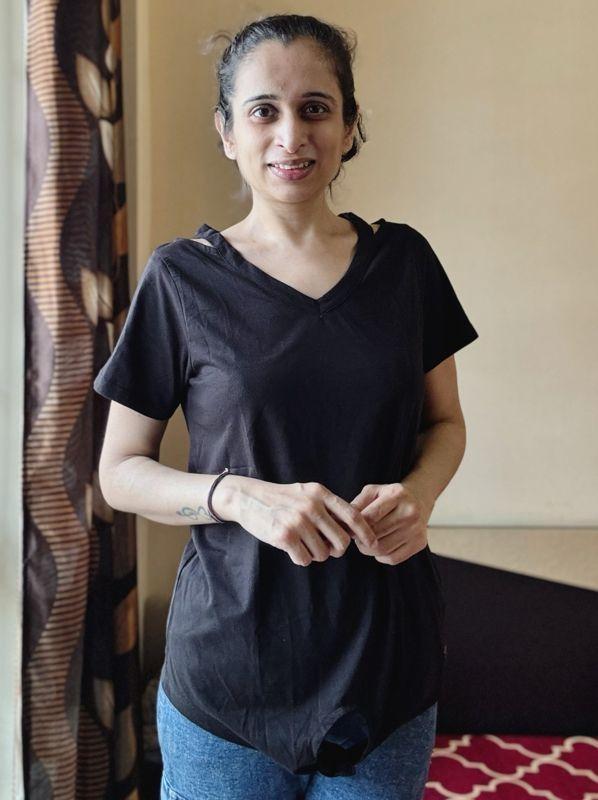
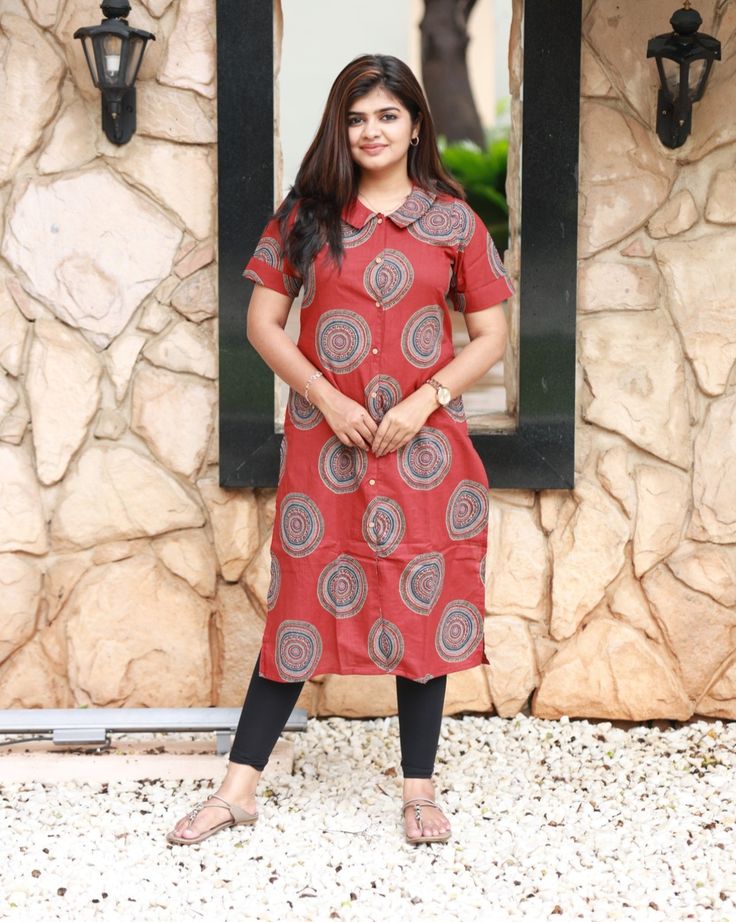
- **Fabric Physics:** The source garment appears to be a medium-weight cotton or cotton-linen blend. It has a matte finish with low specularity (no shine). The physics engine must simulate a semi-structured drape that holds the collar shape and sleeve cuffs rigidly while allowing for softer, gravity-driven vertical folds along the torso. It lacks the elasticity of the user's current jersey knit t-shirt, meaning it will not cling to the body contours but rather hang from the shoulder line.
- **Key Features:** The Peter Pan collar and the central button placket are structural anchors that must be generated at the neck. The cuffed short sleeves must replace the user's current t-shirt sleeves. The repeating "circular medallion" print (blue and beige on rust red) must maintain its pattern scale and not warp excessively over the chest.
PHASE 2: FIT & DRAPE SIMULATION
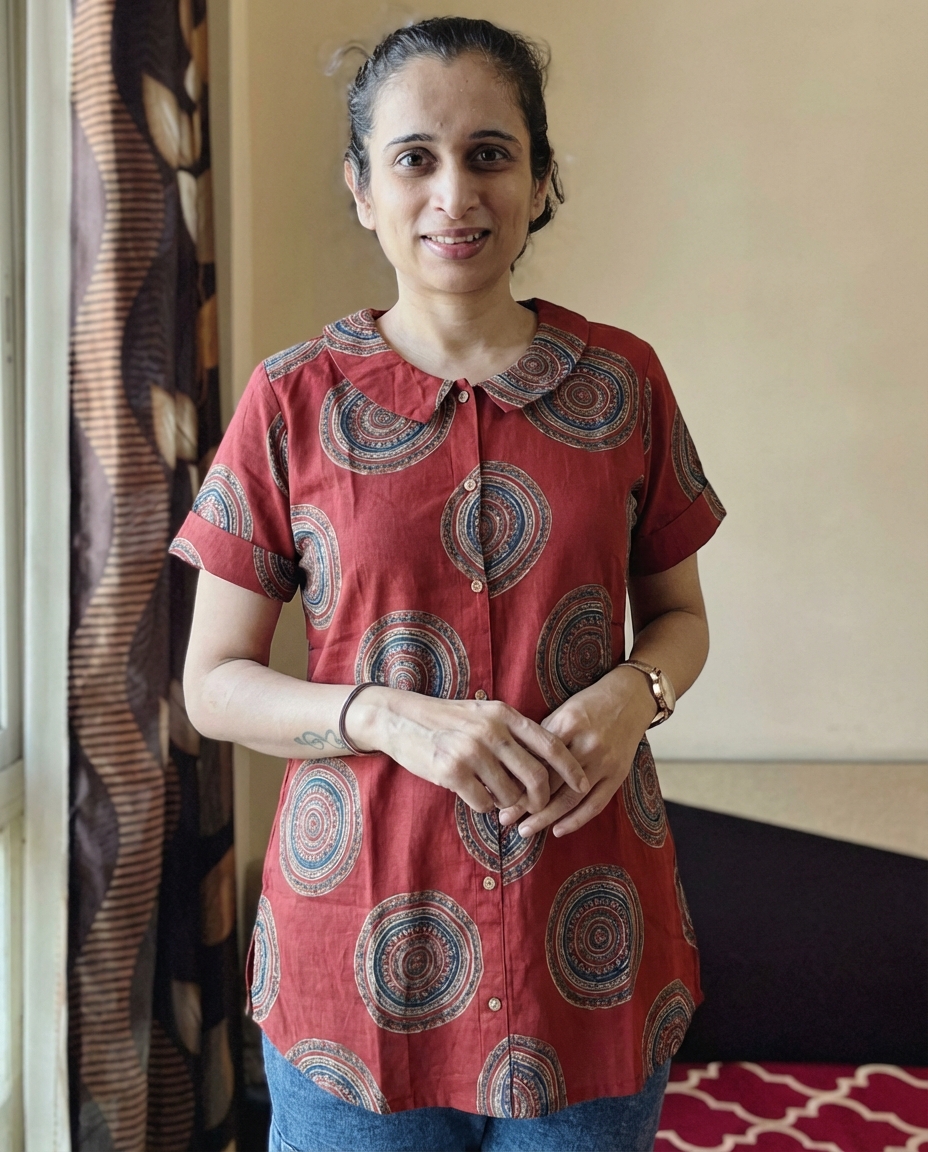
- **Body Mapping:** The new garment is a tunic/kurta, implying a looser fit than the user's current fitted tee. The fabric must bridge the gap between the bust and the hips in a straight line, avoiding the "vacuum-sealed" look under the bust. Because the user's arms are resting against the torso, slight compression folds must generate at the armpit/side-seam interface.
- **Occlusion Handling:** The user's clasped hands and forearms are the critical occlusion layer. A high-precision segmentation mask must be applied to the hands and wrists (including the bracelet/watch). The lower portion of the kurta must visually pass *behind* the clasped hands and drape naturally over the upper thigh/jeans area visible at the bottom of the frame. The tattoo on the right forearm must remain visible and un-blurred.
PHASE 3: ENVIRONMENT & LIGHTING
- **Light Match:** The user is illuminated by a soft, diffused natural light source coming from the left (window side), creating gradual shadows on the right side of the body. The source garment is currently lit by flat, bright outdoor lighting. The simulation must darken the red tone slightly and introduce a lighting gradient: brighter on the wearer's right shoulder/torso, graduating to a shadow on the wearer's left side to match the facial shading.
- **Color Calibration:** The source red is highly saturated (outdoor daylight). To match the user's indoor environment, the saturation of the rust red must be reduced by approximately 10-15%, and the white balance warmed slightly to harmonize with the beige/brown tones of the room's curtains and background.
PHASE 4: IDENTITY PROTECTION
- **Facial Lock:** Absolute pixel preservation required for the entire head region from the chin up, including the hairline and the specific flyaway hairs against the background. The neck masking must be adjusted carefully to accommodate the new higher collar without erasing the user's jawline definition.
- **Body Integrity:** The user's arm volume and shoulder width must not be altered. The simulation is strictly forbidden from slimming the torso; the garment must drape over the user's actual voxel volume. The skin tone of the arms and neck must remain untouched by color bleed from the red fabric.