Thinking Process
PHASE 1: VISUAL DECONSTRUCTION
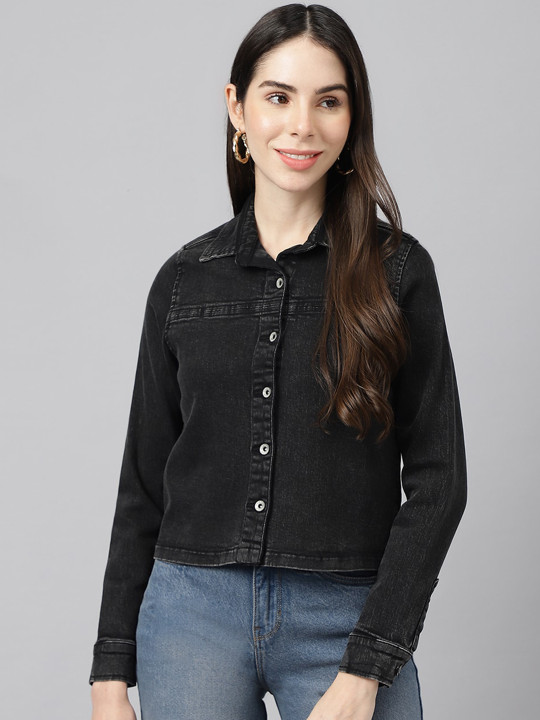
- **Fabric Physics:** The source garment is heavyweight black denim. Unlike the user's current flowy cotton/rayon tunic, this material is rigid and structural. It has high tensile strength with minimal elasticity. Light reflection should be largely matte, with subtle specular highlights revealing the diagonal twill weave texture and significant specular reflection on the silver metal buttons.
- **Key Features:**
- **Silver Shank Buttons:** High-contrast metal buttons on the central placket and cuffs must be preserved and rendered with appropriate metallic sheen.
- **Construction Seams:** The horizontal yoke stitching across the chest and vertical panel seams are critical for the structural look.
- **Collar Structure:** The point collar must maintain its stiffness and not droop like a soft fabric.
- **Hemline:** This is a semi-cropped jacket. It will likely sit higher on the torso than the user's current long kurta.
PHASE 2: FIT & DRAPE SIMULATION
- **Body Mapping:**
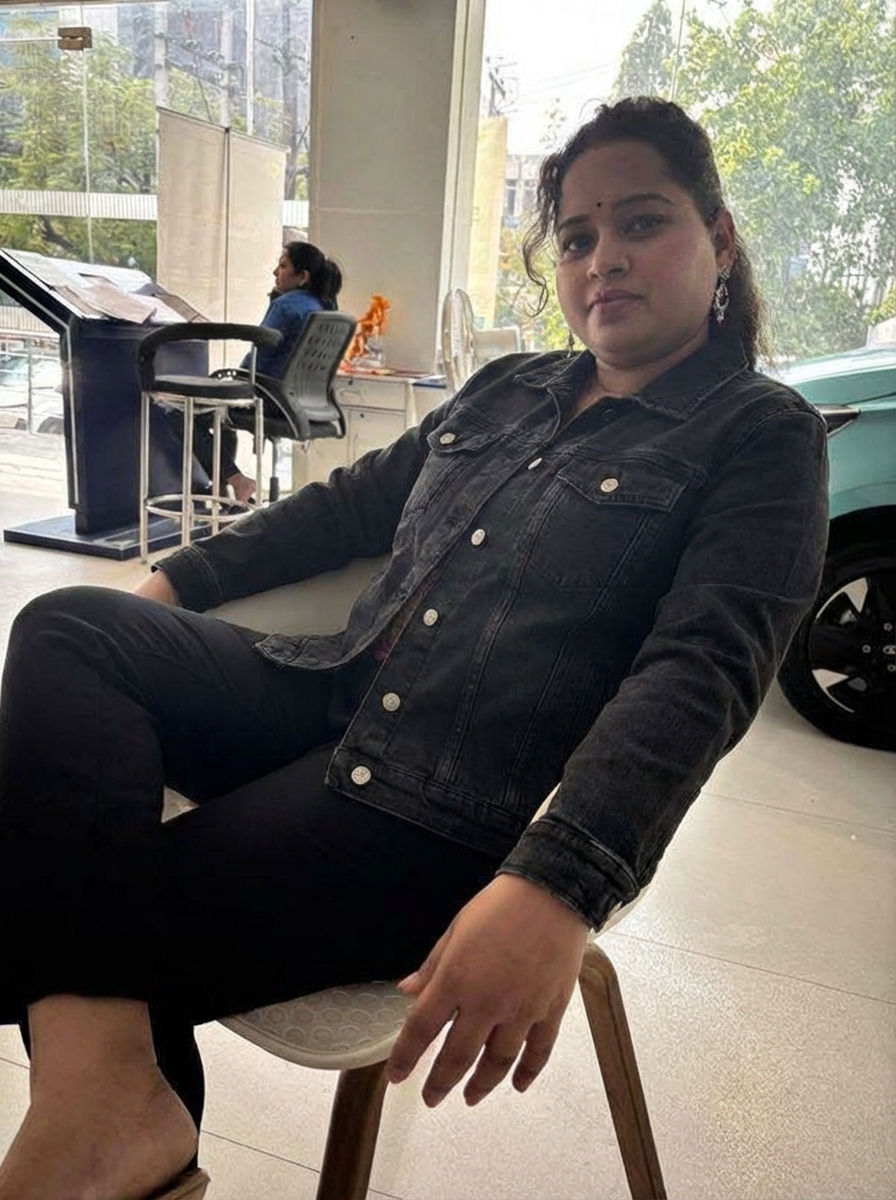
- **Seated Deformation:** Since the user is seated and leaning back, the denim must simulate compression against the chair back. The fabric should naturally bunch horizontally across the stomach area due to the seated posture, rather than hanging straight down.
- **Shoulder Alignment:** The jacket has a set-in sleeve structure. The shoulder seam must align with the user's anatomical shoulder point, replacing the drop-shoulder silhouette of the current tunic.
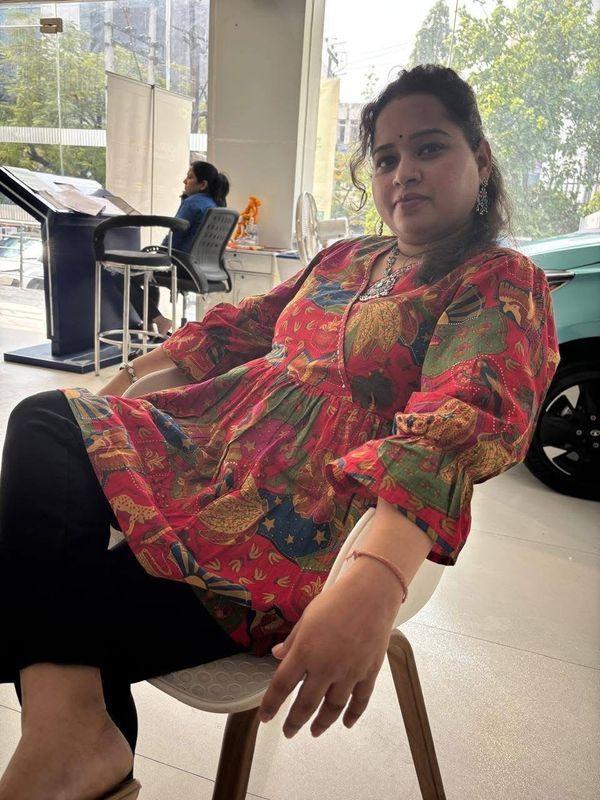
- **Sleeve Volume:** The user's current garment has wide bell sleeves. The simulation must ignore this volume and fit the denim sleeves closer to the arm anatomy, creating rigid creases at the bent elbow (inner arm) rather than soft folds.
- **Occlusion Handling:**
- **Hair:** The user's curly hair falling over the left shoulder (viewer's right) and behind the neck must be segmented and layered *over* the jacket collar and shoulders.
- **Right Hand:** The user's right hand rests on her thigh. Depending on the length of the jacket on her torso, the hemline may interact with the wrist; the hand must remain the top layer if the sleeve extends that far.
- **Necklace:** The silver necklace currently visible will likely be concealed by the high button closure of the jacket; however, if visible at the neck opening, it must overlay the fabric.
PHASE 3: ENVIRONMENT & LIGHTING
- **Light Match:** The user is in a backlit environment with strong natural light coming from the large window behind/left. The new garment requires "Rim Lighting" on the user's right side (viewer's left) to match the window glare. The front of the jacket should be lit by the softer, diffused ambient interior light.
- **Color Calibration:** The source image is cool-toned studio lighting. The target image has a warmer, slightly yellow tint typical of indoor showrooms. The black denim must be color-graded to reflect this warmer ambient temperature, ensuring the black levels match the black of the user's current trousers.
PHASE 4: IDENTITY PROTECTION
- **Facial Lock:** Absolute freeze on the facial region (eyes, nose, mouth), jawline, and the specific texture/volume of the hair. The skin tone on the visible neck area and hands must remain untouched.
- **Body Integrity:** Strictly forbid slimming algorithms. The denim jacket must be warped to fit the user's existing body volume and shape. The simulation must accommodate her bust and waist measurements realistically without distorting the background chair or floor tiles. The gap between the arm and torso must be preserved where visible.