Thinking Process
PHASE 1: VISUAL DECONSTRUCTION
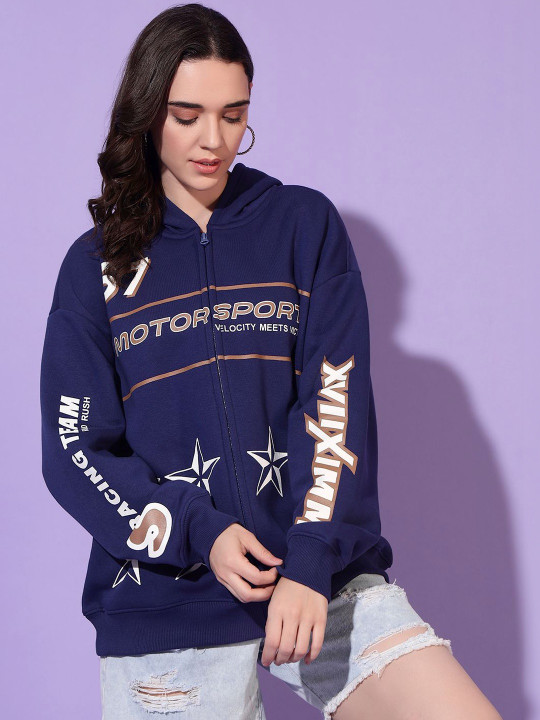
- **Fabric Physics:** The source garment is a heavy-weight cotton-poly fleece blend. It possesses high structural integrity with low elasticity. Unlike the user's current lightweight top, this material is light-absorbent (matte) and will not show specular highlights. The drape should be heavy, creating thick, tubular folds rather than fine ripples.
- **Key Features:**
- **Graphics:** The "MOTORSPORT" chest text, the star motifs on the lower torso, and the vertical "RACING TEAM" text on the right sleeve and "XVII XIMM" on the left sleeve must remain legible but deform naturally with folds.
- **Hardware:** The central zipper line and the metal zipper pull.
- **Structure:** The dropped shoulder seams, the thick ribbed hem at the bottom, and the ribbed cuffs. The hood bulk around the neck area is critical for silhouette accuracy.
PHASE 2: FIT & DRAPE SIMULATION
- **Body Mapping:**
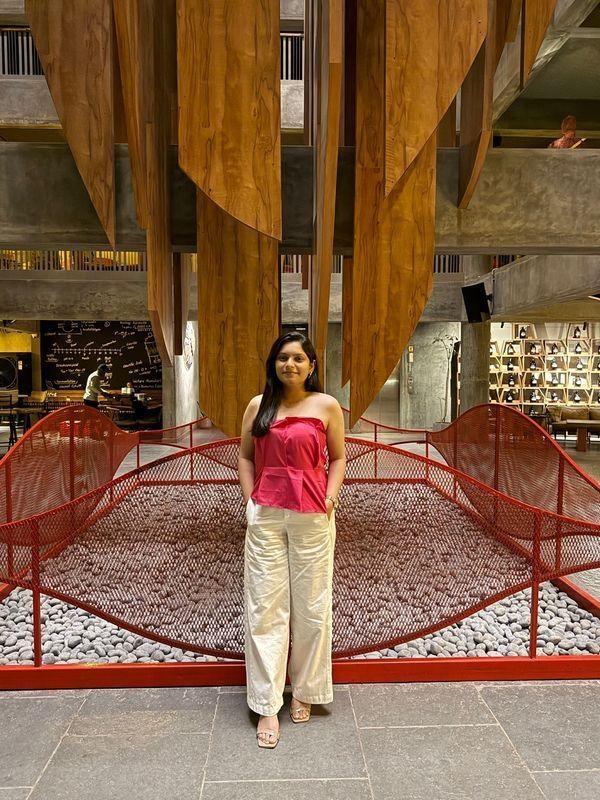
- **Silhouette Change:** The transition must go from the user's current form-fitting strapless silhouette to an "Oversized/Relaxed" fit. The hoodie must add volume to the shoulders and torso, hanging loosely away from the waist.
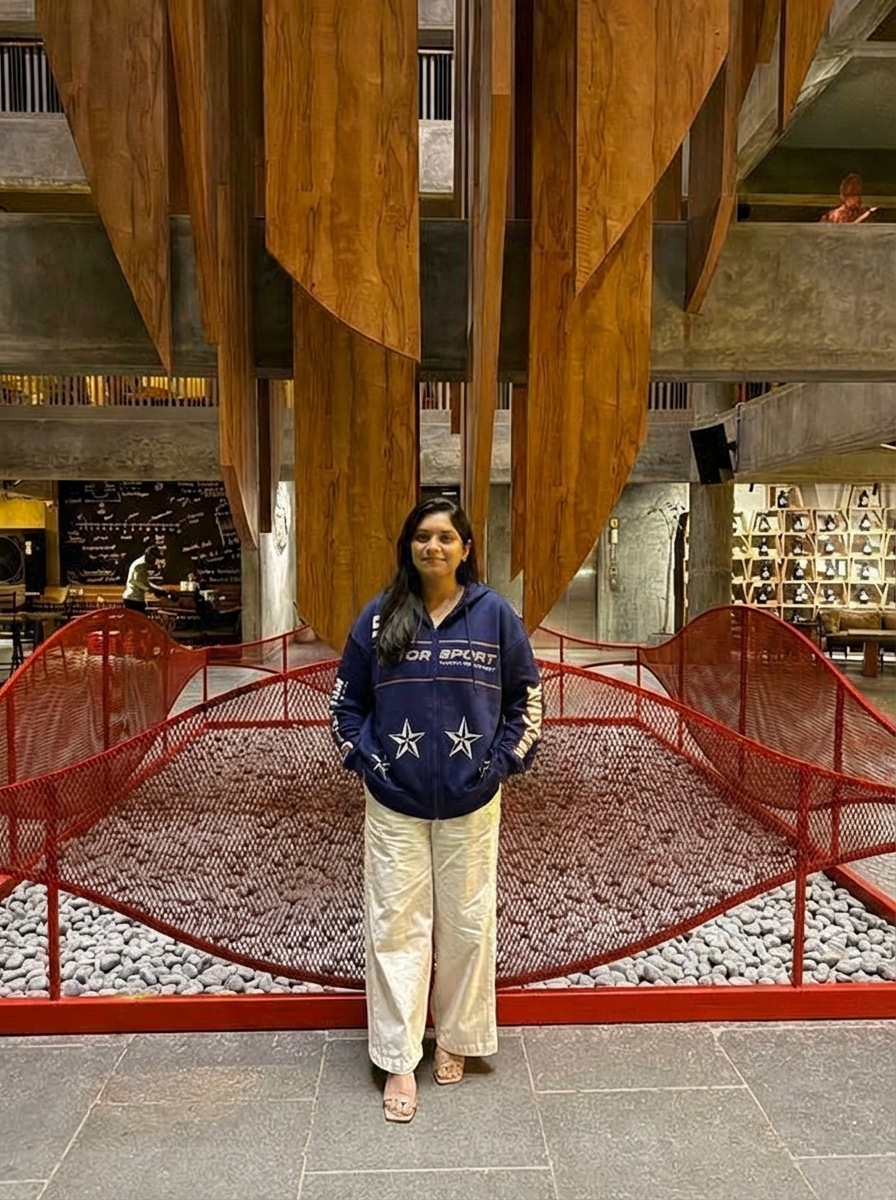
- **The Pocket Problem:** The user's hands are currently inside her pant pockets. The simulation must account for this interaction. The hoodie's bottom hem is long; it should drape *over* the pant waistband. The sleeves will need to bunch significantly at the forearms/wrists because the hands are anchored at hip height, preventing the sleeves from fully extending.
- **Occlusion Handling:**
- **Hair:** The user's long dark hair falls over her shoulders. This must be segmented and layered *on top* of the new hoodie material.
- **Pant Interface:** The white trousers must remain the base layer. The hoodie hem overlaps the top of the trousers. The slight bulge of the hands inside the pockets must be preserved, creating a subtle collision volume that pushes the hoodie fabric outward at the hips.
PHASE 3: ENVIRONMENT & LIGHTING
- **Light Match:**
- **Source Lighting:** The user is in a dimly lit, large architectural space with warm, overhead ambient lighting (yellow/brown tones from the wood).
- **Shadow Casting:** Shadows on the hoodie must be soft and cast downward, consistent with the overhead ceiling lights. Deep occlusion shadows must be generated under the arms and where the hair rests on the fabric.
- **Color Calibration:**
- The source hoodie is illuminated by cool, bright studio flash. The blue tone must be desaturated slightly and warmed (shifted toward amber) to match the ambient temperature of the wooden interior. The stark white graphics on the hoodie must be dimmed to match the exposure levels of the user's white pants.
PHASE 4: IDENTITY PROTECTION
- **Facial Lock:** Absolute freeze on the user's face, neck, and the specific flow of her hair. The jawline must remain sharp and distinct from the new hood collar.
- **Body Integrity:** Strictly forbidden to slime the user's physique to fit the garment. The user's shoulder width and hip width (visible via the pants) must act as the rigid kinematic collision mesh. The hoodie adds volume *on top* of her existing measurements; it does not replace them.