Thinking Process
PHASE 1: VISUAL DECONSTRUCTION
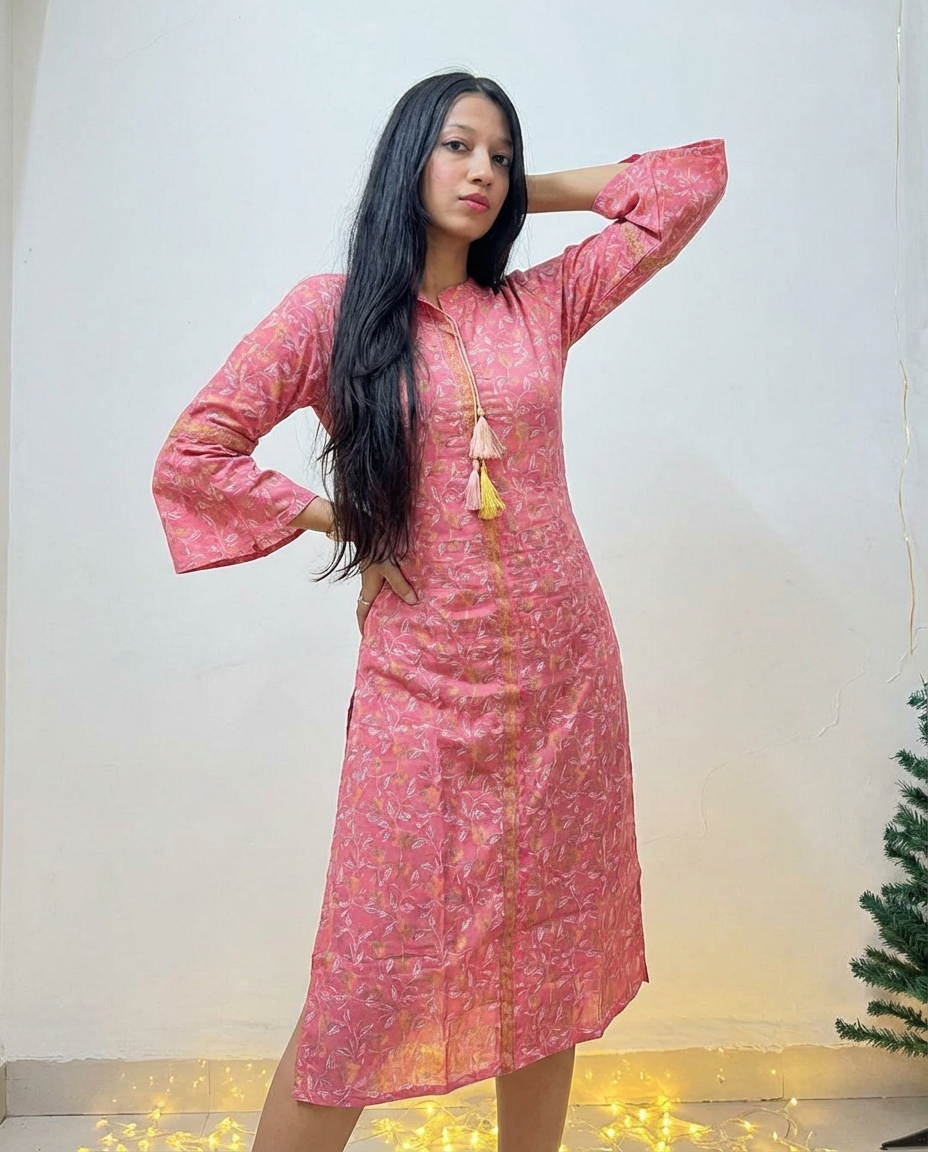
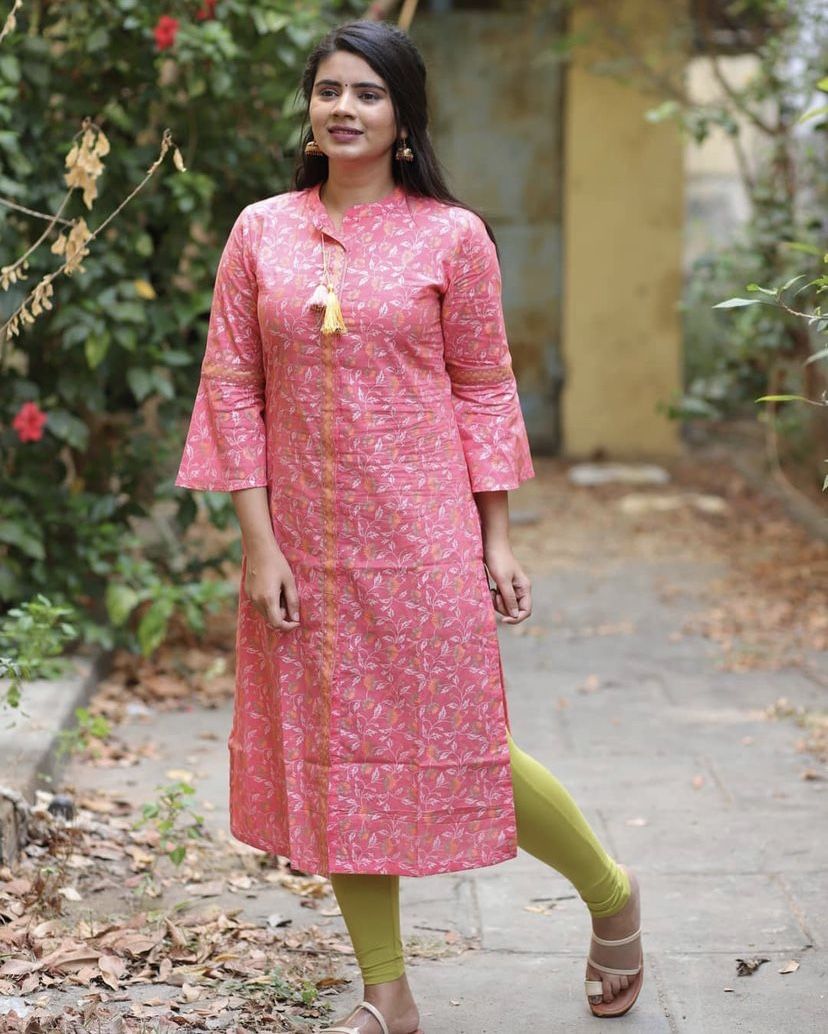
- **Fabric Physics:** The source garment is a printed cotton or cotton-blend Kurta. It possesses a medium weight stiffness—it does not cling like lycra nor flow like silk chiffon. It has a matte finish with low specularity. The drape should be relatively vertical and structured, maintaining the shape of the side slits and the slight flare of the sleeves.
- **Key Features:**
- **Tassels:** The decorative tassels (latkans) at the neckline must be preserved and subjected to gravity (hanging straight down, not plastered to the chest).
- **Sleeve Detail:** The 3/4 length bell sleeves with the gold border/trim.
- **Pattern Continuity:** The intricate white/gold floral print on the pink base must remain consistent across seams.
- **Central Placket:** The vertical gold border running down the center front.
PHASE 2: FIT & DRAPE SIMULATION
- **Body Mapping:**
- **Right Arm (Raised):** Due to the user's raised right arm, the kurta sleeve on this side must slide down towards the shoulder, bunching slightly at the armpit and exposing the forearm. The side seam of the kurta on the right torso will be pulled tight/taut upwards.
- **Left Arm (On Hip):** The left sleeve will encounter collision with the forearm/elbow, creating compression folds at the inner elbow. The fabric at the left waist will bunch and fold where the hand presses against the hip.
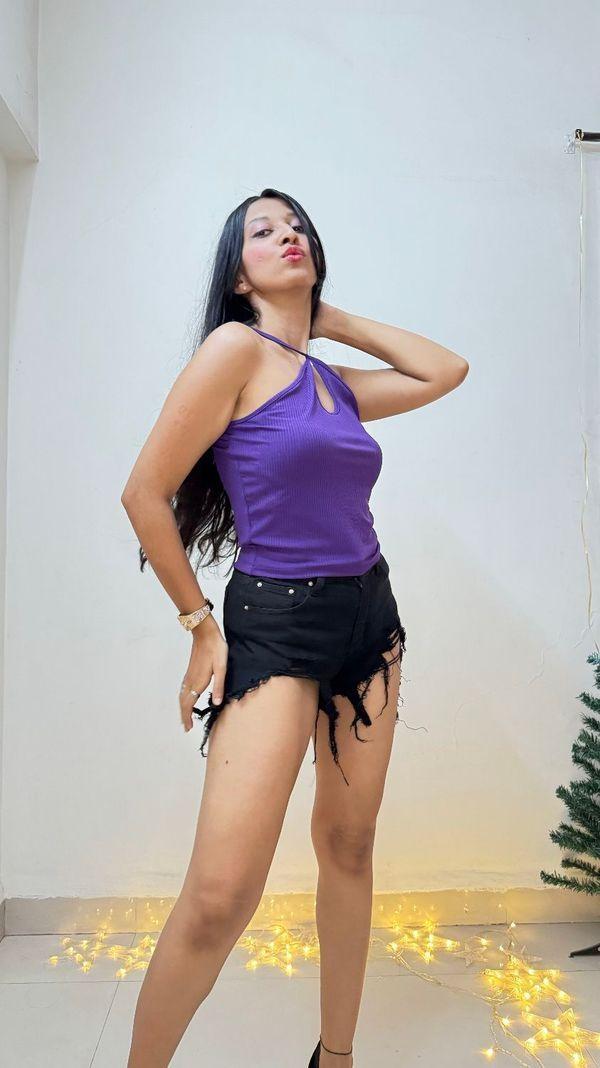
- **Length & Gravity:** The kurta is knee-length. It must drape *over* and completely conceal the user's current black denim shorts. The hemline should hang freely around the mid-thigh/knee area, responding to gravity.
- **Occlusion Handling:**
- **Hair:** The user's long black hair falls over her left shoulder and chest. A strict segmentation mask must be applied to layer the hair *over* the new pink kurta.
- **Left Hand:** The user's left hand is resting on her thigh. The kurta fabric must drape *behind* the hand or be deformed by the hand's pressure; the hand itself must remain visible and layer on top of the fabric if the tunic falls that low.
PHASE 3: ENVIRONMENT & LIGHTING
- **Light Match:** The user is in an indoor environment with flat, diffuse artificial overhead lighting and warm ambient light from the floor (fairy lights). The source image has outdoor, directional sunlight.
- **Action:** Remove the harsh outdoor contrast from the kurta. Apply soft, diffuse shading consistent with the room's white walls.
- **Floor Interaction:** The bottom hem of the kurta should reflect a subtle warm glow from the yellow fairy lights on the floor.
- **Color Calibration:** The pink of the kurta must be color-graded to match the indoor white balance. Desaturate slightly to remove the "outdoor vibrancy" so it integrates with the slightly cooler indoor ambient light.
PHASE 4: IDENTITY PROTECTION
- **Facial Lock:** Absolute preservation of the user's facial features, makeup, and head position. The jawline must remain sharp and distinct from the new collar.
- **Body Integrity:** The user's exposed legs (below the new kurta hemline) and arms must retain their original volume and skin texture. No slimming filters or skin smoothing should be applied to the body. The pose (hip tilt) must remain unaltered.