Thinking Process
PHASE 1: VISUAL DECONSTRUCTION
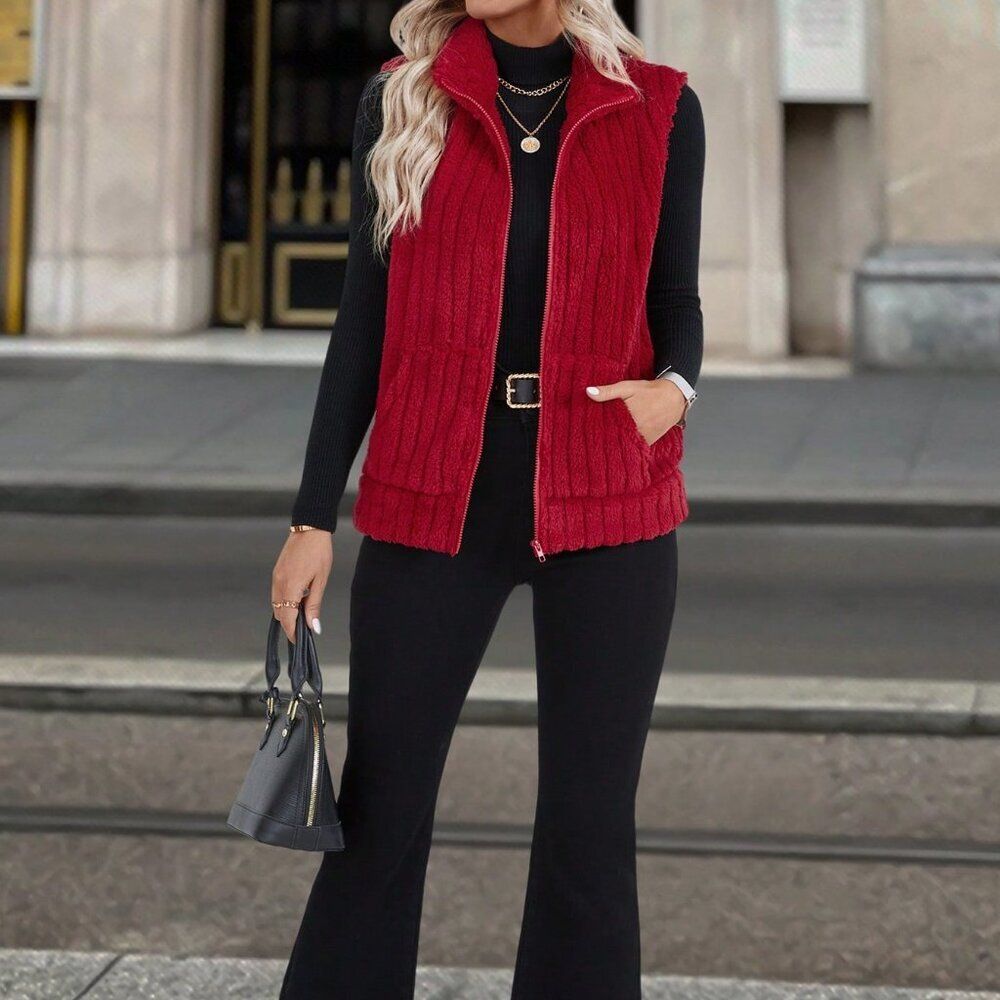
- **Fabric Physics:** The source garment is a textured, ribbed fleece or faux-fur gilet (vest). It possesses high volumetric density and stiffness compared to the user's current thin cotton shirt. It is matte with low specularity, meaning it absorbs light rather than reflecting it shinily, though the ribbed texture creates high-contrast micro-shadows within the vertical grooves.
- **Key Features:**
- Vertical ribbed/corded texture pattern which must follow the warping of the body.
- High stand-up collar (must replace the user's current open collar).
- Silver central zipper mechanism and zipper pull.
- Side pocket welts.
- **Crucial Distinction:** This is a sleeveless vest. The simulation must handle the transition at the armholes (scye) carefully, ensuring the user's skin is visible at the arms, or strictly transferring the vest over the user's torso area.
PHASE 2: FIT & DRAPE SIMULATION
- **Body Mapping:**
- **Shoulders:** The vest has a structured shoulder line that will sit higher and squarer than the user's current drop-shoulder top.
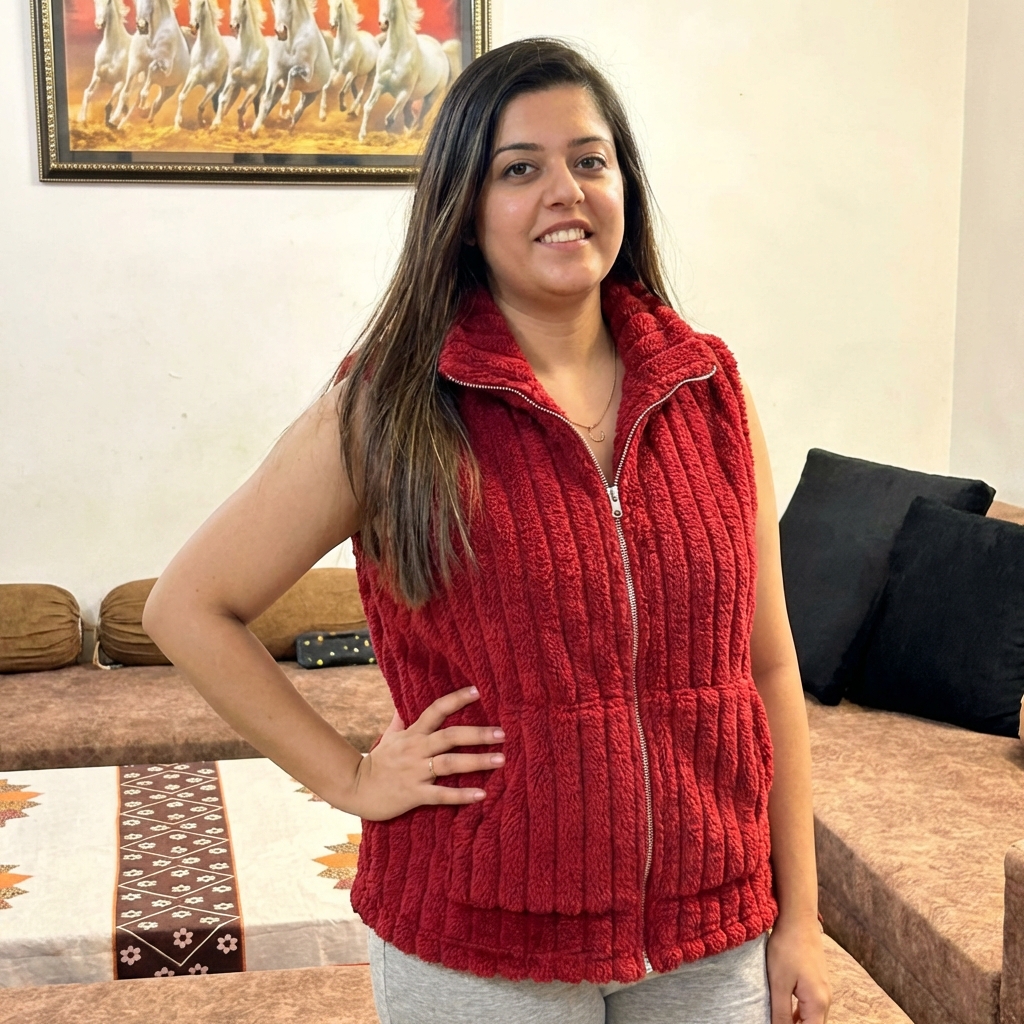
- **Hand-on-Hip Interaction:** The user's right hand is placed on her hip. Because the vest material is thick (fleece), it will not wrinkle finely around the hand like the current shirt. Instead, it should bulk/bunch slightly above the wrist and create a softer, wider curve around the hand placement. The fabric stiffness prevents it from conforming tightly to the waist indent.
- **Torso:** The vest is a straight-cut garment. It should hang relatively straight down from the bust apex, ignoring the waist curve more than the current garment does.
- **Occlusion Handling:**
- **Hair:** The user has long strands of hair falling over her right shoulder and breast. A precise segmentation mask is required to layer the hair *over* the new high collar and vest chest area.
- **Hands:** The right hand (fingers and palm) acts as a hard occlusion layer. The vest must be rendered *behind* the hand.
- **Necklace:** The user's necklace sits low. The new garment has a high collar; the necklace will likely be obscured by the vest's zipper area or must be masked out if the vest closes higher than the chain.
PHASE 3: ENVIRONMENT & LIGHTING
- **Light Match:**
- **Source Light:** Cold/Neutral outdoor daylight (diffuse).
- **Target Light:** Warm, indoor artificial overhead lighting (incandescent). The light source is coming from above and slightly in front of the user, casting shadows downward.
- **Shadows:** The ribbed texture of the vest must cast self-shadows consistent with the overhead light source. A contact shadow must be generated where the vest meets the user's neck and under the user's right hand.
- **Color Calibration:** The source red is a cool-toned crimson. It must be color-graded to a warmer, slightly more yellow-biased red to match the color temperature of the user's room (matching the white balance seen in the background wall and painting frame).
PHASE 4: IDENTITY PROTECTION
- **Facial Lock:** Absolute freeze on the facial region (eyebrows to chin) and the neck structure above the collar line. The user's smile and facial lighting must remain untouched.
- **Body Integrity:** STRICT PROHIBITION on warping the user's body mesh to match the source model's slender frame. The vest must be warped to fit the user's existing BMI and torso width. The user's arm thickness and hip width must remain 100% original.