Thinking Process
PHASE 1: VISUAL DECONSTRUCTION
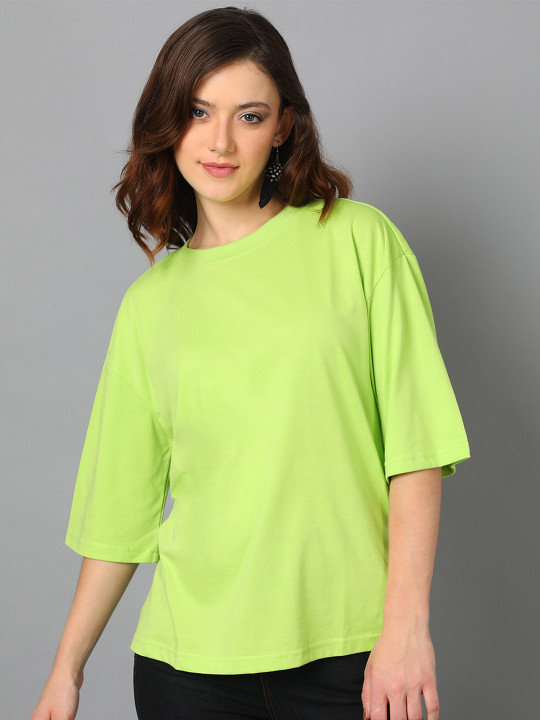
- **Fabric Physics:** The source garment consists of a medium-weight cotton jersey knit. It possesses a matte finish with diffuse light reflection (low specularity). The material has moderate stiffness, allowing it to hold the "boxy" shape of the drop shoulders while permitting soft vertical draping.
- **Key Features:** The solid lime green colorway must be maintained. Critical structural details include the ribbed crew neckline, the distinct drop-shoulder seam placement, the wide elbow-length sleeves, and the double-stitched straight bottom hem. The lack of buttons or zippers requires a seamless surface rendering.
PHASE 2: FIT & DRAPE SIMULATION
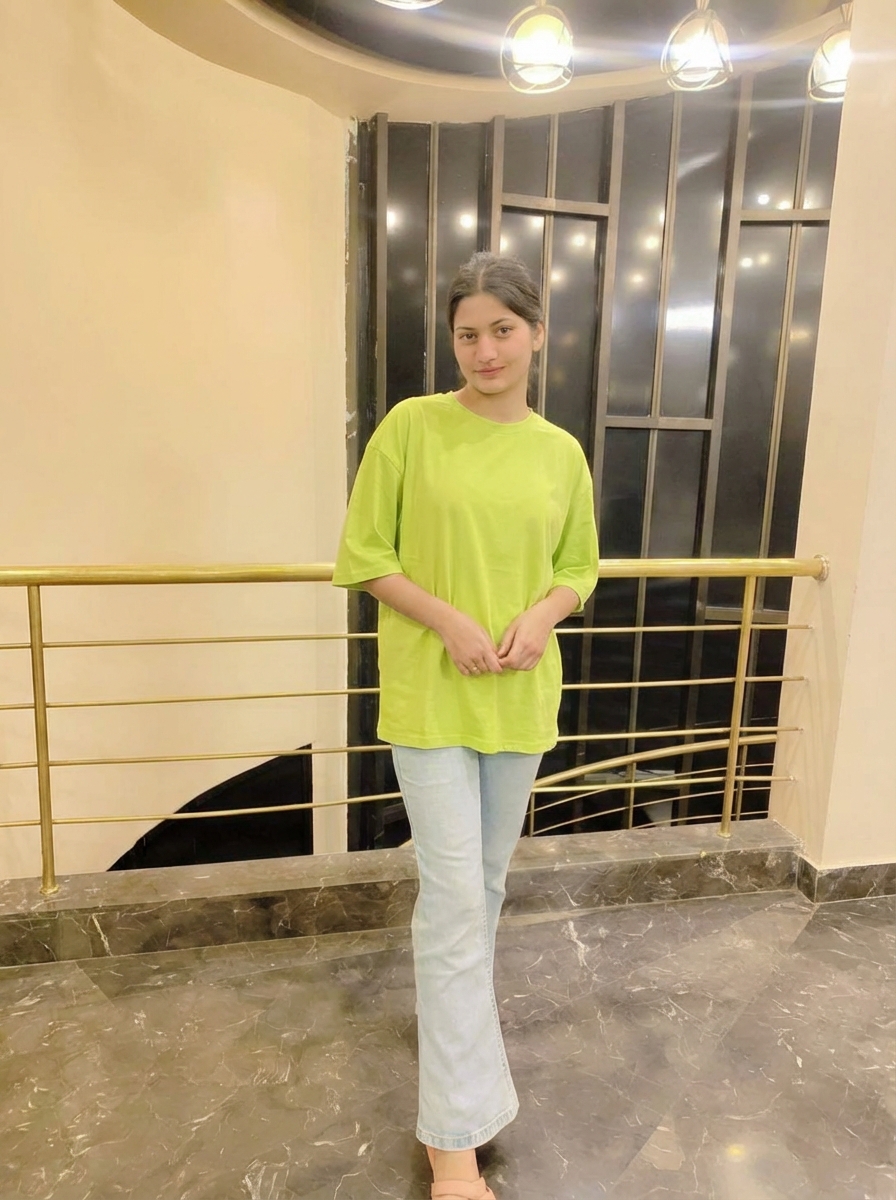
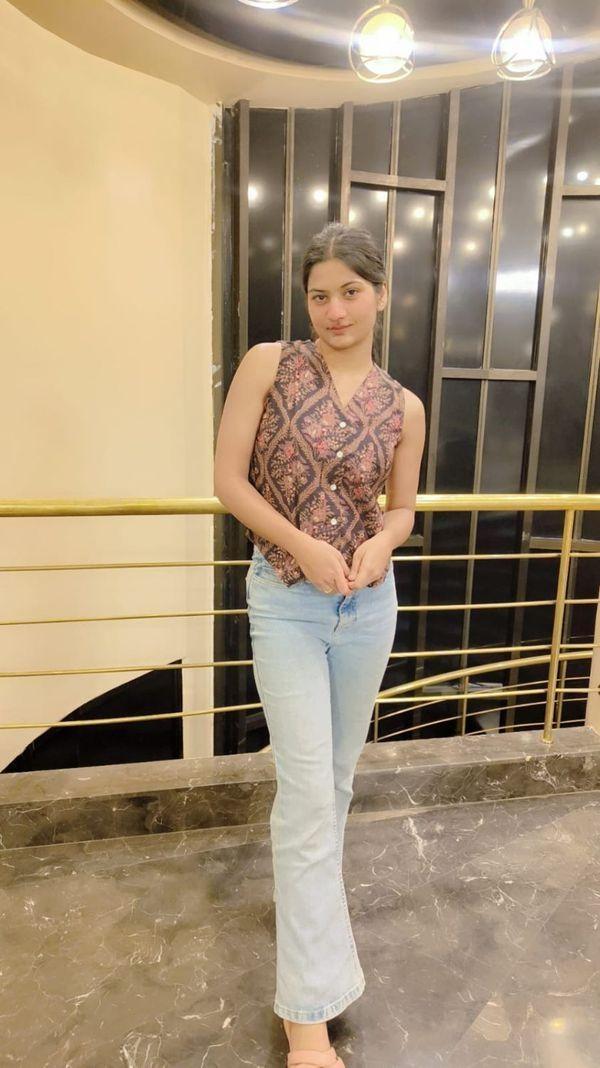
- **Body Mapping:** The source garment is oversized/relaxed fit. On the target user, the silhouette must expand significantly outward from the current fitted vest. The drop shoulders must fall well below the user's biological shoulder acromion. The wide sleeves should extend to the elbow or slightly below, hanging loosely around the biceps without clinging. Given the user's pose (leaning slightly back), the front hem should drape straight down, potentially breaking slightly where the hands are clasped.
- **Occlusion Handling:** The user's hands are clasped at the waistline. The simulation must determine if the shirt length covers the hands or tucks behind them. Assuming an untucked look, the fabric must simulate contact compression where the wrists press against the torso. The loose strands of hair near the ears and neck must be segmented and layered *over* the new neckline. The lower body (jeans) must be masked out to ensure the shirt hem layers correctly over the waistband.
PHASE 3: ENVIRONMENT & LIGHTING
- **Light Match:** The target environment features warm, overhead artificial lighting (tungsten/gold hue) causing downward-casting soft shadows. The flat, cool studio lighting of the source image must be completely relit. Shadows must be generated under the new sleeve openings, under the neckline, and within the vertical folds of the fabric.
- **Color Calibration:** The source lime green is cool-toned. It must be color-graded with a warm, yellowish tint to match the ambient temperature of the room. The brightness of the green must be reduced slightly to account for the indoor setting versus the bright studio flash.
PHASE 4: IDENTITY PROTECTION
- **Facial Lock:** The user's entire head region, including the hairline, facial features, and skin tone, must be frozen and protected from any warping. The neck area above the new crew collar must remain original.
- **Body Integrity:** The user's skeletal structure (shoulder width and arm length) must dictate the drape. Do not slim the user's waist or alter the hip width to fit the garment; the garment must deform to fit the user. The lower body (legs, jeans, shoes) must remain pixel-perfectly unchanged.