Thinking Process
PHASE 1: VISUAL DECONSTRUCTION
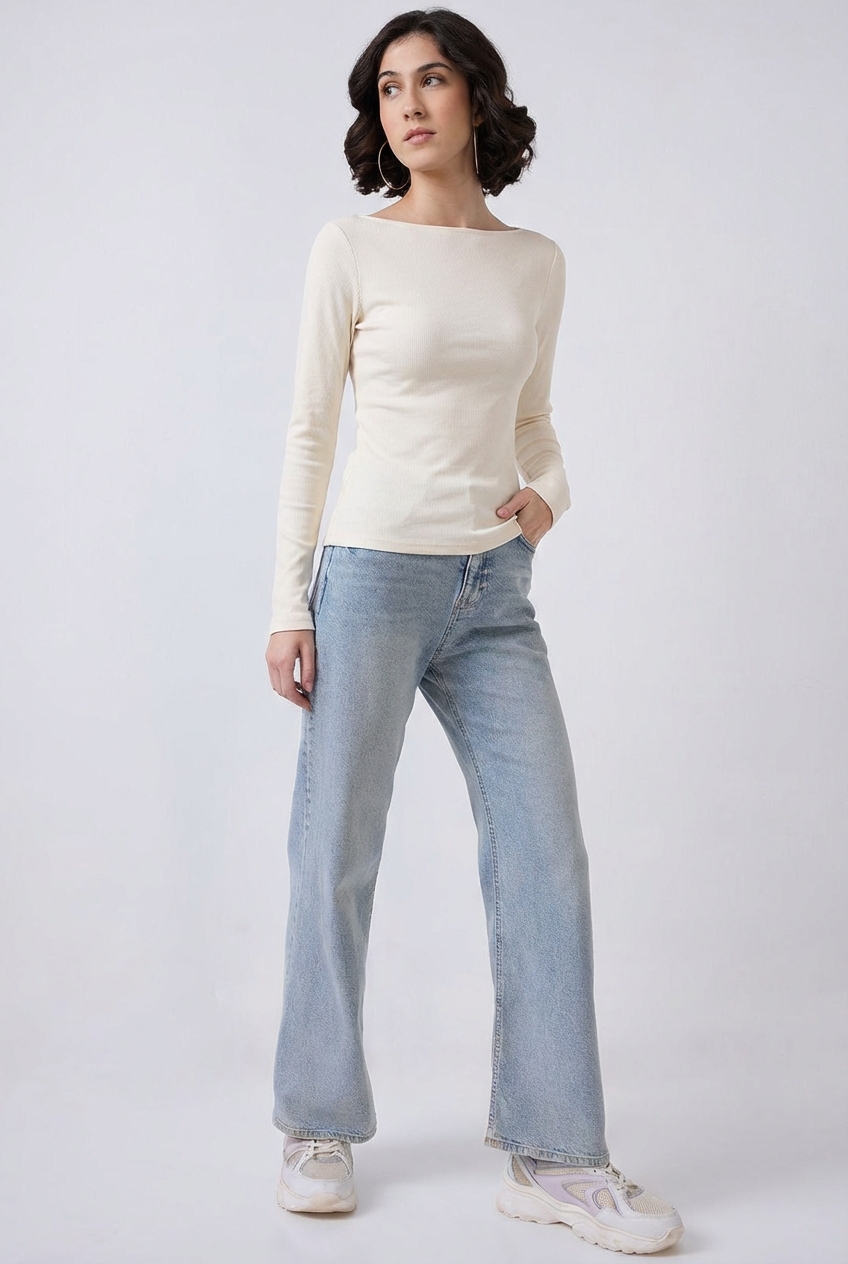
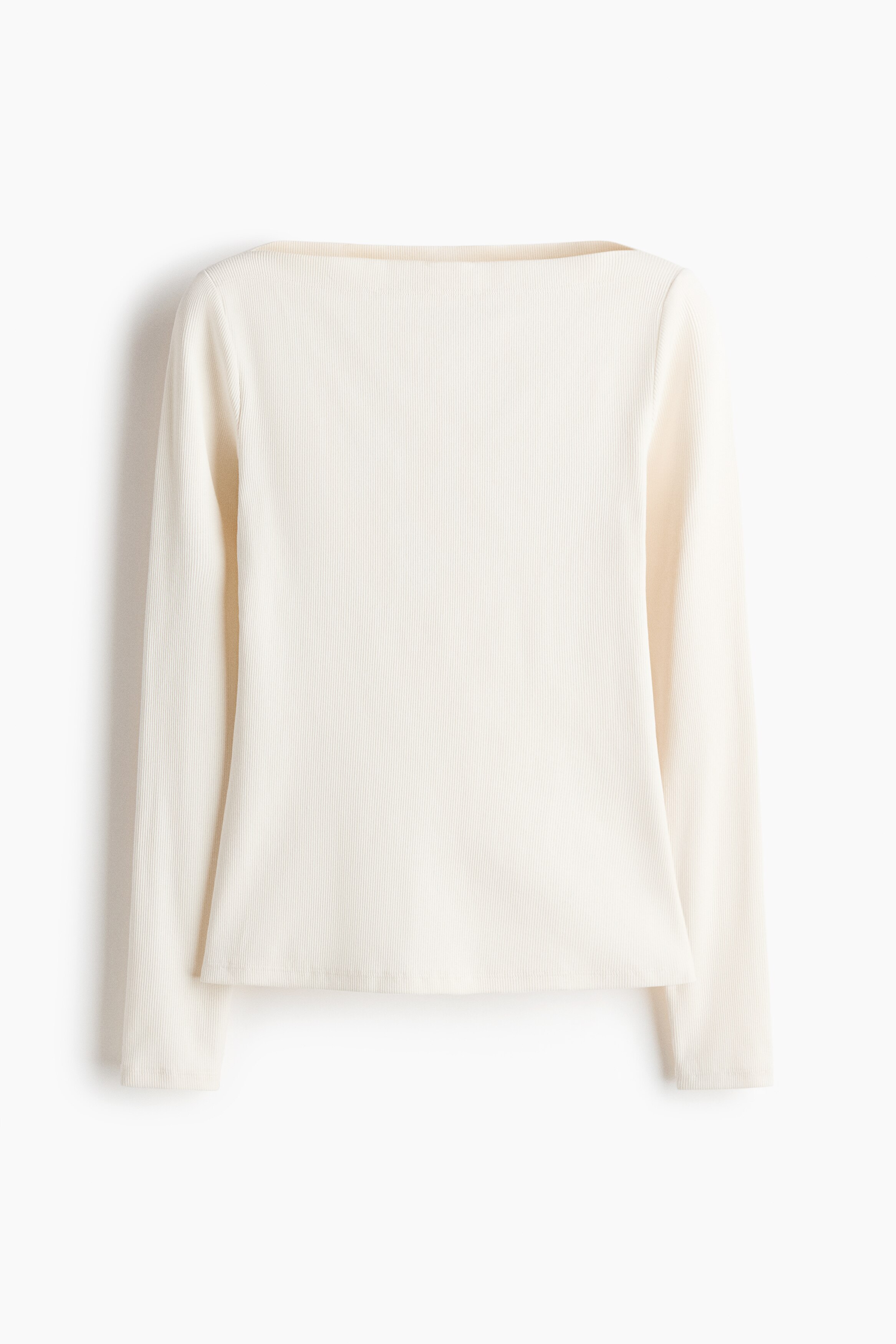
- **Fabric Physics:** The source garment is a ribbed knit (likely cotton or modal blend). It possesses high elasticity and matte reflectance. It should not shine; instead, the lighting must interact with the vertical ridges of the ribbing to create micro-shadows that define the texture. The drape weight is medium-light, meaning it will cling to the body contours rather than hanging stiffly.
- **Key Features:**
- **Vertical Ribbing:** The vertical texture lines must remain consistent and warp correctly around the body's curvature.
- **Boat Neckline:** The wide, shallow neckline must be preserved, sitting across the clavicles.
- **Sleeve Hems:** The finished cuffs on the long sleeves must be rendered at the wrists.
- **Bottom Hem:** The straight-cut hemline needs to be preserved.
PHASE 2: FIT & DRAPE SIMULATION
- **Body Mapping:**
- **Torso:** Due to the stretch nature of the ribbing, the garment must hug the user's torso, following the curvature of the waist and bust without appearing rigid.
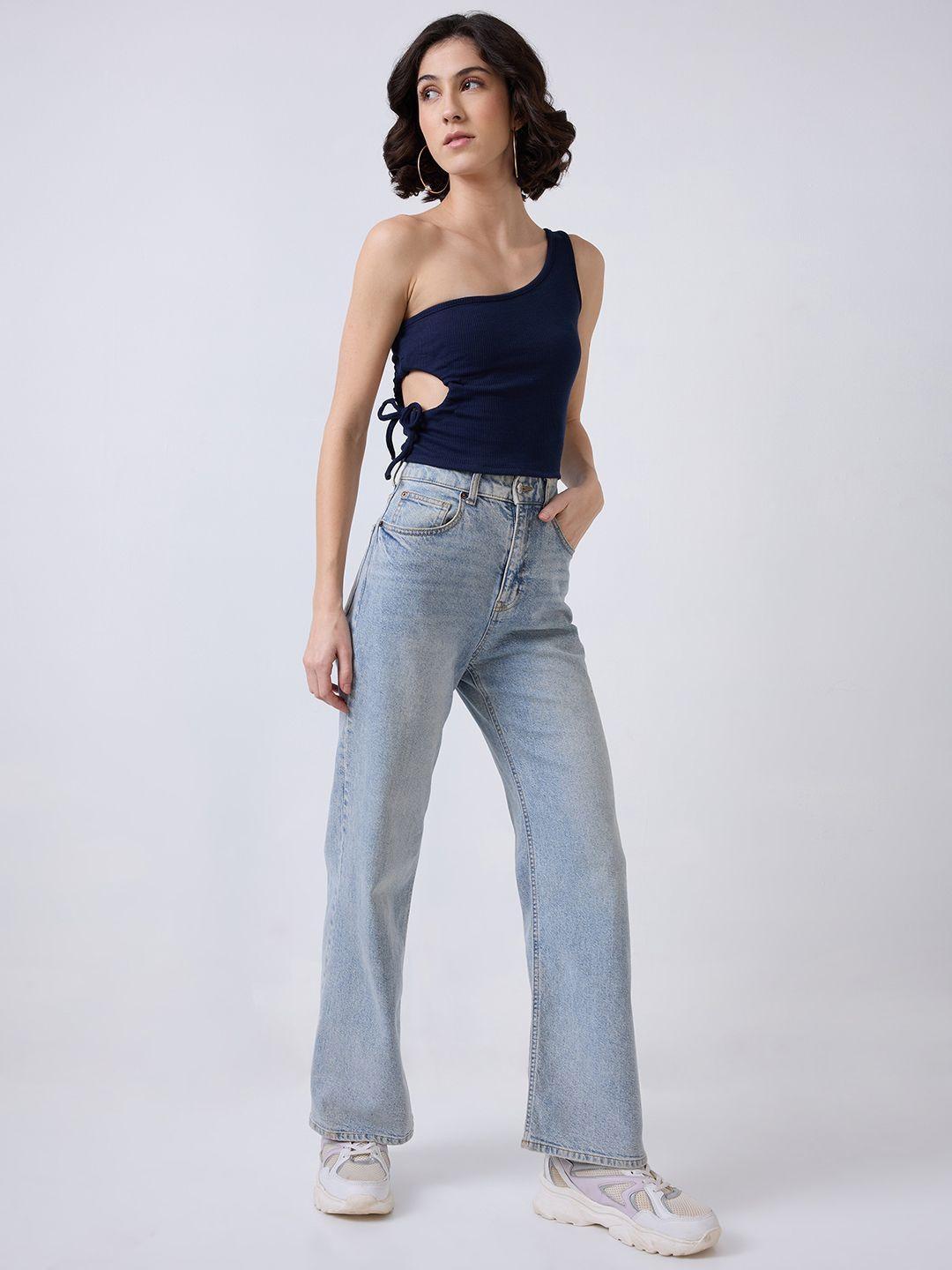
- **Shoulders/Arms:** The source garment has long sleeves. The user's current bare arms must be fully covered. The fabric should exhibit slight compression folds at the inner elbow of the right arm (hanging down) and significant bunching/tension wrinkles on the left arm where it bends to enter the pocket.
- **Waist Interaction:** The source garment is long enough to overlap the waistband of the jeans. The simulation must calculate a natural fall over the denim, creating a slight bulk where the hem meets the high-waisted jeans, or a "tucked" visualization if the physics dictates the fabric interacts with the pocket entry.
- **Occlusion Handling:**
- **Hair:** The user's chin-length wavy hair currently touches her bare shoulders. This hair must be segmented and layered **over** the new fabric on both sides of the neck.
- **Left Hand/Pocket:** The user's left hand is inside the pocket. The left sleeve of the new garment must terminate or drape naturally around the wrist/pocket entry point; it cannot overwrite the jeans pocket or the hand placement.
- **Earrings:** The large hoop earrings must remain the top-most layer, sitting in front of the new boat neckline if interaction occurs.
PHASE 3: ENVIRONMENT & LIGHTING
- **Light Match:** The target environment utilizes soft, diffuse studio lighting, predominantly from the front-left. The new garment must generate self-shadowing (ambient occlusion) in the armpits, under the bust, and along the right side of the torso (away from the light source) to match the scene's depth.
- **Color Calibration:** The source garment is cream/off-white. Care must be taken to prevent "blowout" (pure white clipping) in the highlights. The cream tone needs to be color-graded slightly cooler to match the clean white balance of the user's studio background, ensuring it doesn't look yellow while maintaining the fabric's warmth relative to the blue jeans.
PHASE 4: IDENTITY PROTECTION
- **Facial Lock:** The user's entire head region (hair, eyes, nose, mouth, jawline, and neck up to the clavicle) must be masked and frozen.
- **Body Integrity:** The simulation is strictly forbidden from warping the user's underlying skeletal structure or silhouette. The hips and waist width defined by the jeans must remain constant. The user's skin tone on the visible neck area must not be altered by the lighting transfer of the new garment.