Thinking Process
PHASE 1: VISUAL DECONSTRUCTION
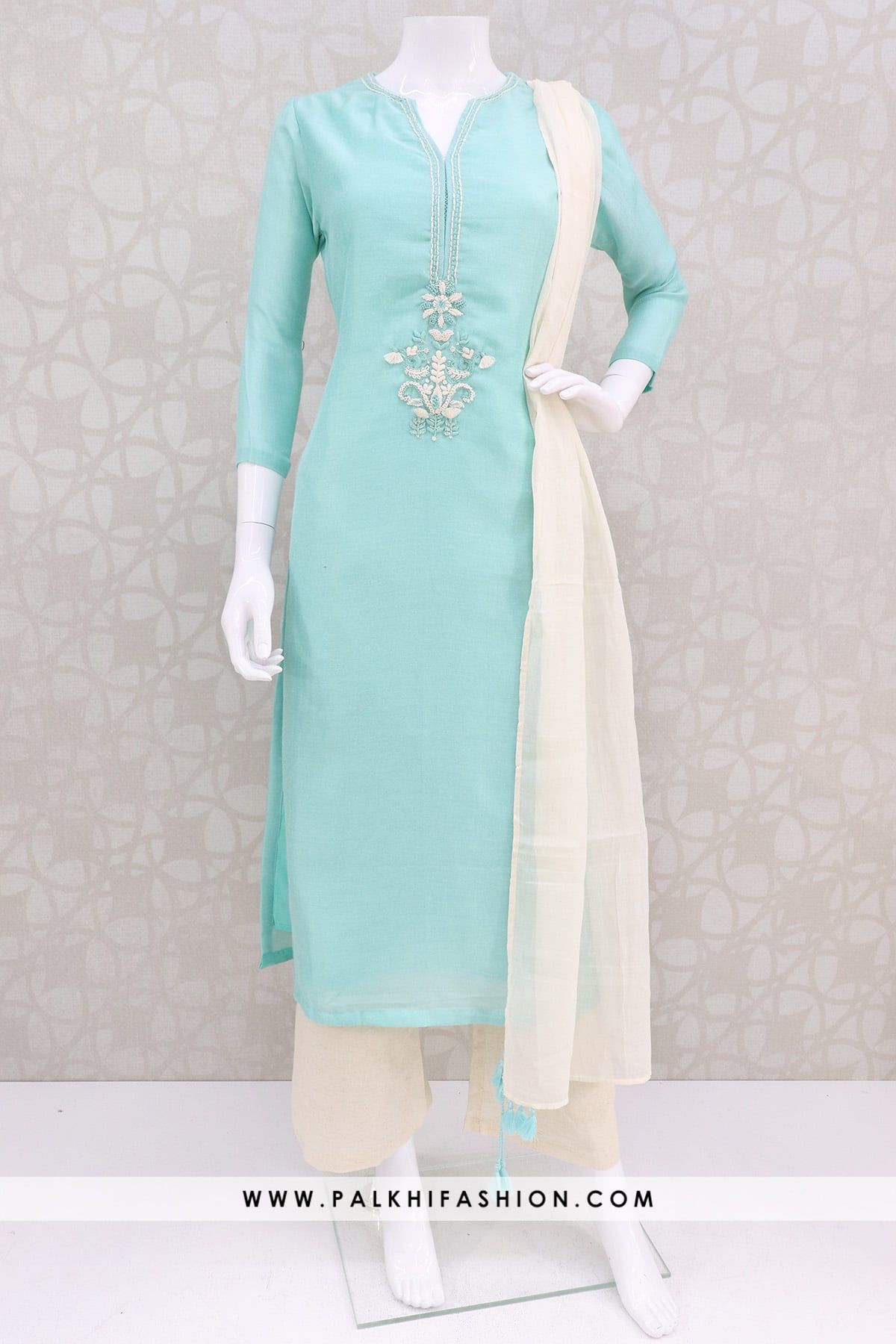
- **Fabric Physics:** The source garment is a semi-structured "Kurta" (tunic), likely a cotton-silk blend or glazed cotton. It exhibits a matte finish with low-to-medium specularity (soft sheen). Unlike the user's current knit top, this fabric does not stretch significantly. It should behave like a woven textile, maintaining vertical rigidity while folding softly at stress points.
- **Key Features:** The central chest embroidery (floral motif) and the notched V-neckline with white trim are critical anchors that must remain centered on the user's sternum. The 3/4 length sleeve hem implies the user's lower forearms/wrists will be exposed (requiring skin generation if currently covered). The cream dupatta (scarf) on the mannequin is a complex separate layer; if transferred, it must drape loosely over the left shoulder; if excluded, the focus remains solely on the main turquoise tunic.
PHASE 2: FIT & DRAPE SIMULATION
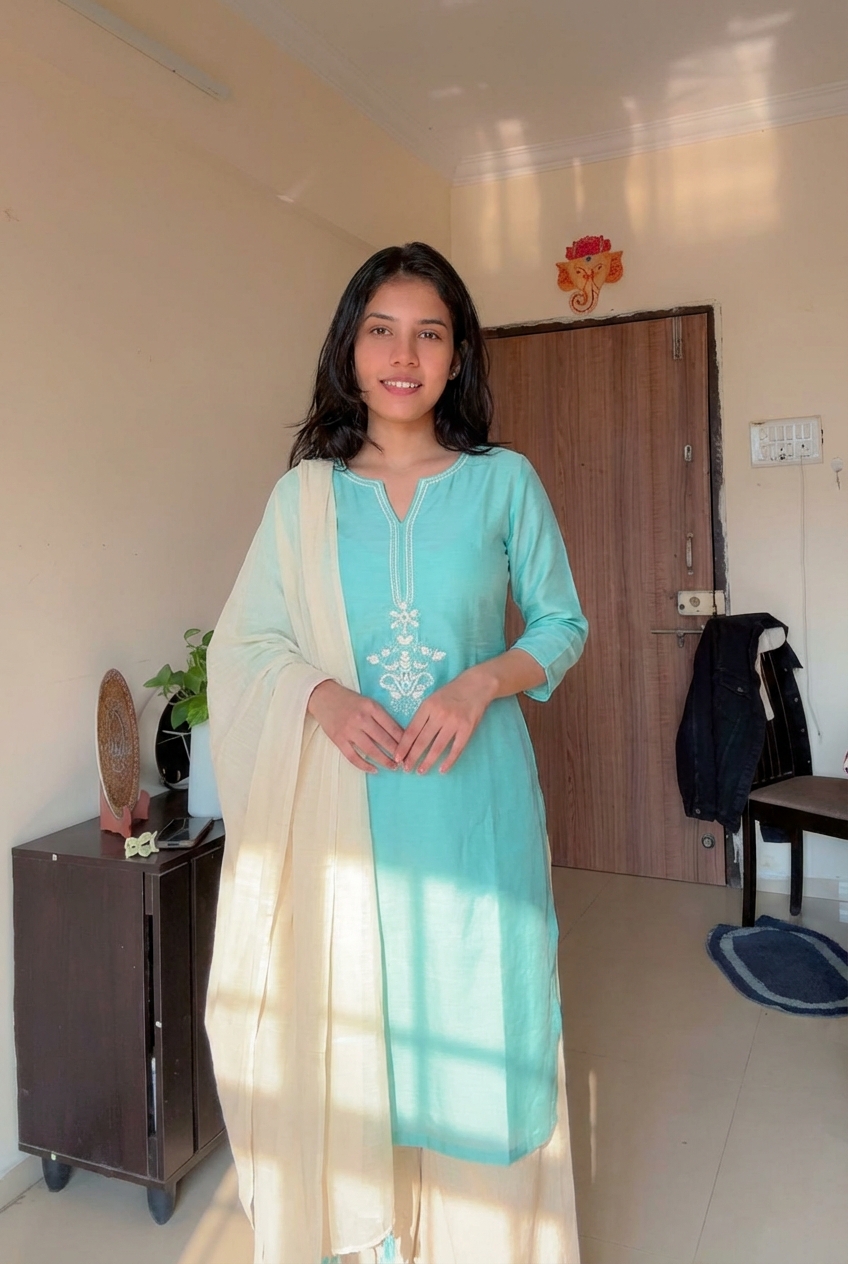
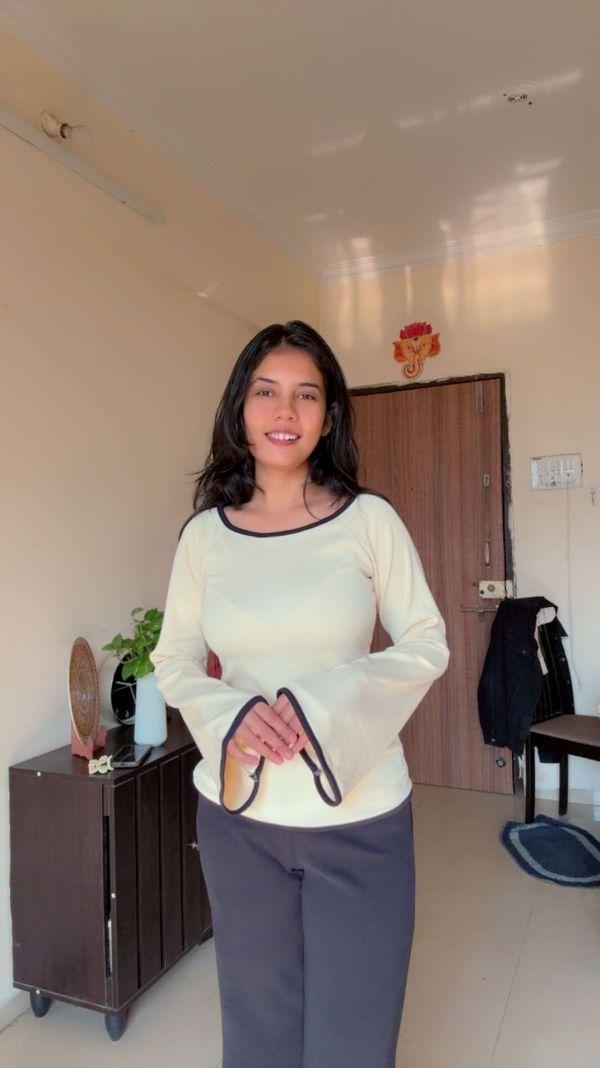
- **Body Mapping:** The user is standing with a neutral torso but hands clasped at the lower waist. As a tunic/kurta, the new garment is longer than the current top and typically extends below the hip. The fabric simulation must handle the collision with the clasped hands—the lower hem of the kurta should drape *behind* the hands or bunch slightly above them, rather than clipping through. The silhouette must transition from the user's fitted waist to the straighter, A-line cut of the kurta.
- **Occlusion Handling:**
1. **Hair:** The user's long, dark wavy hair falls over both shoulders and down the chest. This is a high-priority occlusion layer; the hair must be segmented and composited *on top* of the new kurta shoulders.
2. **Hands/Arms:** The user's hands are clasped. The new garment's fabric must not cover the fingers.
3. **Sleeve Volume:** The user's current top has wide "bell sleeves." The simulation must ignore this volumetric noise and fit the new, narrower 3/4 sleeves closer to the user's actual arm anatomy.
PHASE 3: ENVIRONMENT & LIGHTING
- **Light Match:** The user's environment has a strong, directional daylight source coming from the left (viewer's perspective), casting distinct shadows to the right. The studio-lit source garment is flat. A lighting gradient must be applied to the turquoise fabric: brighter highlights on the user's right shoulder/chest (viewer's left) and deeper shadows wrapping around the opposing side. The embroidery texture needs bump mapping to catch this directional light.
- **Color Calibration:** The user's room has a warm, tungsten/golden hour cast. The cool turquoise of the source garment must be color-graded slightly warmer (shift white balance towards yellow/orange) to integrate naturally into the environment, preventing it from looking like a "blue screen" overlay.
PHASE 4: IDENTITY PROTECTION
- **Facial Lock:** Absolute freeze on the facial ROI (Region of Interest): eyes, nose, mouth, jawline, and the specific skin texture of the neck. The hairline must remain untouched.
- **Body Integrity:** The user's shoulder width and hip alignment must be preserved. While the garment changes from a fitted knit to a looser tunic, the underlying skeletal structure and pose must not be warped, slimmed, or expanded. The skin tone of the exposed lower forearms (if generated) must match the user's face and hands perfectly.